
Career
Top Universities to Study Political Science in the UK

People usually have some doubts about starting a political career because it can have quite a negative reputation. But we will tell you why this degree is worth the time and effort and what benefits the political science program includes apart from a specialization. So, if you have ever wanted to get a political science degree, we will tell you everything you need to know about this field.
Some Words about Political Science:
Political Science is one of the social sciences focused on the studying of the state and its institutions. According to the philosophical context, political science is necessary for improving the state for the benefit of the citizens. But modern political scientists believe that the functions of political science should be overviewed in a broader context.
Political science means much more than just the state and its institutions in the modern world. It concerns public opinion, race and gender issues, international communication, etc. Nowadays, political science is about being inquisitive and objective.
It has a lot of things to discover. Students who want to choose this educational program will learn how to explain and describe the political phenomenon. So, briefly speaking, political science is about:
- Processes of government
- Government’s institutions
- The behavior of the people in the government
- Political systems and what affects them

Political Science Degree:
Political science students can get both bachelor’s and master’s degrees in political science. Of course, everything depends on the university and your chosen study program. But we will talk about the best political science degree programs later.
Students with a political science major will study mainly the theory and practice of government. Also, the learners will learn more about such topics as international affairs, comparative politics, political theory, and more. After getting the degree, the students will have profound knowledge in this area.
After graduation, students can choose various doctorate political science programs. In addition, postgraduate and graduate students with political science majors can also get credits for internships in different companies, such as law firms, non-governmental organizations, and so on. Hence, this degree opens many roads not only in this but also in related spheres.
| Also Read: How to Stop Comparing Yourself to Others? |
| Also Read: How to Build Your Self-Confidence? |
Why Should You Study Political Science:
Many people believe that political science is about something boring. Also, this decline has a bad reputation because of various unfortunate political events. That’s why students prefer not to choose the politics major in their curriculum.
Nevertheless, several factors can change your attitude toward getting a political science degree or even starting a career in this field. First of all, everyone should understand that everything related to politics and government affects every person in the country. So, political science is not about something that is far from us. It is about our everyday life.
The next important factor is that political science is not only about politics. It unites various disciplines, such as international affairs or communication. So, be sure that you will be surprised because this educational program is quite interesting and even intriguing.
Finally, a degree is a good opportunity to start your dream career. Different companies around the world will welcome it.
How Long Does It Take to Graduate?
The structure of university degrees in the UK is usually modular, which means they are more compact compared to degrees in many other countries. This allows you to complete your studies and start using your skills in the real world much faster.
Typically, an undergraduate degree in political science (usually a Bachelor of Arts or Bachelor of Science) takes 3 years to complete. On the other hand, postgraduate degrees, such as master’s degrees, are usually 1 or 2 years long.
What Do the Courses Cover?
Similar to most university degrees in the UK, a political science course will provide you with a strong foundation in the subject during your first year. After that, you’ll have the opportunity to specialize in the areas that interest you the most.
In addition to learning about the inner workings of government, you’ll also study the core theories and concepts that form the basis of politics. The course will cover topics like international relations, social policy, and the history of politics.
Interestingly, one in four world leaders have studied in the UK. This means that the UK’s renowned educational institutions are the perfect place to gain a global perspective on the past, present, and future of the political science field.
| Also Read: Which Courses Have the Best Job Opportunities in the UK? |
| Also Read: 12 IT Jobs That Don’t Require Coding Skills |
Skills to Get the Degree:
You should also know that a student should have a specific skill set necessary to get the political science degree and further start a career in this field. First of all, political scientists should be fact-related and objective. Political science is not for you if you do not know how to forget about a subjective approach based on stereotypes.
One more critical feature of the modern political scientist is the ability to be inquisitive. Also, everything related to political science fields should be based on facts and clear reasoning. According to the latest research, there are several top-wanted skills required for the future political scientist:
- Creativity
- Analytical thinking
- Good communication skills
- Critical-thinking skills
Surprisingly, analytical thinking, one of the often-related features of the political scientist, is not enough to succeed in this sphere. You should also know how to apply your creative mind in a serious field.
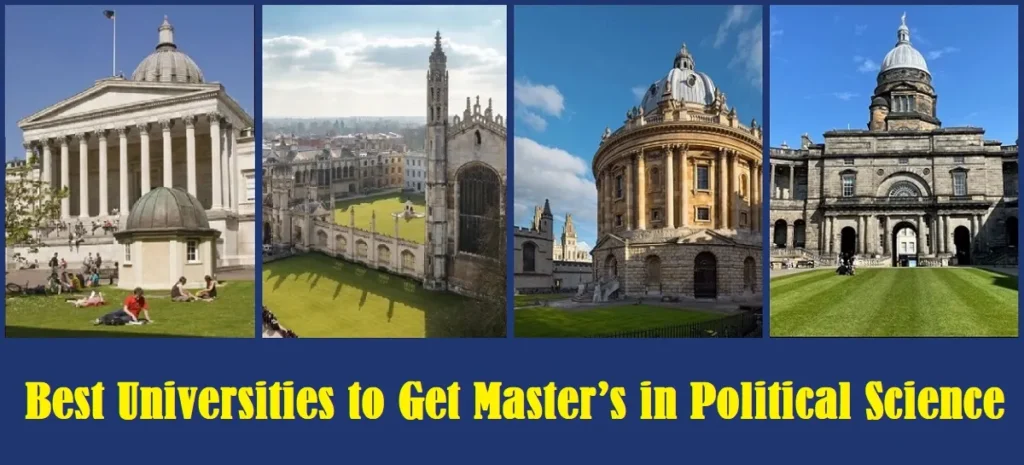
Best Universities to Get Master’s in Political Science:
You need to list the best institutions where you can learn everything you need to succeed in this field. There are various affordable political science degrees, especially if you obtain a scholarship!
Here, we will discuss the best universities where you can get the political science degree required to start a career in this field.
1. University of Edinburgh:
The School of Social and Political Science at the University of Edinburgh is the place where students can get a political science degree (either Bachelor’s or Master’s). The main aim of this institution is to provide an understanding of the world to implement positive changes.
Students can choose any of the related programs. Furthermore, undergraduate and postgraduate degrees are available at the University of Edinburgh. At this university, you will be able to learn from the best experts in the field of Political and Social Science. So, search for the best program and start getting the career of your dream.
2. London School of Economics and Political Science (LSE):
The Department of Government at London School of Economics and Political Science is renowned for its varied student body and international viewpoint, making it one of the top hubs for political science research and teaching worldwide.
3. University College London:
Choosing University College London for Political Science not only provides a top-tier education but also offers a vibrant and engaging experience for aspiring political scientists. Its renowned Department of Political Science holds a distinguished reputation for its cutting-edge research in the field.
4. University of Cambridge:
The University of Cambridge has been shaping global leaders and thinkers for centuries and adds a remarkable depth to the education offered. Students benefit greatly from the university’s extensive resources, such as state-of-the-art research facilities and libraries, which allow for in-depth exploration and analysis of political theories and practices.
5. University of Oxford:
At Oxford, students have the opportunity to learn from world-renowned scholars and experts who are at the forefront of political research and analysis. The university’s rich history and intellectual environment provide a unique setting for exploring complex political theories and their real-world applications.
Moreover, students benefit from access to extensive resources, including libraries, seminars, and study groups, which help critical thinking and deep understanding of political science.
How to Start a Career?
As mentioned above, a degree in this sphere will help you apply for not only political science jobs. Students with MA degrees in this field will also be the top wanted workers in the related spheres. Thus, after finishing this educational program, you will be able to apply your communication, analytical thinking, and critical thinking skills in higher-paying job positions.
If you still have doubts concerning your degree in this sphere, see the list of potential careers:
- Professor
- Associate Attorney
- Attorney/Lawyer
- Policy Analyst
- Political Scientist
- Legislative Assistant
- Public Relations Specialist
- Market Research Analyst
- Research Scientist
Average Salary:
| Professional: | £16,500 |
| Non-professional: | £22,000 |
Moreover, a career as a political scientist can be a profound background for working inside the government. A working resume is all you need to start a career in political science or any related field. So, think about all the soft and hard skills you got during studying, as well as job position-related experience, and start the search for the career of your dream.
Final Words:
To conclude, a political science degree is not as boring as you think. A master’s degree in this field will be helpful to succeed in any related area. Now you can choose the best university from our list and learn more about the courses you will master with the major in political science. Undoubtedly, the skills and knowledge you get will be worth all your time.

If you’ve read even a few career blogs, you’ve seen the same advice again and again.
Learn content writing.
Learn graphic design.
Learn digital marketing.
And at some point, you think:
“Okay… but everyone already knows this. What now?”
That feeling is valid.
The internet keeps recycling the same beginner skills, while quietly ignoring newer, less crowded opportunities. Skills that don’t look flashy on Instagram—but actually create leverage.
This article is for people who:
- Are tired of generic advice
- Want skills with less competition
- Prefer quiet, long-term value over hype
- Want control, not constant hustle
In this guide, you’ll learn 5 overlooked digital skills you can learn at home, why they matter, who they’re for, and how to start without overwhelm.
No buzzwords. No trend-chasing. Just practical direction.
Why “Popular Skills” Are Becoming Harder to Monetize?
Let’s be honest for a moment.
Popular skills aren’t useless—but they are crowded.
When everyone learns the same thing:
- Prices drop
- Competition rises
- Anxiety increases
That’s why the smarter move today is not popular skills, but supporting, system-level skills.
Skills that:
- Sit behind the scenes
- Are hard to replace
- Are learned by fewer people
That’s where stability lives.
1. No-Code Automation (Making Tools Talk to Each Other):
What This Skill Really Is?
No-code automation means connecting apps so work happens automatically, without writing code.
Example:
- When someone fills a form → data goes to a spreadsheet → email is sent automatically.
Tools do the work. You design the flow.
Why This Skill Is Powerful (and Ignored)?
Most people:
- Hate repetitive tasks
- Don’t know automation exists
- Think it requires programming
It doesn’t.
Businesses lose hours daily on manual work. Automation fixes that quietly.
Tools You’d Learn:
- Zapier
- Make (formerly Integromat)
- Airtable
Who This Skill Is Perfect For?
- Organized thinkers
- Process lovers
- People who enjoy efficiency
This skill pays well because it saves time, not because it looks creative.
2. Data Cleanup & Organization (The Skill Nobody Wants—but Everyone Needs):
What It Is?
This skill involves:
- Cleaning messy spreadsheets
- Organizing data
- Removing duplicates
- Making information usable
Not analysis. Not coding. Just clarity.
Why This Skill Is Underrated?
Data is everywhere.
Clean data is rare.
Most businesses have information—but it’s unusable. They need someone who can bring order.
Why Beginners Can Learn This Easily?
- Learn Google Sheets or Excel basics
- Practice sorting, filtering, formatting
- Build patience and precision
It’s calm work. Focused work.
And surprisingly valuable.
3. AI Prompt Design (Talking to AI the Right Way):
What This Skill Actually Is
AI prompt design means knowing how to ask AI tools the right questions to get high-quality results.
Most people type vague prompts and get poor outputs.
A prompt designer:
- Structures instructions clearly
- Adds context
- Guides outcomes
Why This Is a New Opportunity?
AI tools are everywhere now.
But most people use them badly.
Those who know how to guide AI properly save:
- Time
- Money
- Effort
This skill is about thinking clearly, not being technical.
Who This Is For?
- Writers
- Managers
- Researchers
- Anyone working with AI tools daily
It’s a thinking skill. And thinking skills age well.
4. Digital Product Operations (Running the Backend Nobody Sees):
What This Skill Means?
Digital product operations involves managing:
- Product uploads
- File organization
- Customer access
- Updates and versions
It’s the engine room behind online products.
Why This Skill Is Rare?
Everyone wants to:
- Create
- Sell
- Promote
Very few want to maintain systems.
But creators desperately need help keeping things running smoothly.
What You’d Learn?
- File management
- Platform dashboards
- Version control (simple, not technical)
- Customer access workflows
This skill brings stability and long-term work.
5. Knowledge Management (Turning Information Into Systems):
What Is Knowledge Management?
It’s the skill of:
- Organizing notes
- Structuring information
- Building personal or team knowledge systems
Think:
- Notion dashboards
- Documentation systems
- Learning libraries
Why This Skill Is Becoming Valuable?
Information overload is real.
People don’t lack information.
They lack structure.
Those who can turn chaos into clarity are quietly in demand.
Who This Is Perfect For?
- Deep thinkers
- Note-takers
- People who love systems
It’s not loud work. But it’s respected work.
How to Choose the Right “Unpopular” Skill for You?
Ask yourself:
- Do I enjoy structure or creativity?
- Do I prefer solving problems quietly?
- Do I like improving systems?
Choose the skill that feels mentally calm, not exciting.
Calm skills are sustainable skills.
A Simple Learning System:
Use this 3–2–1 system:
- 3 days a week: learning
- 2 days a week: practice
- 1 day a week: review
Track:
- What confused you
- What clicked
- What improved
This reduces anxiety and builds confidence naturally.
Why These Skills Give You an Advantage?
These skills:
- Have less competition
- Are harder to replace
- Support other roles
- Age well over time
They don’t depend on trends.
They depend on thinking and structure.
Conclusion:
The internet rewards noise.
The real world rewards reliability.
You don’t need another popular skill.
You need one overlooked skill you can grow steadily.
Pick one from this list.
Learn it slowly.
Apply it calmly.
That’s how real careers are built—without panic.
👉 Choose the skill that feels boring but useful. Start today.
“AI Sounds Important… But Is It Really for Me?”
Let’s be honest.
When you hear Artificial Intelligence, what comes to mind?
Complex math? Coding? Long hours? Expensive courses?
You’re not wrong to feel confused or even intimidated.
Many students and beginners think free AI courses are low quality, too technical, or a waste of time. Some even tried one before… and quietly quit halfway.
Here’s the truth most people don’t tell you:
You don’t need to be smart, technical, or experienced to learn AI. You just need the right starting point.
In this guide, I’ll walk you through:
- What AI really means?
- The right mindset for learning AI without stress
- 9 genuinely free AI courses with certificates in 2026
- How to choose the right course for you
- How to track your progress and stay consistent
No jargon.
No pressure.
Just a clear path forward.
Let’s begin.
What Is AI?
Artificial Intelligence (AI) simply means teaching computers to think and learn like humans—at least a little.
AI is already around you:
- Google search suggestions
- YouTube recommendations
- Chatbots
- Face recognition on phones
- Spam email filters
You don’t need to build AI to benefit from it.
First, you just need to understand how it works and how it’s used.
That’s exactly what these free AI courses with certificates help you do.
The Right Mindset Before You Start Any AI Course:
Most beginners fail not because AI is hard—but because they start with the wrong mindset.
Common Fears (Totally Normal):
- “Free courses won’t be respected”
- “I’m not good at math”
- “I don’t have a technical background”
- “What if I don’t understand anything?”
Take a breath.
The Correct Beginner Mindset:
- You are learning concepts, not becoming a scientist
- Progress matters more than speed
- Certificates are proof of effort, not perfection
Think of AI like learning to drive.
You don’t start with a Formula 1 car.
You start with basics.
Why Free AI Courses with Certificates Are Worth It in 2026?
Let’s clear this doubt once and for all.
Yes, free AI courses can be valuable.
When they come from trusted platforms.
They help you:
- Understand AI fundamentals
- Improve your resume
- Build confidence
- Decide if AI is right for your career
And most importantly…
You lose nothing except time—and you gain clarity.
Now, let’s get to the list you came for.
9 Best Free AI Courses with Certificates in 2026:
Below are carefully chosen courses that are:
- Free (or free with certificate option)
- Beginner-friendly
- Recognized globally
- Easy to follow at your own pace
1. AI for Everyone – Andrew Ng:
Platform: Coursera
This is one of the best starting points for absolute beginners.
What You’ll Learn?
- What AI can and cannot do
- How AI is used in real businesses
- Common myths about AI
Why It’s Beginner-Friendly?
- No coding
- No math
- Pure concepts, explained simply
Certificate:
- Free to learn
- Certificate available via financial aid
Best for: Non-technical learners, students, managers
2. Introduction to Artificial Intelligence – IBM:
Platform: IBM (via Coursera)
What You’ll Learn?
- Basics of AI, ML, and deep learning
- AI use cases in real industries
- Ethics of AI
Key Highlights:
- Taught by a global tech company
- Beginner-level explanations
- Short modules
Certificate:
- Free with financial aid
Best for: Resume builders and corporate learners
3. Google AI for Beginners:
Platform: Google
Google offers simple learning paths under its AI initiative.
What You’ll Learn?
- Machine learning basics
- AI tools used by Google
- Real-world examples
Why It’s Powerful?
- Trusted brand
- Clean explanations
- Practical insights
Certificate:
- Free certificate available
Best for: Students and job seekers
4. Introduction to AI – Microsoft Learn:
Platform: Microsoft
What You’ll Learn?
- AI workloads
- Machine learning basics
- Responsible AI concepts
Why Beginners Love It?
- Short lessons
- Interactive learning
- Clear structure
Certificate:
- Free completion badge
Best for: Beginners who like step-by-step learning
5. AI Basics for Everyone – Udemy (Free):
Platform: Udemy
What You’ll Learn?
- AI terminology
- How AI impacts jobs
- Everyday AI tools
Things to Know:
- Certificate available
- Course quality varies (check ratings)
Best for: Casual learners and fast starters
6. Elements of AI:
Provider: University of Helsinki
This course is famous worldwide.
What You’ll Learn?
- How AI works
- Societal impact of AI
- Logical thinking behind AI
Why It’s Special?
- No coding required
- Used by governments and universities
- Extremely beginner-friendly
Certificate:
- Free certificate
Best for: First-time learners
7. AI Foundations – LinkedIn Learning:
Platform: LinkedIn
What You’ll Learn?
- AI fundamentals
- Career relevance
- Business use cases
Certificate:
- Free certificate during trial period
Best for: Professionals and fresh graduates
8. Machine Learning Crash Course:
Platform: Google Developers
What You’ll Learn?
- Core ML concepts
- Visual explanations
- Practical understanding
Note:
- Slightly technical
- Still beginner-friendly
Certificate:
- Free completion badge
Best for: Curious learners ready to go deeper
9. AI Ethics and Responsible AI:
Platform: Microsoft / IBM
What You’ll Learn?
- Ethical AI use
- Bias and fairness
- Real-world implications
Why It Matters?
AI is not just about technology—it’s about responsibility.
Certificate:
- Free
Best for: Students and future professionals
How to Choose the Right Free AI Course?
Ask yourself three simple questions:
- Do I want concepts or coding?
- Concepts → AI for Everyone
- Coding later → Google or IBM
- Do I need a certificate?
- Yes → Coursera, Microsoft, Google
- How much time can I give daily?
- 30 minutes is enough
👉 Choose ONE course. Not three.
Step-by-Step System to Complete Any AI Course Successfully:
Step 1: Block Small Time Slots
- 20–30 minutes a day
- Same time every day
Step 2: Learn, Don’t Rush
- Pause videos
- Take notes
- Rewatch if needed
Step 3: Apply Light Learning
- Explain concepts in your own words
- Share what you learn with a friend
Step 4: Finish and Claim Certificate
- Certificates boost confidence
- Add them to LinkedIn or resume
How to Track Your AI Learning Progress?
You don’t need fancy tools.
Just track:
- Course started
- Lessons completed
- Date finished
- Certificate earned
Use:
- A notebook
- Google Docs
- Notes app
Consistency beats intensity.
Common Mistakes Beginners Make (Avoid These):
- Starting too many courses
- Quitting halfway
- Comparing yourself to experts
- Expecting instant results
Remember:
You’re building knowledge, not racing.
Conclusion: Start Your AI Journey Today, Not “Someday”
AI is no longer optional.
But learning AI does not have to be hard, expensive, or scary.
With these 9 free AI courses with certificates in 2026, you now have:
- A clear starting point
- Trusted platforms
- Zero financial risk
- A step-by-step system to succeed
Don’t wait for confidence.
Confidence comes from starting.
Choose one free AI course today.
Spend just 20 minutes.
Finish what you start.
Your future self will thank you.
Start now. AI is waiting.
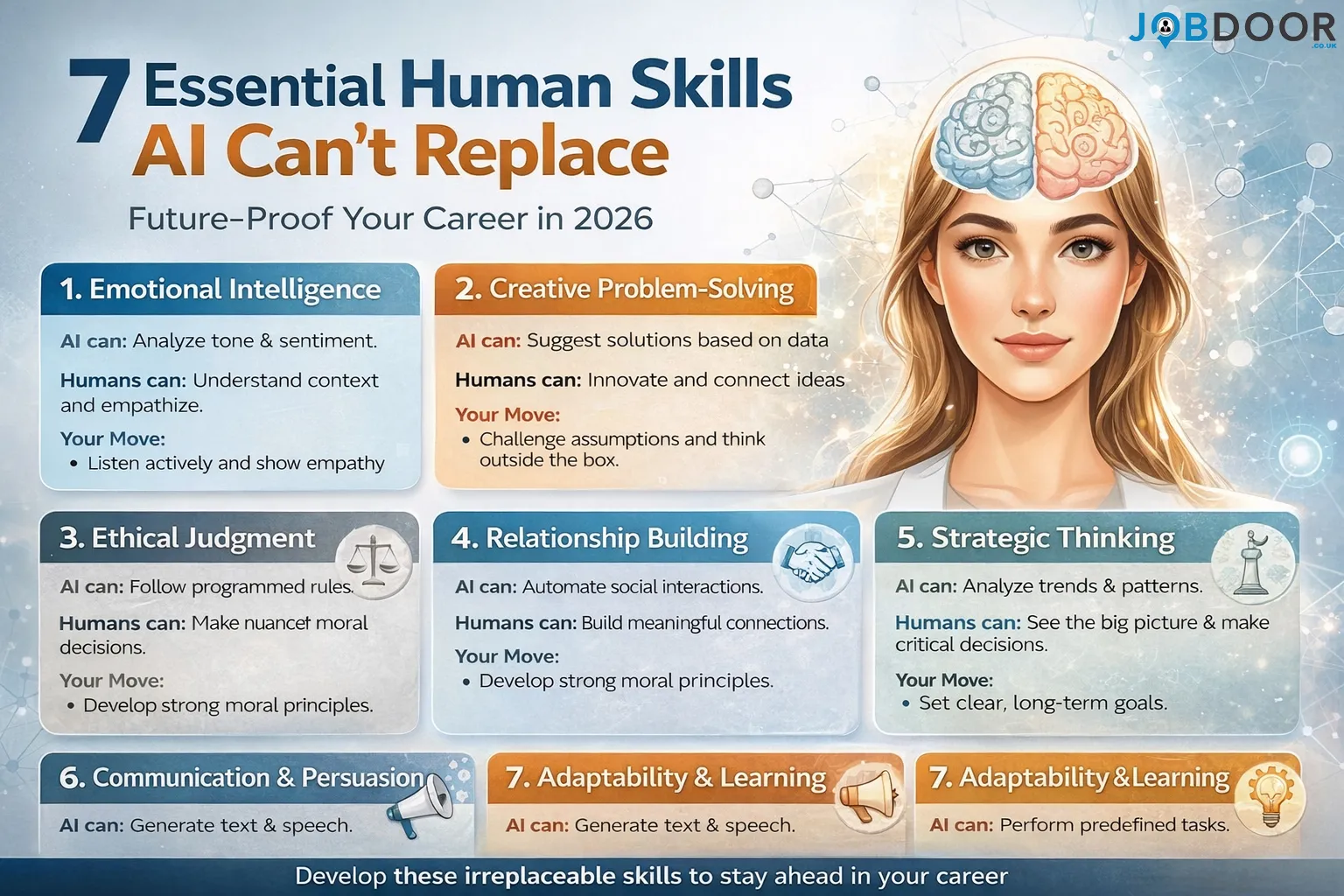
Artificial Intelligence is transforming how work is done. Automation, machine learning, and AI tools now handle tasks that once required large teams and years of experience. While this progress brings efficiency, it also raises a serious question for professionals across industries:
Which skills will still matter when AI becomes more powerful?
The answer is reassuring. Despite rapid technological advances, there are core human skills that AI cannot replace. These skills are not trends—they are timeless qualities that have always defined capable professionals. In 2026 and beyond, these abilities will become even more valuable.
This article breaks down 7 essential skills AI can’t replace, explains why they matter, and shows how you can strengthen them to stay relevant and respected in your career.
Why Human Skills Still Matter in the Age of AI?
AI excels at processing data, identifying patterns, and automating routine work. However, it lacks consciousness, values, lived experience, and moral responsibility. Businesses don’t just run on systems—they run on trust, judgment, relationships, and leadership.
Those who combine AI tools with strong human skills will not be replaced; they will be promoted.
1. Emotional Intelligence:
Emotional intelligence is the ability to understand emotions—both your own and others’—and respond thoughtfully.
What AI can do?
Analyze tone, sentiment, and behavioral data.
What only humans can do?
Show empathy, read context, build trust, and handle sensitive situations with care.
In leadership, customer service, negotiations, and teamwork, emotional intelligence is irreplaceable. People want to work with those who listen, understand, and respond with sincerity.
How to strengthen it?
- Practice active listening
- Improve self-awareness
- Learn to manage emotions under pressure
2. Creative Problem-Solving:
AI can generate ideas based on existing data, but true creativity comes from human insight.
What AI can do?
Suggest solutions based on patterns and probabilities.
What only humans can do?
Think outside the box, challenge assumptions, and connect unrelated ideas in meaningful ways.
Complex problems often require imagination, intuition, and experience—qualities shaped by human life, not algorithms.
How to strengthen it?
- Work on open-ended problems
- Learn across disciplines
- Question “standard” solutions
3. Ethical Judgment:
Ethics cannot be automated.
What AI can do?
Follow programmed rules and guidelines.
What only humans can do?
Make moral decisions, weigh consequences, and act with integrity in uncertain situations.
In areas like business leadership, law, healthcare, and governance, ethical judgment defines credibility. AI lacks accountability; humans do not.
How to strengthen it?
- Study real-world case studies
- Understand long-term consequences
- Commit to principles, not convenience
4. Relationship Building:
Strong relationships are built on trust, consistency, and mutual respect.
What AI can do?
Track connections and suggest networking opportunities.
What only humans can do?
Build genuine bonds, earn loyalty, and maintain long-term professional relationships.
Careers grow through people—not systems. Mentorships, partnerships, and client relationships are deeply human.
How to strengthen it?
- Communicate honestly and clearly
- Follow up consistently
- Add value before asking for favors
5. Strategic Thinking:
Strategy involves foresight, experience, and judgment.
What AI can do?
Analyze trends and optimize based on data.
What only humans can do?
Set vision, define priorities, and make trade-offs in uncertain environments.
Strategic thinking is not about reacting to data—it’s about deciding where to go and why.
How to strengthen it?
- Think long-term, not just short-term
- Study business and history
- Practice decision-making with incomplete information
6. Communication and Persuasion:
Clear communication remains one of the most powerful professional skills.
What AI can do?
Generate text, summaries, and scripts.
What only humans can do?
Persuade, inspire, negotiate, and communicate with authenticity.
Whether leading a team, pitching an idea, or resolving conflict, human communication builds understanding and alignment.
How to strengthen it?
- Improve writing and speaking clarity
- Practice explaining complex ideas simply
- Learn negotiation fundamentals
7. Adaptability and Learning Mindset:
The ability to adapt is the ultimate future-proof skill.
What AI can do?
Execute tasks it was trained for.
What only humans can do?
Learn continuously, adapt to change, and redefine roles as industries evolve.
Those who resist change are replaced. Those who adapt lead.
How to strengthen it?
- Stay curious
- Learn new tools without fear
- Accept change as part of growth
How to Combine AI with Human Skills?
The goal is not to compete with AI, but to work alongside it.
Use AI to:
- Automate repetitive tasks
- Improve efficiency
- Support analysis and research
Use human skills to:
- Make decisions
- Lead people
- Build trust and vision
This combination creates professionals who are both efficient and indispensable.
Common Career Mistakes to Avoid in 2026:
- Relying only on technical tools
- Ignoring people skills
- Avoiding responsibility and judgment
- Treating AI as a replacement instead of an assistant
Technology changes fast. Human values do not.
Final Thoughts:
Every major technological shift in history has rewarded those who preserved core human strengths while adopting new tools. The AI era is no different.
The 7 skills AI can’t replace—emotional intelligence, creativity, ethics, relationships, strategy, communication, and adaptability—have always mattered. In 2026, they matter even more.
If you invest in these abilities while using AI wisely, you won’t just survive the future of work—you’ll shape it.

6 AI Tools that Can Automate Your Work and Save 1,000+ Hours of Work
Artificial intelligence is no longer a futuristic concept reserved for tech experts. It has become a practical companion for students,...

I Tested 250+ AI Tools — Here Are 15 Hidden Gems Worth Using in 2026
Artificial intelligence is expanding at an incredible pace, with hundreds of new tools launching every month. While most people only...

25 New AI Tools Everyone Will Be Using in 2026 (Most People Don’t Know)
Artificial intelligence continues to evolve at a breathtaking pace, and 2026 has already introduced a wave of innovative AI tools...

AI Basics That Will Save You Hours Every Week (Everybody Must Know)
Artificial Intelligence is no longer a futuristic concept. It’s already shaping how we search online, create content, run businesses, and...


Why AI Is a Wealth-Building Skill in 2026?
Artificial intelligence is no longer a futuristic concept — it’s a practical income tool that everyday creators, freelancers, bloggers, and...

The 7 Best AI Tools for Beginners in 2026 (Start Using AI Today)
Artificial Intelligence is everywhere right now. You hear about it on YouTube, social media, blogs, and even casual conversations. People...
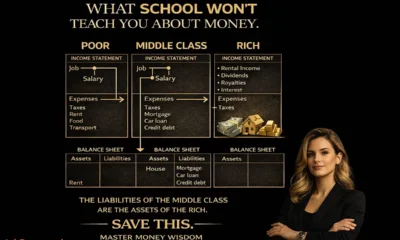

What School Won’t Teach You About Money: The Real Difference Between Poor, Middle Class, and Rich
Most of us spend 12–16 years in school learning mathematics, science, and history. Yet very few of us are taught...

Break Free From Poverty Thinking & Build Real Wealth
Many people work hard their entire lives yet struggle financially. The problem is not always income — often, it is...


9 Ways Money Disappears Without You Noticing (And How to Take Back Control)
Money rarely disappears overnight. More often, it slips away quietly through small habits, unnoticed expenses, and lifestyle patterns that feel...


What to Say When a Colleague Leaves (Perfect Goodbye Email Ideas)
Saying goodbye at work is never easy. One day you’re sharing coffee breaks, deadlines, and inside jokes — and the...

YouTube Automation: Make $10K Monthly Without Even Showing Your Face
What if you could build a profitable YouTube channel… without filming yourself, buying expensive gear, or becoming an on-camera personality?...


My Boss Is Leaving — What to Say: The Perfect Goodbye Email or Message to Your Boss
Your boss is leaving. And suddenly, you’re stuck wondering what to say. Do you keep it formal? Do you express...


10 Places Where Rich People Give Away Free Money (And How You Can Get It)
Let’s be honest. The idea of getting free money sounds too good to be true. Most of us instantly think...

Top 5 AI Trends That Will Define 2026 – It Will Change Everything
Let’s be honest. When people talk about AI and the future, it can feel overwhelming.New tools. New trends. Big predictions....

I Tried 100 AI Tools: These 7 Can Help You Make Money in 2026
Everywhere you look, someone is talking about AI. “AI will replace jobs.”“AI is the fastest way to make money.”“Use this...


AI Business Ideas You Can Start Today (No Tech Skills Needed)
AI is everywhere right now. You hear people say: But instead of feeling excited, you might feel confused, anxious, or...

ChatGPT Prompts to Create Viral YouTube Shorts
YouTube Shorts look simple on the surface. A short video.A few seconds.Quick views. But when you actually sit down to...


5 Underrated Digital Skills You Can Learn at Home That Most People Still Ignore
If you’ve read even a few career blogs, you’ve seen the same advice again and again. Learn content writing.Learn graphic...
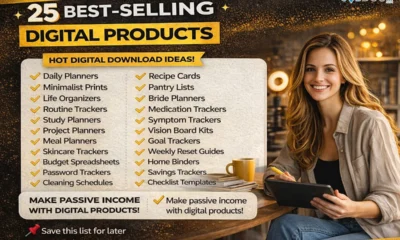

25 Best-Selling Digital Products You Can Create Once and Sell Forever
If you’ve ever searched online for ways to make passive income, you’ve probably felt overwhelmed. So many options.So much jargon.So...


5 Powerful Ways to Monetize Your Facebook Group (Even If You’re Starting From Zero)
You started a Facebook group for a reason. Maybe to share knowledge.Maybe to connect people with similar interests.Maybe just for...
-
 Career2 years ago
Career Opportunities for Seniors: 7 Jobs that are Perfect for Older Adults
-
 Money1 month ago
26 Lucrative Passive Income Ideas to Build Wealth in 2026
-
 Job Description2 years ago
Graphic Designer Job Description: Education, Salary, Skills, Work Hours
-

 News2 years ago
Students’ question to UK PM Rishi Sunak: “What if your kids started smoking?
-
 Career2 years ago
13 Best Jobs That AI Can’t Replace: A Guide to Future-proof Careers
-

 Career2 years ago
Standard Employment Contract Template Example for UK (Word & PDF)
-

 AI & Tools1 month ago
ChatGPT vs Copilot: Which AI Is Best for You in 2026?
-

 Money2 years ago
How To Get Paid to Read Books? (9 Best & Legit Sites)