
Career
Career Opportunities for Seniors: 7 Jobs that are Perfect for Older Adults


Your Retirement income isn’t enough? Looking for some jobs at your retirement age? For retirees, who choose to remain involved and earn on a monthly or weekly basis. You are at perfect place for it. Before moving on to the best jobs for older adults or retirees, let’s talk about why work after retirement?
Why Work After Retirement?
In a perfect world all retirement savings could provide enough funds to completely ensure their financial security during their final days. However, this is impossible in every case. Every person takes different steps to plan for retirement and the decisions you have made during the span of years can influence how you’re going to experience in the moment.
Sometime, your retirement savings aren’t enough to meet the increasing expenses of living, or medical costs. In some cases, you need an extra bit of cash to pay for the travels that are on your bucket list.
Perhaps you’re looking to make savings to spend on fun, attempting to get rid of debt or simply trying to become more social and active. Whatever your motivations for getting a job once you’ve retired you have, there are opportunities for jobs which can aid you with the costs while enjoying your time in retirement.
There are various jobs you can do on a pretty flexible schedule. You don’t have to do full-time job; you can also commit to a job according to your schedule. In this article, we share with you 7 jobs that are best and suitable for older adults or retirees.
List of 7 Jobs that are Perfect for Older Adults:
1. Pet Sitter:
If you love spending time with animals or you go pretty well with them, then this is a perfect entertainment for you. When your family, friends or neighbors are away for vacation or work. They may need assistance for their pets.
You may have to take care for a variety of pets, including dogs, cats, birds, and other small animals. Strong communication skills, a genuine love for animals, and a sense of responsibility are essential qualities for a successful Pet Sitter.
| Also Read: 11 Things Rich People Do That The Poor Don’t |
There are 2 options you can choose for yourself, either start your own pet sitting business or join any animal care organization. Pet Sitters may work independently or be employed by pet-sitting services. This is a win-win job as it keeps you mentally and physically active.
Salary:
| Average Salary: | £31,000 annually |
| Entry Level Salary: | £22,000 annually |
| Experienced Persons Salary: | £72,000 per year |
How to Find Pet Sitter Jobs in UK?
You can find pet sitting jobs online on many popular websites like Care.com, Yoopies.co.uk, and Pawshake.co.uk.
2. Retail Worker:
A Retail Worker, also known as a sales associate, their primary responsibility is to assist customers, maintain store cleanliness, and contribute to a positive shopping experience. If you choose to work for larger companies, they even provide you with health insurance.
The role of a Retail Worker can vary based on the type of retail establishment, whether it’s a clothing store, electronics store, grocery store, or any other retail setting. Effective communication skills, a customer-focused mindset, and the ability to work well in a team are key qualities for success in this role.
This is one of the most popular jobs among seniors. It offers various benefits such as flexible hours according to your schedule and it doesn’t require any specific skill to join. Just a friendly communication with customers and you are loved by everyone!!
Salary:
| Average Salary: | £30,000 annually |
| Entry Level Salary: | £24,000 annually |
| Experienced Persons Salary: | £57,000 annually |
How to Find Retail Worker Jobs?
Visit the UK’s Find a Job official website to find the current Retail Worker jobs.
3. Tutor:
Are you interested in sharing your knowledge or you have the ability to explain matters in a very well way? You can help many others successfully gain that knowledge. Tutoring is best for those. You can adjust your timing according to your comfort and even choose your clients.
A tutor is an educator that provides group or individual instructions to students in specific subjects or skills. They are usually employed in diverse settings such as colleges, schools or private tutoring centers as well as may work as an independent.
You can teach from elementary school students to university going students. You can even teach anyone in the world by conducting online classes using your smartphone. After Pandemic, the tutor jobs are highly in demand. This job will keep you engaged in gaining knowledge for yourself as well as sharing what you have.
Salary:
| Average Salary: | £48,000 annually |
| Entry Level Salary: | £39,000 annually |
| Experienced Persons Salary: | £68,000 annually |
How to Find Tutor Jobs?
There are a number of websites online like where you can apply for the tutor jobs.
4. Temporary Office Assistant:
If you are a senior who compete with its physical and mental health but still wants to keep going. This temp work is for you. Flexibility is a big advantage in such works. You can tell your co-worker about your schedule or when you are feeling enough to work. In addition, temp works doesn’t require much of a physical work.
You work as an office assistant on a temporary basis and your job is to provide clerical or receptionist services. In this position you may assist with filing paperwork, assuring the proper organization of documents, answering phone calls and offer other administrative assistance as needed. The details of this job are contingent on the company you work for.
An employer may hire temporary office assistant for additional support during the busiest times of the year, or to cover a full-time worker’s absence. The timeframe for employment varies and a temporary designation for this position typically involves working for one period of one year or less. You can choose your category of temp work from various websites or through agents.
Salary:
| Average Salary: | £25,000 annually |
| Entry Level Salary: | £22,000 annually |
| Experienced Persons Salary: | £36,000 annually |
How to Find the Temporary Office Assistant Job?
You can find the current opportunities near you at UK National Careers Service official website.
5. Concierge Service:
If you live in a town or city, which is famous for tourist attractions. You may have many job opportunities at such a place. You know your city well? Then that’s perfect and if you don’t, think of this opportunity to learn more about it.
The word “concierge” originally refers to “the staff in hotels” who were responsible for assisting guests with information, making reservations, and providing other services to enhance their stay. However, the concept has expanded beyond the hospitality industry and is now utilized in various sectors.
All you need to know is about the city’s famous restaurants, tourist attractions and guides. You get to bask in the light of your guest’s appreciation as they boast about the dinner or they place they have visited. Since the job is pretty flexible, you even get to work on weekends.
You will have to assist guests on their selection on the packages on your hotel or many other activities. If you work for a larger hotel chain, you should expect better and higher employee benefits such as free or discount stay at their place or free meal at a restaurant.
Salary:
| Average Salary: | £23,000 annually |
| Entry Level Salary: | £21,000 annually |
| Experienced Persons Salary: | £30,000 annually |
How to Find Concierge Service Job?
You can find more than 6000 Concierge Service job on LinkedIn, and JobSite.
6. Craftpreneur:
Have a talent for crafts? You know how to Knitt or pottery? Why don’t you start making and selling them? Homemade products such as soaps, macrame, knitted items or any such personal crafts or artisan goods have a large demand on market. This is right job to utilize your hobby as a money-making machine.
You can create virtual shop online or make yourself a page on Instagram or Facebook and get yourself first in gossips of shopping lovers. Virtual shop allows you to reach out to consumers around the world and increase your demand. You can even set up your stalk in seasonal fairs or events at your town.
Being a craftpreneur can give older adults the freedom they need in “retirement.” If you’d like to take the month away to travel and explore the world, you can simply design a set of “limited edition” items and take off out for a trip around the globe.
Salary:
| Average Salary: | £34,000 annually |
| Entry Level Salary: | £17,000 annually |
| Experienced Persons Salary: | £57,000 annually |
Helpful Resources:
The Craft Council offers a program of support for craft businesses, ranging from one-to-one advice sessions, online resources, and one-off workshops to Hothouse, a 6 month development program for emerging makers.
You can also follow @CraftsYouth on Twitter for craft related job vacancies, apprenticeships, training schemes, and for craft exhibitions and workshops.
7. Security Guard:
This job position is the best for seniors. Because seniors often have the patience and life experience to succeed in this career. This job doesn’t require any education qualifications or specific skills. You only need to pass few tests such as background check and drug test.
The specific duties can vary depending on the employer and the nature of the security assignment. For armed guards, the training and required qualifications are more extensive. If you can’t sleep at night or find yourself more active during night hours, then you can go for night shift.
Security Guards monitor and patrol assigned areas to identify and prevent security risks. This includes using surveillance equipment, such as cameras and alarms, to keep a watchful eye on the surroundings.
Salary:
| Average Salary: | £23,403 annually |
| Entry Level Salary: | £21,450 annually |
| Experienced Persons Salary: | £29,123 annually |
More Information:
Visit Here to know more about Security guards and related occupations.










How to Start a Career in Transport and Logistics in the UK
Planning a career in transport and logistics in the UK? See entry-level roles, apprenticeships, qualifications, skills and practical steps to...


Rolls-Royce Internship UK: Eligibility, Opportunities & How to Apply
Find Rolls-Royce internships in the UK with practical guidance on eligibility, opportunities, applications, assessments, skills and preparation.


JLR Internships in the UK: How to Find and Apply
Find JLR internships and undergraduate placements in the UK, with practical guidance on eligibility, applications, career areas, assessments and preparation.


Technology Internships in the UK: How to Find and Prepare
Find technology internships in the UK with practical guidance on choosing a tech career area, building skills, finding employers and...


Deloitte Internship UK: How to Apply and Prepare
A practical guide to Deloitte internships in the UK, covering programmes, eligibility, applications, assessments, skills, student visas and preparation.


How to Prepare for a Remote Interview: Complete Guide
Prepare for a remote or video interview with practical advice on technology, camera setup, communication, notes and handling technical problems.

How to Stay Employable: 12 Long-Term Career Strategies
No one can guarantee permanent employment. Employers change, industries evolve and personal circumstances can affect a career at any stage....


How AI Is Changing Recruitment: What Job Seekers Should Expect
Artificial intelligence is changing recruitment, but not in the simple way many headlines suggest. Employers may use AI to organise...


How to Use AI to Identify Your Transferable Skills
Changing careers can feel difficult because job titles often make people focus on what they have not done instead of...


How to Use AI Responsibly When Applying for Jobs
AI can help job seekers save time when researching roles, improving a CV, preparing a cover letter and practising for...


AI Skills Every Job Seeker Should Learn (Without Becoming an AI Expert)
Artificial intelligence is becoming part of everyday work in many industries. You do not need to become a programmer, data...


How to Get a Job in the UK: A Complete Step-by-Step Guide
Finding a job in the UK can feel difficult, especially when you are competing with many other applicants. The process...


How to Write a CV With No Experience
Find out how to write a CV with no experience, what to include and how students, graduates and first-time job...


What Is a Job Description and What Should You Look For?
What is a job description? Understand what it means, what to look for and how to use it to decide...
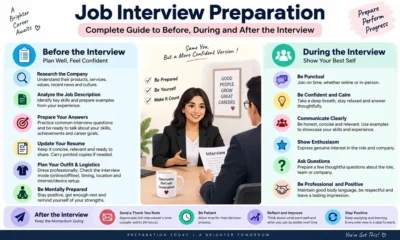

Job Interview Preparation: Complete Guide to Before, During and After the Interview
A complete job interview preparation guide covering common questions, competency answers, remote interviews, interview mistakes and what to do after...
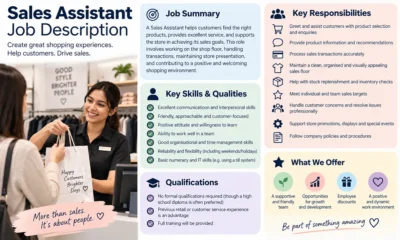

Sales Assistant Job Description: Duties, Skills, Salary and Career Guide UK
A Sales Assistant helps customers, processes purchases and supports the day-to-day running of a retail environment.


Web Developer Job Description: Duties, Skills, Salary and Career Guide UK
A Web Developer builds, maintains and improves websites and web applications. See the main duties, skills, qualifications, salary expectations and...


Choose an Entry-Level Job Based on Your Personality and Skills
Choosing your first job can be confusing. There are hundreds of entry-level jobs in the UK, but the best option...
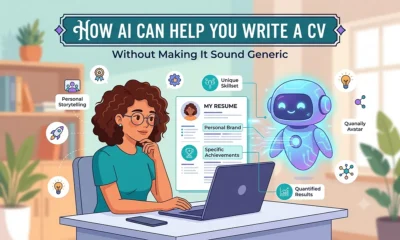

How AI Can Help You Write a CV Without Making It Sound Generic
Find out how to use AI to improve your CV, tailor your experience and write clearer applications without adding false...


Python Interview Cheat Sheet: 30 Python Concepts You Should Know Before Your Next Coding Interview
Python is one of the most popular programming languages for beginners and professional developers. It is widely used in web...
-
 Jobs8 months ago
Second Jobs in the UK: 15 Practical Ways to Earn Extra Income
-

 Career2 years ago
5 Free Job Posting Sites in the UK (For Employers)
-
 How-to8 months ago
How to Use Google Gemini for Freelance Work and Career Skills
-
 How-to8 months ago
Passive Income Ideas: Build Long-Term Income Streams
-

 AI & Tools8 months ago
How to Use Google Gemini for Productivity at Work
-

 Job Description2 years ago
Support Worker Job Description: Duties, Skills, Salary and Career Guide UK
-

 AI & Tools8 months ago
ChatGPT vs Microsoft Copilot: Which AI Is Best for You?
-

 Career3 years ago
13 Best Jobs That AI Can’t Replace: A Guide to Future-proof Careers