
AI & Tools
AI Basics That Will Save You Hours Every Week (Everybody Must Know)
Artificial Intelligence is no longer a futuristic concept. It’s already shaping how we search online, create content, run businesses, and even make daily decisions. Yet despite its growing presence, many beginners feel confused, overwhelmed, or unsure about where to start.
If you’ve ever felt like AI is too complex, too technical, or only meant for developers — you’re not alone. The truth is, most people struggle not because AI is difficult, but because they start with the wrong approach.
This guide will help you understand AI in a simple, practical way. You’ll learn what AI really is, why beginners feel stuck, and how you can start using AI tools confidently — even with zero technical background.
What Artificial Intelligence Really Means?
At its core, Artificial Intelligence refers to machines or software that can perform tasks typically requiring human intelligence. These tasks include understanding language, generating images, recognizing patterns, making recommendations, and solving problems.
Instead of thinking of AI as robots or complicated algorithms, it’s better to view it as smart assistance that helps you work faster and smarter.
Examples you already use daily include:
- Search engine suggestions
- Voice assistants
- Content recommendations on social media
- Smart photo editing tools
- Chat-based writing assistants
AI isn’t replacing human creativity — it’s amplifying it.
Why Most Beginners Struggle With AI?
Many beginners assume AI requires coding skills, technical knowledge, or expensive software. This misconception creates unnecessary fear and delays learning.
Here are the real reasons beginners struggle:
1. Information Overload:
There are thousands of AI tools available, making it difficult to decide where to begin.
2. Fear of Complexity:
Technical jargon like “machine learning,” “neural networks,” and “automation workflows” can intimidate newcomers.
3. Lack of Clear Use Cases:
Beginners often don’t know how AI fits into their daily work or income goals.
4. Tool Hopping:
Jumping between multiple tools without mastering one leads to confusion instead of progress.
The solution is simple: start small, stay practical, and focus on real benefits.
The Easiest Way to Understand AI Quickly:
The fastest way to learn AI is not by studying theory — it’s by using it.
A beginner-friendly learning path looks like this:
- Start with conversational AI tools to understand prompts and responses
- Experiment with content creation tools for writing, images, and videos
- Use productivity AI for research, summarization, and organization
- Apply AI to your personal goals like blogging, freelancing, or business
This hands-on approach builds confidence faster than tutorials alone.
Essential AI Skills Every Beginner Should Learn:
Instead of trying to master everything, focus on these high-impact skills:
Prompt Writing:
Learning how to ask AI clear and specific questions dramatically improves results.
Editing AI Output:
AI gives a starting point — refining and personalizing the output creates quality work.
Idea Generation:
AI is extremely powerful for brainstorming blog topics, business ideas, and content angles.
Automation Thinking:
Understanding how AI can remove repetitive tasks saves time and increases productivity.
These skills are practical, future-proof, and useful across industries.
Practical Ways Beginners Can Use AI Today:
AI becomes meaningful when it solves real problems. Here are beginner-friendly applications:
Content Creation:
Generate blog outlines, social captions, video scripts, and email drafts within minutes.
Learning & Research:
Summarize complex topics, explain difficult concepts, and gather insights faster.
Business Productivity:
Create proposals, automate responses, and improve customer communication.
Personal Growth:
Plan routines, generate study notes, and track goals more efficiently.
The goal is not to depend on AI — it’s to work smarter with it.
How AI Can Help Bloggers and Content Creators?
Since your work involves blogging, AI can dramatically speed up your content workflow while improving consistency and idea generation.
AI helps with:
- Keyword research and topic discovery
- SEO-friendly blog outlines
- Writing introductions and conclusions
- Creating Pinterest titles and descriptions
- Repurposing content across platforms
Instead of replacing your writing voice, AI acts as a creative partner that removes writer’s block and speeds up production.
Common Mistakes Beginners Should Avoid:
Learning AI becomes much easier when you avoid these pitfalls:
Expecting Perfect Output:
AI results often need refinement. Treat them as drafts, not final content.
Using Generic Prompts:
Vague instructions lead to average responses. Specific prompts create better outcomes.
Ignoring Creativity:
Blindly copying AI content reduces authenticity and engagement.
Trying Too Many Tools:
Master one or two tools before exploring others.
Consistency beats complexity every time.
A Simple 7-Day Beginner AI Learning Plan:
If you want a structured approach, follow this easy plan:
Day 1: Learn what AI can do and explore basic chat tools
Day 2: Practice writing prompts and refining responses
Day 3: Generate blog ideas and outlines
Day 4: Use AI for research and summarization
Day 5: Experiment with image or design AI tools
Day 6: Apply AI to productivity and daily tasks
Day 7: Create a small project using AI (blog, post, or idea list)
By the end of one week, AI will feel familiar instead of intimidating.
The Future of AI for Beginners:
AI adoption is growing rapidly, but the biggest opportunity belongs to early learners — not experts.
In the coming years, AI will become deeply integrated into:
- Online businesses
- Freelancing and remote work
- Content creation ecosystems
- Education and skill development
- Marketing and automation
Beginners who start today will build a strong advantage over those who delay learning.
The most valuable skill won’t be technical expertise — it will be knowing how to collaborate with AI effectively.
Final Thoughts:
AI is not as complicated as it appears. The confusion beginners feel usually comes from misinformation, tool overload, and unrealistic expectations.
When approached practically, AI becomes one of the most powerful productivity and creativity tools available today.
Start small. Focus on real use cases. Practice consistently.
Within a short time, AI will shift from feeling overwhelming to becoming an everyday advantage.
Remember — the goal isn’t to master AI overnight.
It’s to start using it confidently, one step at a time.







How to Use AI to Identify Your Transferable Skills
Changing careers can feel difficult because job titles often make people focus on what they have not done instead of...

How to Use AI Responsibly When Applying for Jobs
AI can help job seekers save time when researching roles, improving a CV, preparing a cover letter and practising for...

AI Skills Every Job Seeker Should Learn (Without Becoming an AI Expert)
Artificial intelligence is becoming part of everyday work in many industries. You do not need to become a programmer, data...


How to Get a Job in the UK: A Complete Step-by-Step Guide
Finding a job in the UK can feel difficult, especially when you are competing with many other applicants. The process...

How to Write a CV With No Experience
Find out how to write a CV with no experience, what to include and how students, graduates and first-time job...


What Is a Job Description and What Should You Look For?
What is a job description? Understand what it means, what to look for and how to use it to decide...

Job Interview Preparation: Complete Guide to Before, During and After the Interview
A complete job interview preparation guide covering common questions, competency answers, remote interviews, interview mistakes and what to do after...

Sales Assistant Job Description: Duties, Skills, Salary and Career Guide UK
A Sales Assistant helps customers, processes purchases and supports the day-to-day running of a retail environment.


Web Developer Job Description: Duties, Skills, Salary and Career Guide UK
A Web Developer builds, maintains and improves websites and web applications. See the main duties, skills, qualifications, salary expectations and...

Choose an Entry-Level Job Based on Your Personality and Skills
Choosing your first job can be confusing. There are hundreds of entry-level jobs in the UK, but the best option...

How AI Can Help You Write a CV Without Making It Sound Generic
Find out how to use AI to improve your CV, tailor your experience and write clearer applications without adding false...
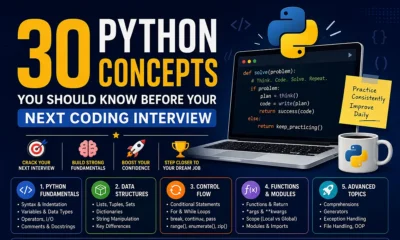

Python Interview Cheat Sheet: 30 Python Concepts You Should Know Before Your Next Coding Interview
Python is one of the most popular programming languages for beginners and professional developers. It is widely used in web...

AI Could Replace Millions of Entry-Level Jobs in the UK by 2035: Which Roles Are Most at Risk?
Artificial intelligence is changing the way people work across the UK. From customer service and administration to data processing and...


How to Get a Job When There Are Fewer Vacancies
Finding a job can become more difficult when fewer suitable vacancies are available. You may see the same roles repeatedly,...


How UK Job Seekers Can Use LinkedIn to Find More Job Opportunities
Use LinkedIn more effectively in your UK job search with practical advice on improving your profile, finding jobs, networking and...


Why Is It So Hard to Get a Job in the UK?
If you have been applying for jobs in the UK and getting very few replies, you are not alone. Many...


Entry-Level Jobs in the UK Compared: Pay, Difficulty, Stress and Career Growth
Starting your career can be confusing, especially when there are so many entry-level jobs available in the UK. While some...


Why Are Graduate Jobs Becoming Harder to Find in the UK?
Graduating from university is supposed to feel like the beginning of a new chapter. You finish your degree, prepare your...

Why Good Candidates Fail Job Interviews: 10 Reasons You May Not Get the Job
Find out why good candidates can fail job interviews, what may affect an employer's decision and how to improve before...


30 Entry-Level Jobs in the UK for People With Little or No Experience
Finding your first job can feel difficult, especially when many vacancies ask for previous work experience. The good news is...
-
 Career3 years ago
Career Opportunities for Seniors: 7 Jobs that are Perfect for Older Adults
-
 Jobs8 months ago
15 Best Second Jobs to Boost Your Income in the UK for 2026
-

 Career2 years ago
5 Free Job Posting Sites in the UK (For Employers)
-
 How-to8 months ago
How to Make Money with Google Gemini: Practical Methods Anyone Can Start
-
 AI & Tools7 months ago
10 Insane Ways Google Gemini Will Explode Your Productivity in 2026
-

 Job Description2 years ago
Support Worker Job Description: Duties, Skills, Salary and Career Guide UK
-

 AI & Tools7 months ago
ChatGPT vs Microsoft Copilot: Which AI Is Best for You?
-

 Career3 years ago
13 Best Jobs That AI Can’t Replace: A Guide to Future-proof Careers