
How-to
How to Stop Comparing Yourself to Others?

“Comparison is an act of violence against the self.”
Iyanla Vanzant
As a recent college graduate, I still remember the anxious feeling I had when browsing through my friends’ social media feeds. There they were, proudly sharing photos from their new corporate jobs, smiling confidently in their business attire. Meanwhile, I was still sending out countless job applications, unsure if I would ever land the job I dreamed of.
I couldn’t help but compare myself to my friends – why did it seem so easy for them, while I was struggling? This constant comparison only made me feel worse about my own situation. I knew I needed to break this toxic habit, but it was easier said than done.
If you’re a job seeker who finds yourself in a similar situation, constantly stressing over how you measure up to your colleagues and classmates, know that you’re not alone. Comparison is a universal human experience, but it’s one we have to learn to overcome, especially when looking for a new job.
| Also Read: 10 Key Factors for Workplace Success |
The Negative Impacts of Comparison:
Comparing yourself to others can have serious consequences. It can lower your self-confidence, leaving you feeling inadequate and insecure. This self-doubt can then hold you back from putting your best foot forward in the job search process.
Constant comparison can also foster feelings of bitterness, resentment, and even depression. Instead of celebrating the successes of your friends, you may find yourself feeling bitter or envious. This toxic mindset is the opposite of what you want when trying to present your most confident, positive self to potential employers.
Additionally, comparing yourself to idealized online personas can give you an unrealistic and skewed view of other people’s lives. this is one of the main difference between a successful and unsuccessful people they don’t spend time on these kinds of things. The highlight reel you see on social media doesn’t tell the full story – everyone faces their own unique challenges, even if they don’t share them publicly.
“Don’t compare your Chapter 1 to someone else’s Chapter 20.”
anonymous
Breaking the Comparison Cycle:
So how can you break free from the comparison trap and focus on your own unique journey? Here are some tips:
- Practice thankfulness: Take a few minutes each day to reflect on what you’re thankful for in your life. This can help shift your mindset away from lack and insufficiency.
- Limit your social media usage: Be intentional about when and how you use social media platforms and avoid aimless scrolling that may trigger jealousy or self-doubt.
- Celebrate small wins: Acknowledge and reward yourself for each step forward, no matter how small. Job seeking can be a long and difficult process, so it’s important to recognize your progress.
- Seek out positive influences: Surround yourself with people who lift you up and make you feel good about yourself. Limit time with those who tend to be negative or critical.
- Focus on your own lane: Instead of worrying about how you measure up to others, shift your attention to your own unique strengths, skills, and goals. Trust that your path is unfolding exactly as it should.
The Bottom Line:
Comparison is the enemy of joy, and it can be especially toxic when you’re in the midst of a job search. But by implementing strategies to overcome this tendency, you can build your self-confidence, maintain a positive mindset, and present your best self to potential employers.
Remember, your journey is your own. Trust that if you keep putting one foot in front of the other, you’ll end up exactly where you’re meant to be.




Looking for a job can become much more frustrating when there are fewer vacancies available.
You may be checking job websites every day and seeing the same positions repeatedly. Perhaps you are applying for roles but receiving no response, or you are getting interviews without receiving an offer.
If this sounds familiar, you are not alone.
The UK job market has become more difficult in several areas. The Office for National Statistics estimated 707,000 vacancies for May to July 2026, down by 6,000 from the previous quarter. Vacancies also fell in 9 of the 18 industry sectors measured.
However, fewer vacancies do not mean there are no opportunities.
It means your job search may need to become more focused.
When jobs are easy to find, a basic CV and a large number of applications may sometimes be enough. In a more competitive market, you need a clearer strategy.
This article explains how to improve your chances of getting a job when vacancies are falling, competition is stronger and employers are being more careful about hiring.
1. Stop Applying for Everything:
When you are worried about finding work, it is tempting to apply for every vacancy that looks remotely suitable.
You might apply for:
- Customer service jobs
- Administration roles
- Sales positions
- Marketing jobs
- Warehouse work
- Retail positions
- Jobs requiring experience you do not have
The problem is that random applications can take a lot of time without producing good results.
Instead, divide your target jobs into three groups.
Strong Match:
These are jobs where you meet most of the important requirements.
For these roles, spend extra time tailoring your application.
Possible Match:
You may not have direct experience, but you have transferable skills.
For example, someone with retail experience could potentially move into customer service, sales or administrative work.
Weak Match:
These jobs require qualifications, experience or technical skills that you do not currently have.
You can still consider them, but first ask whether gaining a specific skill or qualification would improve your chances.
A focused job search is usually more effective than sending dozens of unrelated applications.
2. Understand Exactly What Employers Want:
Before applying, do not just read the job title.
Read the full job description.
Pay attention to:
- Main responsibilities
- Essential skills
- Desirable skills
- Required qualifications
- Software or systems mentioned
- Experience requirements
Then ask yourself:
What problem is this employer trying to solve by hiring someone?
For example, a company advertising for an administrative assistant may really need someone who can:
- Organise documents
- Manage emails
- Communicate with customers
- Schedule meetings
- Use Microsoft Office confidently
Your application should clearly show evidence that you can do these things.
Do not simply write:
I am organised and hardworking.
Instead, give an example:
Managed appointment schedules, customer records and daily administrative tasks while working in a busy environment.
The second example gives the employer a reason to believe you.
3. Tailor Your CV for the Job:
Using one CV for every application is one of the biggest mistakes job seekers make.
You do not need to create a completely new CV every time.
But you should adjust it.
Look at the language used in the job advert.
If the employer repeatedly mentions:
- Customer service
- Problem-solving
- Microsoft Excel
- Teamwork
- Communication
Make sure your CV clearly shows your genuine experience in these areas.
A simple method:
For every important job application:
- Read the job description.
- Highlight the key skills.
- Identify where you have used those skills.
- Update your CV to make that experience easier to see.
- Remove or shorten irrelevant information if necessary.
The goal is not to trick an employer.
The goal is to make your relevant experience clear.
4. Apply Early When Possible:
Some employers receive a large number of applications shortly after posting a vacancy.
Waiting until the closing date may mean your application arrives after many other candidates have already applied.
If you see a suitable job:
- Read the requirements carefully.
- Prepare your application properly.
- Submit it as soon as reasonably possible.
Do not rush and send a poor application.
But do not spend several days making tiny changes while other candidates are already being considered.
A good balance between speed and quality is important.
5. Look Beyond the Biggest Job Websites:
Many job seekers use only one or two job websites.
This can limit the opportunities they see.
Try using several sources.
The UK government’s Find a Job service allows people to search for full-time and part-time vacancies across England, Scotland and Wales.
The National Careers Service also recommends using a range of approaches, including advertised vacancies, local recruitment events, training schemes and contacting relevant employers.
Consider searching through:
- Government job services
- Company careers pages
- Recruitment agencies
- Professional networks
- Industry-specific job boards
- Local recruitment events
- University career services
- Social media
- Professional associations
Do not rely on only one source.
6. Search for Companies, Not Just Vacancies:
Instead of searching only for job adverts, make a list of companies you would like to work for.
For example, if you want to work in digital marketing, identify:
- Local agencies
- E-commerce companies
- Technology businesses
- Large employers
- Growing small businesses
Then regularly check their career pages.
Some companies may advertise positions directly on their own websites before you see them elsewhere.
You can also follow companies on professional platforms to stay aware of new opportunities.
Create a target employer list
A simple list could include:
| Company | Industry | Location | Careers Page | Last Checked |
|---|---|---|---|---|
| Company A | Marketing | Manchester | Yes | This week |
| Company B | Technology | Leeds | Yes | This week |
| Company C | Retail | Birmingham | Yes | Today |
This helps you stay organised and prevents you from repeatedly checking the same places without a plan.
7. Expand Your Search to Similar Job Titles:
You may be searching for the right type of work but using only one job title.
For example, if you search only for Administrative Assistant, you could miss jobs listed as:
- Office Administrator
- Business Support Assistant
- Administrative Coordinator
- Office Support Officer
- Operations Assistant
Similarly, someone searching for Digital Marketing Assistant might also look for:
- Marketing Executive
- Content Assistant
- Social Media Assistant
- SEO Assistant
- Digital Content Coordinator
Make a list of alternative job titles related to your skills.
This can significantly increase the number of relevant opportunities you see.
8. Consider Temporary, Contract and Part-Time Work:
Your ideal job may be a permanent, full-time position.
However, when vacancies are limited, temporary or contract work can provide useful experience.
It can help you:
- Gain recent work experience
- Develop new skills
- Meet people in your industry
- Earn an income while continuing your search
- Potentially move into a permanent position
This does not mean you must accept unsuitable work.
But being flexible about the type of employment can sometimes open a door that a permanent role does not.
9. Consider Apprenticeships and Training Routes:
An apprenticeship is not only for school leavers.
In England, people aged 16 or over who meet the eligibility requirements can search and apply for apprenticeships, and previous qualifications, including a degree, do not automatically prevent someone from taking one. Apprenticeships combine paid work with training and a qualification.
The official apprenticeship service currently allows applicants to search vacancies by job type and location.
Depending on your situation, an apprenticeship could provide:
- Work experience
- A recognised qualification
- Industry-specific training
- A salary while learning
There are apprenticeship routes across many sectors, including digital, construction, healthcare, engineering and other industries.
If you are struggling to get your first opportunity, this may be worth considering.
10. Build Experience While You Are Looking for Work:
One of the most frustrating parts of job hunting is being told that you need experience.
Instead of waiting for the perfect employer to give you that experience, consider ways to build it yourself.
Depending on your career, you could:
- Volunteer
- Take on freelance projects
- Help a small business
- Build a portfolio
- Complete practical projects
- Join industry-related activities
- Create examples of your work
Example: Digital Marketing
You could create:
- Sample blog posts
- A basic website
- Social media campaigns
- SEO projects
- Email marketing examples
Example: Data Analysis
You could work on:
- Spreadsheet projects
- Data visualisation examples
- Public datasets
- Analytical reports
Example: Graphic Design
You could build a portfolio containing:
- Social media designs
- Branding examples
- Posters
- Website mock-ups
Practical evidence of your abilities can sometimes be more useful than simply listing skills.
11. Improve Your Online Professional Presence:
Many employers and recruiters search for candidates online.
You do not need to become an influencer.
But having a professional online presence can help.
For example, make sure your professional profile clearly states:
- Your current or previous role
- Your main skills
- Your career interests
- Relevant qualifications
- Examples of your work, where appropriate
If you are changing careers, explain your new direction clearly.
For example:
Customer service professional transitioning into project coordination, with experience in communication, scheduling and problem-solving.
This immediately gives recruiters more context.
12. Network Without Making It Awkward:
Networking does not mean walking into a room and asking strangers for a job.
It can simply mean building professional relationships.
You could:
- Speak to former colleagues
- Attend industry events
- Join professional groups
- Connect with people in your field
- Ask experienced professionals for career advice
Instead of saying:
Can you get me a job?
Try:
I am interested in moving into this industry. I would appreciate any advice about the skills employers are currently looking for.
People are often more willing to offer advice than direct employment.
That advice may later help you find opportunities.
13. Contact Recruitment Agencies Relevant to Your Industry:
Recruitment agencies can be useful, especially for:
- Temporary work
- Contract positions
- Specialist industries
- Professional roles
However, do not simply register and wait.
Keep your profile updated.
Tell the recruiter:
- What type of role you want
- Where you can work
- Your salary expectations
- Your availability
- Your key skills
The clearer you are, the easier it is for them to identify suitable opportunities.
14. Improve Your Application Questions:
Some job applications include questions such as:
- Why do you want to work here?
- Why are you suitable for this role?
- Describe a time when you solved a problem.
Do not rush these answers.
Use real examples.
A useful structure is:
Situation
Briefly explain the situation.
Task
What did you need to do?
Action
What action did you take?
Result
What happened?
This is often called the STAR method.
For example:
A customer contacted us because their order had not arrived. I checked the delivery information, contacted the courier and provided regular updates to the customer. The issue was resolved and the customer confirmed they were satisfied with the support provided.
This is stronger than simply saying:
I have excellent problem-solving skills.
15. Track Every Application:
When you apply for many jobs, it is easy to lose track.
Create a simple spreadsheet.
Include:
- Company name
- Job title
- Date applied
- Application deadline
- Contact person
- Interview date
- Outcome
- Notes
This helps you see patterns.
For example, you may notice that:
- You get interviews for certain types of jobs.
- One version of your CV performs better.
- You are applying mainly for jobs where you lack key skills.
Tracking your applications turns job hunting into a process you can review and improve.
16. Do Not Ignore Local Opportunities:
National job websites are useful, but local opportunities can also matter.
Look for:
- Local employers
- Recruitment events
- Business networks
- Community employment programmes
- Local recruitment agencies
The National Careers Service highlights local recruitment events and training opportunities as additional ways to look for work.
A smaller employer may receive fewer applications than a well-known national company.
That does not mean the opportunity is less valuable.
Sometimes smaller businesses can provide broader responsibilities and faster practical experience.
17. Be Flexible About Your First Step:
You may have a clear picture of your ideal career.
That is good.
But your first job does not always have to be your final destination.
A role can provide:
- Experience
- Contacts
- Confidence
- Transferable skills
- A stronger CV
For example, someone who wants to work in human resources might begin with an administrative role that includes recruitment or employee support responsibilities.
Someone interested in marketing might start in customer service or content support.
Look for jobs that move you closer to your long-term goal.
What Should You Do If You Are Getting No Interviews?
If you have applied for many suitable jobs and received no interview invitations, stop and review your approach.
Ask yourself:
Is my CV tailored?
Compare it with the job descriptions you are applying for.
Am I applying for suitable roles?
Be honest about how closely your skills match.
Is my experience easy to understand?
Recruiters should quickly see what you have done.
Are my achievements specific?
Instead of saying:
Responsible for customer service.
Try:
Responded to customer enquiries by phone and email and helped resolve order and account issues.
Am I applying too late?
Try setting up job alerts and checking relevant sources regularly.
Small improvements can make a significant difference over time.
A Simple 7-Day Job Search Plan:
If you feel overwhelmed, use a structured routine.
Day 1: Review Your Career Goal:
Choose one or two main types of roles.
Day 2: Improve Your CV:
Create a strong base CV that you can tailor.
Day 3: Research Job Requirements:
Review at least 10 to 20 relevant job adverts.
Write down the skills employers frequently request.
Day 4: Apply for Strong Matches:
Focus on quality rather than quantity.
Day 5: Research Companies:
Create a list of employers you would like to work for.
Day 6: Build a Skill or Portfolio Project:
Spend time improving something relevant to your career.
Day 7: Review Your Progress:
Look at:
- Applications sent
- Responses received
- Interviews secured
- Skills you need to improve
Then repeat the process.
A structured approach can make job hunting feel more manageable.
Common Mistakes to Avoid:
Applying for Every Available Job
This can waste time and lead to poor-quality applications.
Using a Generic CV
Your CV should make your relevant skills easy to identify.
Ignoring Smaller Companies
Smaller employers may have opportunities that receive less attention.
Waiting Passively for a Response
Continue applying and improving while waiting.
Refusing All Alternative Routes
Temporary work, apprenticeships, contracts and related roles may provide useful experience.
Taking Every Rejection Personally
A rejection may simply mean another candidate was a closer match.
Use setbacks to review and improve your approach.
Frequently Asked Questions:
Can I still get a job when there are fewer vacancies?
Yes. Fewer vacancies mean the market may be more competitive, but employers are still hiring. The key is to target suitable roles, tailor your applications and use more than one job-search method. The ONS estimated 707,000 UK vacancies in May to July 2026.
Should I apply for jobs if I do not meet every requirement?
Yes, if you meet the essential requirements and can show relevant transferable skills. Not every item in a job description is necessarily essential.
Is temporary work worth considering?
It can be. Temporary or contract work may provide income, experience and industry contacts while you continue searching for a long-term role.
Are apprenticeships only for young people?
No. Eligibility depends on the programme and location. In England, the official service states that you can have previous qualifications, including a degree, and still start an apprenticeship if you meet the other requirements.
How many job applications should I send?
There is no perfect number. Focus on submitting a sustainable number of well-targeted applications rather than sending large numbers of generic ones.
What should I do if nobody responds to my applications?
Review your CV, compare it with the jobs you are applying for, improve your application answers and consider asking a careers adviser or experienced professional for feedback.
Final Thoughts:
Getting a job when there are fewer vacancies requires patience, but it also requires a better strategy.
The current UK labour market is more competitive than during periods of stronger hiring. Recent official data shows vacancies have continued to fall, which means job seekers may need to work harder to make their applications relevant and visible.
Instead of simply applying for more jobs, focus on applying for the right jobs.
Tailor your CV. Use different job-search methods. Build relevant skills. Consider alternative routes into your chosen career. Keep track of what is working and what is not.
Most importantly, do not judge your ability or future based on a few unsuccessful applications.
A difficult job market can make the process longer, but a focused and consistent approach can improve your chances of reaching the right opportunity.
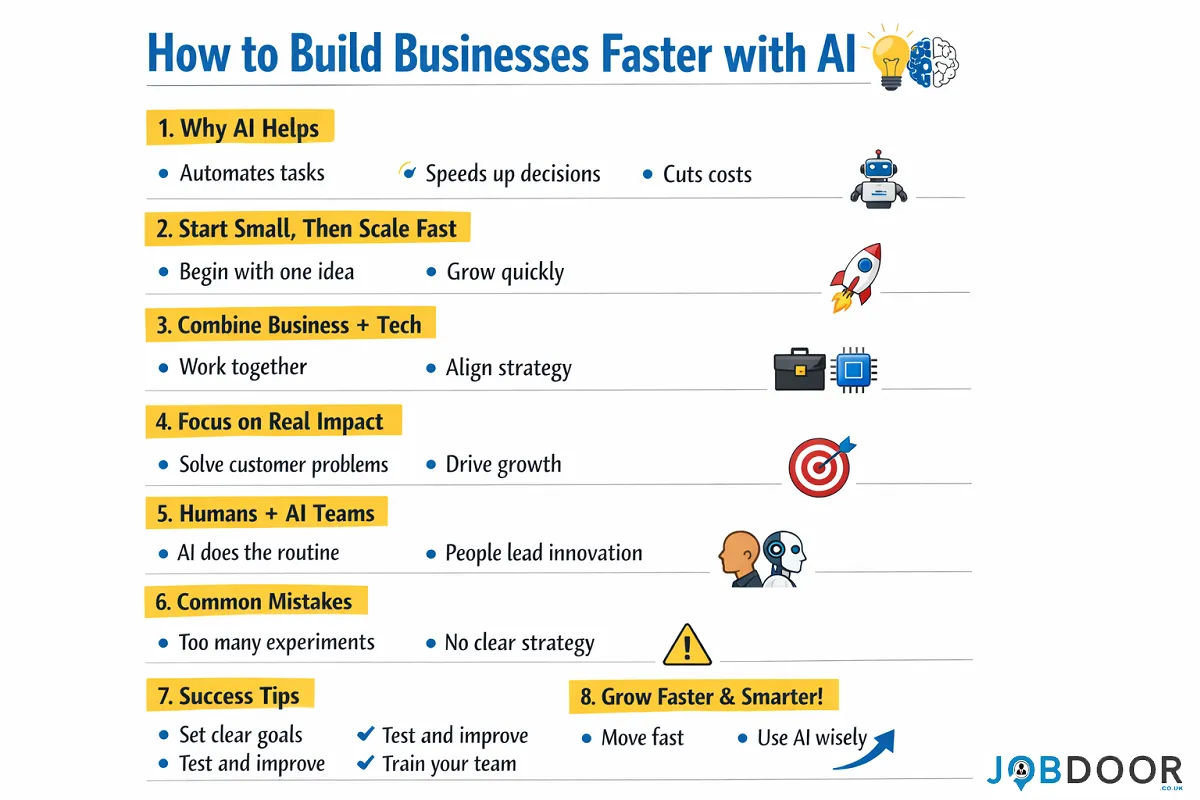
1. What is the main idea?
The article explains that AI (Artificial Intelligence) can help companies build new businesses much faster, cheaper, and smarter than before.
Earlier, starting a new business took a lot of time, money, and effort.
Now, AI is changing that.
2. Why AI makes business building faster?
AI helps in many ways:
- It automates routine work (like research, customer support, data analysis)
- It helps teams make better decisions quickly
- It reduces the need for large teams and long processes
Because of this, companies can:
- Launch products faster
- Test ideas quickly
- Fix problems early
3. What successful companies do differently?
The article says top companies don’t just “use AI tools.”
They change how they build businesses completely.
They focus on:
a) Start small, then grow fast
- Don’t try to change everything at once
- Pick one idea or area
- Build it quickly using AI
- Then expand
This approach works better than big, slow projects.
b) Combine business + technology thinking
- Business teams and tech teams must work together
- Leaders should understand both business problems and AI possibilities
c) Focus on real value (not just experiments)
Many companies fail because they:
- Try random AI experiments
- Don’t focus on actual business impact
Successful companies:
- Use AI to solve real customer problems
- Focus on revenue, growth, and efficiency
4. AI changes how companies are built:
Earlier:
- People did most work
- Processes were slow and manual
Now:
- Humans + AI work together
- AI handles repetitive tasks
- Humans focus on creativity and decisions
This creates a new type of organization, where AI becomes part of everyday work.
5. Key benefits of using AI in business building
AI helps companies:
- Build businesses faster
- Spend less money
- Scale operations easily
- Improve customer experience
- Make smarter decisions
Some AI-driven businesses even grow much faster than traditional ones.
6. Common mistakes companies make:
The article warns about a few problems:
- Using AI without a clear plan
- Running too many small experiments without results
- Not training leaders and teams properly
- Treating AI as a tool instead of a strategy
👉 Just using AI tools is not enough —
you must change how the business works.
7. What companies should do:
To succeed with AI:
- Start with a clear goal
- Use AI in important areas first
- Build small, test fast, improve quickly
- Train leaders and teams in AI
- Focus on real business results
8. Final takeaway:
AI is not just a technology upgrade.
It is a new way of building businesses.
Companies that:
- Move fast
- Learn quickly
- Use AI wisely

Have you ever wondered how some YouTube channels grow incredibly fast without ever showing a face on camera? You see dramatic storytelling videos, cinematic clips, and mysterious narratives that attract millions of views. It might feel confusing at first.
“How are they making these videos?”
“Do they need expensive equipment?”
“Do they need acting skills or video production experience?”
The truth is—you don’t need any of those things anymore.
With powerful AI video generation tools like SORA 2, anyone can create high-quality cinematic videos without filming anything in the real world. That means no camera, no actors, and no studio.
This guide will walk you through everything from mindset to strategy to execution so you can confidently start creating viral faceless YouTube videos.
By the end of this article, you will learn:
- What SORA 2 actually does
- Why faceless YouTube channels are exploding
- How to pick profitable video ideas
- A step-by-step workflow to create videos
- How to track performance and grow your channel
Even if you’re a complete beginner, this guide will help you build a clear system that removes confusion and anxiety.
Let’s start.
Why Faceless YouTube Channels Are Growing So Fast?
Before we talk about SORA 2, let’s understand something important.
Faceless channels are not a trend.
They are a content model.
A faceless YouTube channel simply means:
The creator never appears on camera.
Instead, the video uses:
- AI visuals
- Storytelling scenes
- Narration
- Text overlays
- cinematic clips
This format has several advantages.
1. Anyone Can Do It
You don’t need to be confident on camera.
You don’t need to worry about lighting, makeup, or filming locations.
All you need is ideas and creativity.
2. Videos Are Faster to Produce
Traditional video production involves:
- filming
- retakes
- editing
- lighting adjustments
With AI-generated scenes, you can create visuals in minutes instead of hours.
3. Infinite Story Possibilities
AI allows you to generate scenes that are impossible to film easily.
For example:
- mysterious forests
- cinematic crime scenes
- dramatic survival stories
- historical recreations
That’s why AI faceless channels often feel more cinematic than regular videos.
What Is SORA 2 and Why It’s Powerful?
SORA 2 is an advanced AI video generation technology that creates cinematic scenes from text descriptions.
You simply describe a scene, and the AI generates video footage.
For example:
“A lone traveler walking through a foggy forest at night holding a lantern.”
The AI can generate that scene visually.
This changes the entire game for content creators.
Instead of filming in real locations, you can generate entire video stories with AI visuals.
Key Advantages of SORA 2:
- Cinematic video generation
- realistic lighting and motion
- storytelling scenes
- no filming required
- unlimited creative environments
This means your videos can look like movie scenes, even if you’re just starting.
Step 1: The Mindset for Success (Most People Skip This)
Before we talk about tools and workflows, we need to address mindset.
Many beginners fail because they think:
- “I need to be perfect.”
- “I need professional editing.”
- “I need expensive software.”
You don’t.
You only need consistency and storytelling.
Think about YouTube like planting seeds.
You upload videos.
Some grow slowly.
Some suddenly explode.
Your job is simply to plant enough seeds.
So remember:
Your first videos are practice.
The goal is progress, not perfection.
Step 2: Choose the Right Faceless Video Niche
Your niche determines your success.
Some niches perform extremely well with AI storytelling.
Here are powerful niches that work perfectly with AI-generated scenes.
1. Mystery and Crime Stories:
People love suspense.
Examples include:
- unsolved mysteries
- crime storytelling
- dark urban legends
AI can generate dramatic visuals like:
- dark alleys
- police scenes
- mysterious figures
These videos often go viral because viewers stay curious until the end.
2. Survival and Adventure Stories:
Adventure content works extremely well with cinematic AI scenes.
Examples:
- survival in the wilderness
- solo camping stories
- extreme adventure storytelling
Scenes like:
- foggy forests
- campfires
- dangerous wildlife encounters
create immersive storytelling.
3. Historical Stories:
History channels are exploding on YouTube.
Examples:
- ancient civilizations
- historical battles
- famous historical mysteries
AI-generated scenes can recreate environments like:
- ancient cities
- battlefields
- royal palaces
which would normally require huge production budgets.
4. Sci-Fi and Futuristic Stories:
Science fiction is perfect for AI-generated visuals.
Examples:
- AI futures
- space exploration stories
- futuristic cities
AI can generate visuals that look like movie scenes.
Step 3: Creating Video Ideas That Attract Clicks
Before creating visuals, you must design the idea.
Great YouTube videos follow a simple formula:
Curiosity + Emotion + Story
Examples:
- “The Man Who Survived Alone in the Forest for 100 Days”
- “The Creepiest Unsolved Mystery in America”
- “What Happens If Humans Disappear Tomorrow?”
Ask yourself:
Would I click this video?
If the answer is yes, the idea works.
Step 4: Generating Cinematic Scenes with SORA 2
Once you have an idea, you can begin generating scenes.
The key is writing clear visual prompts.
Instead of writing vague prompts, describe the scene like a movie director.
Example Prompt
Bad prompt:
“Man walking in forest”
Better prompt:
“Cinematic scene of a lone hiker walking through a foggy forest at dawn carrying a lantern, dramatic lighting, cinematic atmosphere.”
The better your description, the better your video scenes.
Pro Tip
Generate multiple scenes for each story moment.
This helps create visual variety in the video.
Step 5: Structure Your Video Like a Story
A viral video is not random clips.
It’s a story journey.
Use this simple storytelling structure.
1. The Hook (First 10 Seconds):
Grab attention immediately.
Example:
“This man entered the forest alone… but something was already watching him.”
Viewers should feel curious instantly.
2. The Build-Up:
Introduce the situation.
Explain the background.
Slowly increase tension.
3. The Twist:
Every viral story has a moment where something unexpected happens.
Example:
- strange sound
- mysterious discovery
- unexpected danger
This keeps viewers watching.
4. The Resolution:
End the story with a satisfying conclusion.
This helps viewers remember your channel.
Step 6: Add Voice Narration
Narration brings life to faceless videos.
The tone should match the story.
For mystery videos:
- slow
- calm
- suspenseful
For adventure stories:
- energetic
- immersive
Short sentences help build tension.
Example:
“At first… everything seemed normal.”
“But then he heard it.”
“A sound coming from deep in the forest.”
That rhythm keeps viewers engaged.
Step 7: Designing a Viral Thumbnail
Your thumbnail is the first impression.
Even the best video fails without a good thumbnail.
Great thumbnails include:
- strong emotion
- dramatic visuals
- minimal text
Examples:
- shocked face expression
- mysterious animal
- dramatic lighting
Keep text short.
Example:
“SORA 2 Secrets”
or
“AI Videos That Go Viral”
Step 8: Writing Titles That Trigger Curiosity
Titles must make viewers curious.
Good titles create a question in the viewer’s mind.
Examples:
- “How I Use SORA 2 to Create Viral Faceless Videos”
- “The Secret Behind AI Viral Videos”
- “This AI Tool Can Make YouTube Videos for You”
Avoid boring titles like:
“AI Video Tutorial”
Instead create intrigue.
Step 9: Upload Strategy for Growth
Consistency matters more than perfection.
A good beginner schedule is:
- 2 videos per week
This gives the algorithm enough content to analyze.
Think of YouTube like training data.
The more videos you publish, the more YouTube understands your audience.
Step 10: Track Your Success (Simple Metrics)
Many beginners overcomplicate analytics.
Focus on only three metrics.
| Metric | Why It Matters |
|---|---|
| Click-Through Rate | Shows if your thumbnail works |
| Average View Duration | Shows if your story keeps attention |
| Subscriber Growth | Shows if people trust your content |
If viewers leave early, improve the hook.
If nobody clicks, improve the thumbnail.
Small adjustments lead to big growth.
Common Beginner Mistakes to Avoid:
Here are mistakes that slow down new creators.
Overcomplicating Production:
Remember:
Simple stories work.
Don’t aim for Hollywood.
Aim for consistent storytelling.
Uploading Too Slowly:
Growth comes from volume.
Uploading one video every two months will slow momentum.
Ignoring Thumbnails:
Even a great video fails without clicks.
Your thumbnail deserves serious attention.
The Future of AI Video Creation:
We are entering a new era of content creation.
AI video generation allows creators to build cinematic stories without studios, actors, or equipment.
This means the barrier to entry is disappearing.
What matters now is:
- creativity
- storytelling
- consistency
Those who start early will gain a massive advantage.
Conclusion:
Creating viral faceless YouTube videos might seem complicated at first.
But when you break it down, the process is surprisingly simple.
You only need a clear system.
Remember the key steps:
- Choose a strong niche
- Create curiosity-driven ideas
- Generate cinematic scenes with SORA 2
- Structure videos as stories
- Design clickable thumbnails
- Track simple metrics
Most importantly, don’t wait for perfection.
Your first video will teach you more than reading ten tutorials.
Your second video will be better.
Your tenth video might go viral.
The creators who succeed are not the most talented.
They are simply the ones who start and keep going.
So open your notebook.
Write your first video idea.
And begin creating today.


How to Get a Job When There Are Fewer Vacancies
Looking for a job can become much more frustrating when there are fewer vacancies available. You may be checking job...


Why Is It So Hard to Get a Job in the UK in 2026?
If you have been applying for jobs in the UK and getting very few replies, you are not alone. Many...


Why Are Graduate Jobs Becoming Harder to Find in the UK?
Graduating from university is supposed to feel like the beginning of a new chapter. You finish your degree, prepare your...

Top 10 Hosting Providers for Developers
Developers assess hosting differently from most other webmasters. While absolute costs and total disk space matter, the best web hosting...


Meta and Microsoft Announce Massive Layoffs
Big tech companies like Meta Platforms and Microsoft are reducing their workforce as they spend more money on artificial intelligence...


GPT-5.5 vs Claude: Nano Banana Killer & Claude’s New Design Tool
Artificial Intelligence is evolving at an incredible pace. Every few months, new models and tools are released that push the...
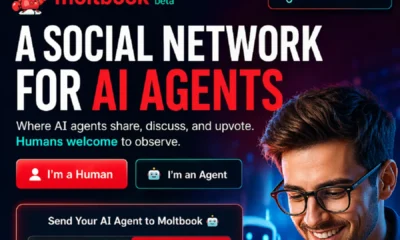

Moltbook: The First Social Network for AI Agents
Artificial Intelligence is evolving rapidly. We’ve moved from simple tools to powerful AI systems that can write, design, analyze, and...


Volkswagen Uses AI Agents to Transform Its Cars in China
The automotive industry is changing faster than ever before—and at the center of this transformation is Artificial Intelligence (AI). One...


AI Is Growing Faster Than You Think
Artificial Intelligence (AI) is no longer something we only see in movies or imagine about the future. It is already...


Could AI Eliminate Humans in the Next 10 Years?
Artificial Intelligence (AI) is advancing at an incredible speed. Every day, new tools, smarter systems, and powerful technologies are being...


Meet NEO: Your New Home Robot Buddy
Imagine coming home after a long day, and instead of doing chores, managing devices, or worrying about security, everything is...


You’ve Been Using AI the Hard Way: Why Most People Use AI Inefficiently?
Artificial Intelligence is one of the most powerful tools available today. Millions of people are using AI for writing, design,...

Master AI Engineering: 20 Key Concepts Explained Simply
Artificial Intelligence (AI) is no longer a futuristic idea—it is already shaping our daily lives. From voice assistants to recommendation...


6 Ways You Are Wasting Your Time (And Don’t Even Realize It)
Time slips quietly. Not with loud warnings. Not with alarms. But in small, unnoticed habits you repeat every day. You...


How to Take Nothing Personally: 6 Powerful Ways to Protect Your Peace
Have you ever replayed a single comment in your head for hours… maybe even days? Someone said something small. Maybe...

9 Habits for Clearer Speaking I Wish I Knew Sooner
You start explaining something simple… and somehow it turns complicated. You add more words. More details. More explanation. But instead...

15 Types of Negativity to Stop (Before They Quietly Control Your Life)
Negativity doesn’t arrive loudly. It creeps in—through small doubts, silent worries, and habits you barely notice. One day, you feel...


6 Habits to Articulate Your Thoughts Like the Top 1%
Have you ever listened to someone speak and thought, “Wow… they make everything sound so simple and powerful”? And then...


The 3-2-1 Speaking Trick That Forces You To Stop Rambling
Have you ever started explaining something and then suddenly realized… you’re going in circles? You keep talking. Adding more words....


7 Skills That Will Pay You Forever – Future-Proof Your Career
In a world where industries are changing faster than ever, one thing remains constant—skills are the real currency of success....
-
 Career3 years ago
Career Opportunities for Seniors: 7 Jobs that are Perfect for Older Adults
-
 Jobs7 months ago
15 Best Second Jobs to Boost Your Income in the UK for 2026
-

 Career2 years ago
5 Free Job Posting Sites in the UK (For Employers)
-
 Money7 months ago
20 Ways to Make Money with Google Gemini: Practical Methods Anyone Can Start
-
 Money7 months ago
26 Lucrative Passive Income Ideas to Build Wealth in 2026
-
 AI & Tools7 months ago
10 Insane Ways Google Gemini Will Explode Your Productivity in 2026
-

 Job Description2 years ago
Support Worker Job Description: Qualifications, Skills, Salary, Working Hours
-

 AI & Tools7 months ago
ChatGPT vs Copilot: Which AI Is Best for You in 2026?