
AI & Tools
AI Search Visibility: How Businesses Can Build Online Authority
A practical guide to AI search visibility, covering useful content, topical authority, brand consistency, independent mentions and responsible AI search optimisation.

AI search is changing how people find information, compare businesses and choose products or services. Instead of typing a few keywords into a search engine, users can now ask detailed questions and receive an answer that may include links, sources and recommendations.
For businesses, this creates a new visibility challenge: how do you make your website and brand useful enough to appear when people ask AI assistants questions related to your market?
There is no guaranteed formula for appearing in an AI-generated answer. However, businesses can improve their chances by building trustworthy content, making information easy to understand, maintaining a consistent online presence and creating pages that genuinely answer customer questions.
This guide explains a practical approach to AI search visibility without relying on shortcuts or attempts to manipulate AI systems.
What Is AI Search Visibility?
AI search visibility is the ability of a business, website, product or professional to appear in answers generated by AI assistants and AI-powered search experiences.
Depending on the system and the user’s question, an answer may draw on websites, business information, reviews, public databases, news coverage and other online sources.
This makes the goal different from traditional search rankings. A page can rank for a keyword in a conventional search engine while another source may be selected as a useful reference in an AI answer.
Why AI Visibility Matters for Businesses
People increasingly use conversational tools to research products, compare options, evaluate services and solve problems. A business that is absent from these conversations can miss opportunities even if its traditional search presence is strong.
| Traditional search | AI-assisted search |
|---|---|
| Users often scan several results | Users may receive a synthesized answer |
| Keywords are an important targeting signal | Meaning, context and useful information matter |
| Ranking position is easy to observe | AI visibility can vary by question and system |
| Pages compete for search results | Sources may be selected to support an answer |
Start With the Questions Your Customers Ask
The strongest starting point is not trying to predict an AI model. Start with your audience.
Write down the questions a potential customer might ask before choosing your product or service.
- What is the best option for my situation?
- How does this service work?
- What should I check before buying?
- What are the main alternatives?
- What are the advantages and limitations?
- How much does this type of service usually cost?
- Which option is suitable for a beginner?
- What mistakes should I avoid?
Group these questions into topics. This gives you a useful content map instead of a list of isolated keywords.
Create Pages That Answer Real Questions
AI systems need understandable information. Your website should therefore make important facts easy for both people and machines to interpret.
A useful page should normally have:
- A clear page purpose
- A direct introduction
- Descriptive headings
- Specific explanations
- Examples or use cases
- Comparison information where relevant
- Frequently asked questions
- Links to supporting pages
- Accurate business or product information
Do not create pages simply because an AI tool suggests a keyword. The page should solve a genuine information need.
Make Important Information Easy to Extract
Good formatting helps readers quickly find what they need and also gives search systems clearer signals about the subject of a page.
For example, if a customer wants to compare three services, a well-structured table can be more useful than several long paragraphs.
Use:
- Short paragraphs
- Descriptive H2 and H3 headings
- Bullet lists
- Comparison tables
- Clear definitions
- Specific examples
- FAQ sections
- Useful internal links
💡 Practical tip: Read each important page and ask, “Could someone quickly find the answer to the main question?” If not, improve the structure before adding more content.
Build Topical Authority Instead of Publishing Random Articles
One article rarely demonstrates deep expertise. A stronger website builds a connected group of resources around an important subject.
For example, a company selling accounting software could create:
- A guide to choosing accounting software
- A comparison of different software types
- A guide for small businesses
- A guide for freelancers
- An explanation of common accounting workflows
- A guide to switching platforms
- Answers to common setup questions
These pages should support one another through natural internal links. Together, they create a clearer picture of the site’s expertise.
Strengthen Your Brand’s Online Identity
AI visibility is not only about your own website. Information about a business can appear across many parts of the web.
- Your official website
- Professional profiles
- Industry directories
- Business listings
- Review platforms
- Relevant publications
- Independent articles and interviews
- Social profiles
Keep important details consistent wherever possible. Business name, services, location, expertise and other key facts should not contradict one another across major sources.
Earn Independent Mentions the Right Way
Independent coverage can strengthen a brand’s reputation, but it should be earned rather than manufactured.
Useful approaches include:
- Contributing genuine industry expertise
- Providing useful expert commentary
- Publishing original research
- Sharing meaningful case studies
- Building relationships with relevant journalists and publishers
- Participating in professional communities
- Creating resources that others naturally want to reference
Avoid creating fake reviews, spammy mentions, copied profiles or large numbers of low-quality pages simply to influence AI results.
Use Original Information Whenever Possible
Generic content is easy to reproduce. Original information gives people a stronger reason to visit and reference your site.
- Original research
- Customer surveys
- Industry observations
- Case studies
- Expert interviews
- Original comparisons
- First-hand testing
- Practical data and examples
If you have real experience with a subject, show it. Explain what you tested, what happened and what other people should consider.
Don’t Confuse AI Visibility With Guaranteed Recommendations
AI-generated answers can change. Different users can ask different questions, and different systems may use different sources or methods.
That means no responsible SEO strategy can promise that a business will always be recommended by ChatGPT or another AI assistant.
The better goal is to build a strong information footprint that is useful across search engines, AI systems and human readers.
How to Monitor AI Search Visibility
You can create a simple tracking process without treating AI results as a fixed ranking position.
| Metric | What to check |
|---|---|
| Brand mentions | Does your business appear for relevant questions? |
| Competitor mentions | Which competing businesses appear instead? |
| Sources | Which websites are being referenced? |
| Content gaps | What useful information is missing from your site? |
| Accuracy | Is information about your business represented correctly? |
Test a consistent set of customer questions periodically. Record the answers, sources and competitors you see. Look for patterns rather than reacting to one result.
A Simple AI Visibility Workflow
Use this six-step process when improving your website.
- List customer questions: Collect the questions people ask before choosing a product or service.
- Test representative questions: Check how different AI search experiences respond.
- Review the sources: Look for websites, publications and other information that appear repeatedly.
- Identify gaps: Find useful questions your website does not answer well.
- Improve your content: Add accurate, original and clearly structured information.
- Measure over time: Repeat the process and track meaningful changes.
How AI Can Help With the Work
AI tools can help with parts of an AI visibility workflow, but human review remains important.
- Brainstorming customer questions
- Grouping related topics
- Finding content gaps
- Creating article outlines
- Summarising research
- Comparing competing pages
- Checking readability
- Repurposing existing content
AI should support the process, not replace fact-checking, editorial judgment or expertise. Important claims should be verified before publication.
Common AI Search Visibility Mistakes
- Writing only for AI: Content should first be useful to people.
- Publishing large volumes of generic articles: More pages do not automatically create authority.
- Making unsupported claims: Accuracy matters for both trust and reputation.
- Ignoring existing SEO: Technical SEO, crawlability and useful content still matter.
- Creating fake mentions: Manipulative activity can damage credibility.
- Tracking one AI response: AI answers can vary, so look for broader patterns.
- Forgetting internal links: Connected content helps users move through your site.
AI Search Visibility Checklist
- ☐ Identify the questions your audience asks
- ☐ Create useful pages around important topics
- ☐ Use clear H2 and H3 headings
- ☐ Add tables, lists and FAQs where useful
- ☐ Publish original examples and research
- ☐ Build relevant internal links
- ☐ Keep business information consistent
- ☐ Earn genuine independent coverage
- ☐ Review how AI systems represent your business
- ☐ Correct inaccurate information when possible
- ☐ Continue improving content based on real customer needs
Frequently Asked Questions
Can a business guarantee that ChatGPT will recommend it?
No. AI answers can vary by question, user, system and available information. A business can improve its online authority and information quality, but it cannot guarantee a particular AI recommendation.
Is traditional SEO still important for AI search?
Yes. A technically accessible website with useful, well-structured content remains a strong foundation. AI search does not make basic website quality irrelevant.
Should I create content specifically for AI?
Create content for people first. Clear structure, direct answers, useful data and accurate information can also make content easier for search and AI systems to understand.
How often should I check AI search results?
There is no universal schedule. A monthly or quarterly review can be useful for many businesses, with more frequent checks when a major product, service or market changes.
Related JobDoor Guides
- AI Content Creation Workflow
- How to Choose AI Tools for Work
- AI Basics for Work
- How to Use AI Efficiently at Work
- AI Business Ideas
Final takeaway: AI search visibility is not about finding a secret trick to make an AI assistant mention your business. It is about becoming a reliable source of useful information. Build strong content, demonstrate real expertise, maintain a consistent brand presence and keep improving your website around the questions your audience actually asks.








How to Start a Career in Transport and Logistics in the UK
Planning a career in transport and logistics in the UK? See entry-level roles, apprenticeships, qualifications, skills and practical steps to...


Rolls-Royce Internship UK: Eligibility, Opportunities & How to Apply
Find Rolls-Royce internships in the UK with practical guidance on eligibility, opportunities, applications, assessments, skills and preparation.


JLR Internships in the UK: How to Find and Apply
Find JLR internships and undergraduate placements in the UK, with practical guidance on eligibility, applications, career areas, assessments and preparation.


Technology Internships in the UK: How to Find and Prepare
Find technology internships in the UK with practical guidance on choosing a tech career area, building skills, finding employers and...


Deloitte Internship UK: How to Apply and Prepare
A practical guide to Deloitte internships in the UK, covering programmes, eligibility, applications, assessments, skills, student visas and preparation.


How to Prepare for a Remote Interview: Complete Guide
Prepare for a remote or video interview with practical advice on technology, camera setup, communication, notes and handling technical problems.

How to Stay Employable: 12 Long-Term Career Strategies
No one can guarantee permanent employment. Employers change, industries evolve and personal circumstances can affect a career at any stage....


How AI Is Changing Recruitment: What Job Seekers Should Expect
Artificial intelligence is changing recruitment, but not in the simple way many headlines suggest. Employers may use AI to organise...


How to Use AI to Identify Your Transferable Skills
Changing careers can feel difficult because job titles often make people focus on what they have not done instead of...

How to Use AI Responsibly When Applying for Jobs
AI can help job seekers save time when researching roles, improving a CV, preparing a cover letter and practising for...

AI Skills Every Job Seeker Should Learn (Without Becoming an AI Expert)
Artificial intelligence is becoming part of everyday work in many industries. You do not need to become a programmer, data...


How to Get a Job in the UK: A Complete Step-by-Step Guide
Finding a job in the UK can feel difficult, especially when you are competing with many other applicants. The process...


How to Write a CV With No Experience
Find out how to write a CV with no experience, what to include and how students, graduates and first-time job...


What Is a Job Description and What Should You Look For?
What is a job description? Understand what it means, what to look for and how to use it to decide...
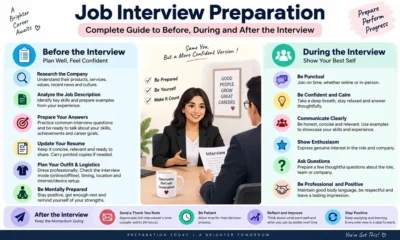

Job Interview Preparation: Complete Guide to Before, During and After the Interview
A complete job interview preparation guide covering common questions, competency answers, remote interviews, interview mistakes and what to do after...
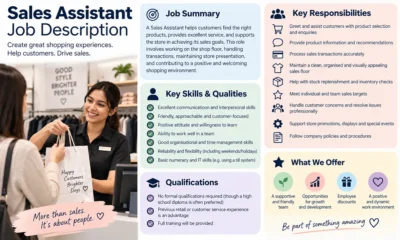

Sales Assistant Job Description: Duties, Skills, Salary and Career Guide UK
A Sales Assistant helps customers, processes purchases and supports the day-to-day running of a retail environment.


Web Developer Job Description: Duties, Skills, Salary and Career Guide UK
A Web Developer builds, maintains and improves websites and web applications. See the main duties, skills, qualifications, salary expectations and...
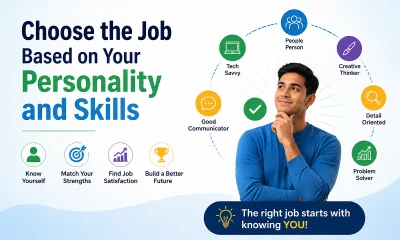

Choose an Entry-Level Job Based on Your Personality and Skills
Choosing your first job can be confusing. There are hundreds of entry-level jobs in the UK, but the best option...
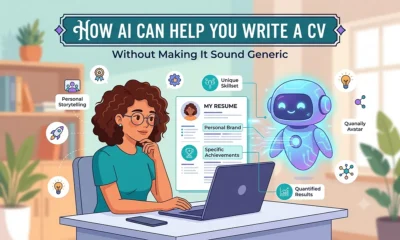

How AI Can Help You Write a CV Without Making It Sound Generic
Find out how to use AI to improve your CV, tailor your experience and write clearer applications without adding false...


Python Interview Cheat Sheet: 30 Python Concepts You Should Know Before Your Next Coding Interview
Python is one of the most popular programming languages for beginners and professional developers. It is widely used in web...
-
 Career3 years ago
Career Opportunities for Seniors: 7 Jobs that are Perfect for Older Adults
-
 Jobs8 months ago
Second Jobs in the UK: 15 Practical Ways to Earn Extra Income
-

 Career2 years ago
5 Free Job Posting Sites in the UK (For Employers)
-
 How-to8 months ago
How to Use Google Gemini for Freelance Work and Career Skills
-
 How-to8 months ago
Passive Income Ideas: Build Long-Term Income Streams
-
 AI & Tools8 months ago
How to Use Google Gemini for Productivity at Work
-

 Job Description2 years ago
Support Worker Job Description: Duties, Skills, Salary and Career Guide UK
-

 AI & Tools8 months ago
ChatGPT vs Microsoft Copilot: Which AI Is Best for You?