
Social Media
How to Run Meta Ads on a Small Budget ($100/Day Strategy That Actually Works)
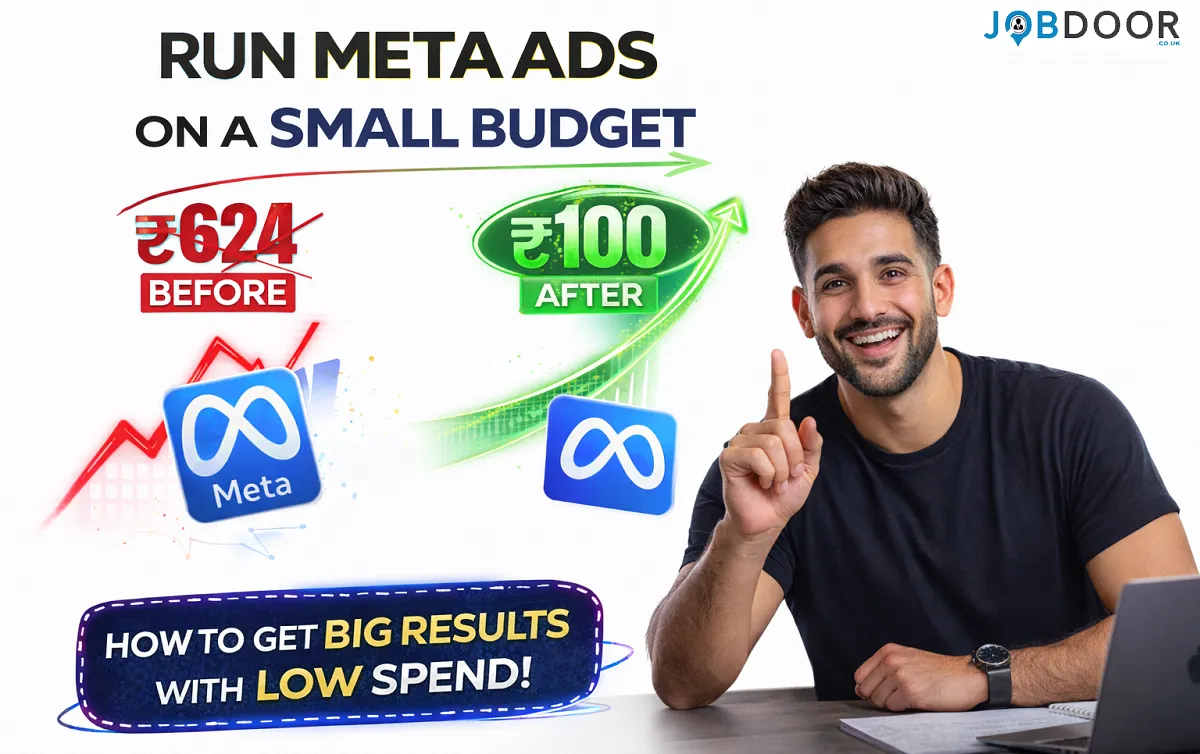
Most businesses believe you need a huge advertising budget to get results from Meta Ads.
That’s simply not true.
In fact, some of the smartest advertisers grow faster because they start small. When you’re working with $100–$300 per day, every click matters. Every impression counts. Every decision must be strategic.
If you’ve ever asked:
- Can I run Meta Ads with $100 per day?
- How do I get big results with a low budget?
- Why do small-budget campaigns fail?
- What’s the smartest structure for limited spend?
This guide will walk you through a complete, modern, and practical strategy for running Meta Ads on a small budget in 2026 — without wasting money.
Let’s break it down step by step.
The Truth About Small-Budget Meta Ads:
Small budgets don’t fail because of money.
They fail because of structure.
When advertisers copy large-budget strategies and apply them to $100 per day, the algorithm doesn’t get enough data to optimize properly.
With limited budget, your strategy must be:
- Focused
- Simple
- Conversion-oriented
- Creative-driven
- Data-efficient
The key is precision, not scale.
Step 1: Choose ONE Objective (Not Three)
The biggest mistake small advertisers make is trying to:
- Get sales
- Get followers
- Get engagement
- Build awareness
All at once.
When you’re spending $100 per day, you cannot afford scattered signals.
Choose one clear goal:
- Lead generation
- Website purchase
- WhatsApp inquiries
- Messenger conversations
Meta’s algorithm works best when the objective is crystal clear.
New Strategy Tip:
If you’re new, start with “Leads” or “Messages” instead of “Sales.” These objectives require fewer conversion signals and optimize faster with small budgets.
Step 2: Go Narrow With Messaging, Broad With Targeting
Traditional advice says narrow your audience.
In 2026, that approach can backfire with small budgets.
Instead:
- Use broad targeting.
- Let Meta optimize delivery.
- Narrow your MESSAGE, not your audience.
Example:
Instead of targeting:
“Business owners, marketing, 25–45, interests in ads”
Use:
Broad audience 21–45
But your ad copy should clearly speak to:
“Local gym owners struggling with lead generation.”
This filters your audience naturally through messaging instead of over-restricting delivery.
This is modern targeting logic.
Step 3: Use the Single Ad Set Strategy
When budget is small, complexity kills performance.
Do NOT create:
- 5 ad sets
- 10 audiences
- Multiple campaign types
Instead:
Campaign Structure:
1 Campaign
1 Ad Set
3–5 Creatives
This allows the algorithm to focus all spend into testing creatives instead of splitting budget across audiences.
Creative testing matters more than audience testing at low spend.
Step 4: Focus 80% on Creative Quality
On small budgets, creative is everything.
Why?
Because you cannot outbid competitors.
You must out-hook them.
Your ad must stop the scroll instantly.
New Creative Formula (High-Performance Structure):
- Pattern interrupt (first 3 seconds)
- Specific problem call-out
- Simple promise
- Proof or logic
- Clear call to action
Example:
“Spending money on Meta Ads but not seeing sales?”
Here’s how to generate 20 leads with $100/day.”
Keep it simple. Clear. Direct.
No fluff.
Step 5: Optimize for Click Quality, Not Just CPC
Many advertisers celebrate low CPC.
But low CPC doesn’t equal profit.
Instead, monitor:
- CTR (aim above 1.5%)
- Landing page view rate
- Cost per result
- Frequency (keep below 2.5 at small scale)
If CTR is low:
It’s a creative issue.
If CTR is high but conversions are low:
It’s a landing page issue.
Diagnose correctly before increasing budget.
Step 6: Leverage WhatsApp & DM Funnels
Small-budget advertisers often cannot afford complex sales funnels.
So simplify.
Use:
- Click-to-WhatsApp ads
- Click-to-Messenger ads
- Instant forms (Lead Ads)
Direct conversations convert better at low spend because:
- Trust builds faster
- Objections are handled immediately
- Friction is lower
Pro Tip:
Use automated replies for first response:
“Thanks for reaching out! What are you looking to achieve?”
This keeps engagement alive while you respond manually.
Step 7: Use Budget Stability, Not Aggressive Scaling
If your $100 campaign starts performing well:
Do NOT double it to $500 instantly.
That disrupts learning.
Instead:
Increase by 20–30% every 3 days.
Let delivery stabilize.
Scaling small budgets requires patience.
Step 8: Understand Before & After Metrics
Many advertisers look at spend only.
Instead, measure improvement.
Before:
$624 cost per result.
After:
$100–$200 cost per result.
The shift happens when:
- Creative improves
- Objective aligns
- Targeting simplifies
- Funnel reduces friction
Track trends, not daily fluctuations.
Small budgets fluctuate more. Look at 3–5 day windows.
Step 9: Retarget Smartly (Even With Small Budgets)
Retargeting is powerful, but small budgets can’t sustain large retargeting pools.
Here’s a better approach:
Create a single custom audience combining:
- Website visitors (30 days)
- Video viewers (50%)
- Page engagers (30 days)
Run a simple testimonial or proof-based ad to this audience.
Budget: $30–$50 daily.
Even small retargeting improves conversion rates dramatically.
Step 10: Fix the Real Problem – Offer Clarity
Most small-budget failures are not ad failures.
They are offer failures.
Ask yourself:
- Is my offer specific?
- Is the result measurable?
- Is the promise believable?
- Is the call-to-action clear?
Example:
Bad:
“Improve your marketing.”
Better:
“Get 15 qualified leads in 7 days using Meta Ads.”
Clarity increases conversions more than budget increases do.
New 2026 Strategy: Micro-Angle Testing
Instead of testing different audiences, test micro-angles.
Example product: Fitness coaching.
Test 3 micro-angles:
- Weight loss for busy moms
- Fat loss after 40
- Home workout results in 30 days
Same campaign.
Same audience.
Different message focus.
This isolates messaging impact.
Small budgets demand message precision.
How to Know When $100 Is Not Enough?
Small budgets work best for:
- Local businesses
- Niche services
- Low-ticket offers
- Lead generation
They struggle when:
- Selling high-ticket products cold
- Competing nationally in eCommerce
- Running broad awareness campaigns
If your cost per result exceeds 3x your target consistently after 10 days, reconsider:
- Offer
- Funnel
- Creative
- Objective
Not just budget.
The Psychological Advantage of Small Budgets:
There’s an unexpected benefit.
When budget is limited:
- You test smarter.
- You analyze deeper.
- You optimize faster.
- You remove waste quickly.
Large budgets allow laziness.
Small budgets force discipline.
And disciplined advertisers scale better long term.
Complete Action Plan for $100/Day
Here’s your practical roadmap:
- Choose one objective (Leads or Messages).
- Create one campaign with one ad set.
- Launch 3–5 strong creative variations.
- Monitor CTR and cost per result.
- Fix creative before adjusting targeting.
- Add small retargeting after 7 days.
- Scale gradually if profitable.
Simple. Focused. Repeatable.
Final Thoughts: Big Results Don’t Require Big Spend
Running Meta Ads on a small budget is not about luck.
It’s about structure.
When you:
- Simplify targeting
- Strengthen messaging
- Focus on creative
- Use direct conversations
- Scale patiently
$100 per day can outperform $1,000 per day campaigns run carelessly.
The advertisers who master low-budget discipline are the ones who scale efficiently later.
Start small.
Test smart.
Optimize deeply.
Scale steadily.
Big results with low spend are possible — if strategy leads, not emotion.
If you’d like, I can now:
- Create an SEO-optimized meta title and description
- Generate Pinterest titles & descriptions
- Or build a content cluster around small-budget Meta Ads strategy
Just tell me what you need next.



Choose an Entry-Level Jobs Based on Your Personality and Skills
Choosing your first job can be confusing. There are hundreds of entry-level jobs in the UK, but the best option...

Python Interview Cheat Sheet: 30 Python Concepts You Should Know Before Your Next Coding Interview
Python is one of the most popular programming languages for beginners and professional developers. It is widely used in web...


AI Could Replace Millions of Entry-Level Jobs in the UK by 2035: Which Roles Are Most at Risk?
Artificial intelligence is changing the way people work across the UK. From customer service and administration to data processing and...


How to Get a Job When There Are Fewer Vacancies
Looking for a job can become much more frustrating when there are fewer vacancies available. You may be checking job...

How UK Job Seekers Can Use LinkedIn to Find More Job Opportunities?
LinkedIn is no longer just a website for experienced professionals. It can be a useful job-search tool for students, graduates,...


Why Is It So Hard to Get a Job in the UK in 2026?
If you have been applying for jobs in the UK and getting very few replies, you are not alone. Many...


Entry-Level Jobs in the UK Compared: Pay, Difficulty, Stress and Career Growth
Starting your career can be confusing, especially when there are so many entry-level jobs available in the UK. While some...


Why Are Graduate Jobs Becoming Harder to Find in the UK?
Graduating from university is supposed to feel like the beginning of a new chapter. You finish your degree, prepare your...


30 Entry-Level Jobs in the UK for People With Little or No Experience
Finding your first job can feel difficult, especially when many vacancies ask for previous work experience. The good news is...


IBM Internship UK: A Complete Guide to Opportunities, Eligibility and How to Apply
An IBM internship can be an attractive opportunity for students and early-career candidates who want practical experience at a major...


How to Find Green Jobs in the UK: A Practical Guide for Job Seekers
Green jobs are becoming an important part of the UK employment market. As businesses, local authorities and industries focus more...

Top 10 Hosting Providers for Developers
Developers assess hosting differently from most other webmasters. While absolute costs and total disk space matter, the best web hosting...


HR Consultant Job Description: Duties, Skills, Salary and How to Become One in the UK
An HR Consultant helps organisations manage their people more effectively. They provide professional advice on areas such as HR policies,...


Meta and Microsoft Announce Massive Layoffs
Big tech companies like Meta Platforms and Microsoft are reducing their workforce as they spend more money on artificial intelligence...


GPT-5.5 vs Claude: Nano Banana Killer & Claude’s New Design Tool
Artificial Intelligence is evolving at an incredible pace. Every few months, new models and tools are released that push the...


Moltbook: The First Social Network for AI Agents
Artificial Intelligence is evolving rapidly. We’ve moved from simple tools to powerful AI systems that can write, design, analyze, and...


Volkswagen Uses AI Agents to Transform Its Cars in China
The automotive industry is changing faster than ever before—and at the center of this transformation is Artificial Intelligence (AI). One...


AI Is Growing Faster Than You Think
Artificial Intelligence (AI) is no longer something we only see in movies or imagine about the future. It is already...


Could AI Eliminate Humans in the Next 10 Years?
Artificial Intelligence (AI) is advancing at an incredible speed. Every day, new tools, smarter systems, and powerful technologies are being...


Meet NEO: Your New Home Robot Buddy
Imagine coming home after a long day, and instead of doing chores, managing devices, or worrying about security, everything is...
-
 Career3 years ago
Career Opportunities for Seniors: 7 Jobs that are Perfect for Older Adults
-
 Jobs7 months ago
15 Best Second Jobs to Boost Your Income in the UK for 2026
-

 Career2 years ago
5 Free Job Posting Sites in the UK (For Employers)
-
 How-to7 months ago
How to Make Money with Google Gemini: Practical Methods Anyone Can Start
-
 How-to7 months ago
How to Build Passive Income and Wealth: 26 Lucrative Ideas
-
 AI & Tools7 months ago
10 Insane Ways Google Gemini Will Explode Your Productivity in 2026
-

 Job Description2 years ago
Support Worker Job Description: Qualifications, Skills, Salary, Working Hours
-

 AI & Tools7 months ago
ChatGPT vs Copilot: Which AI Is Best for You in 2026?