
Job Description
Job Interview Preparation: Complete Guide to Before, During and After the Interview
A complete job interview preparation guide covering common questions, competency answers, remote interviews, interview mistakes and what to do after the interview.
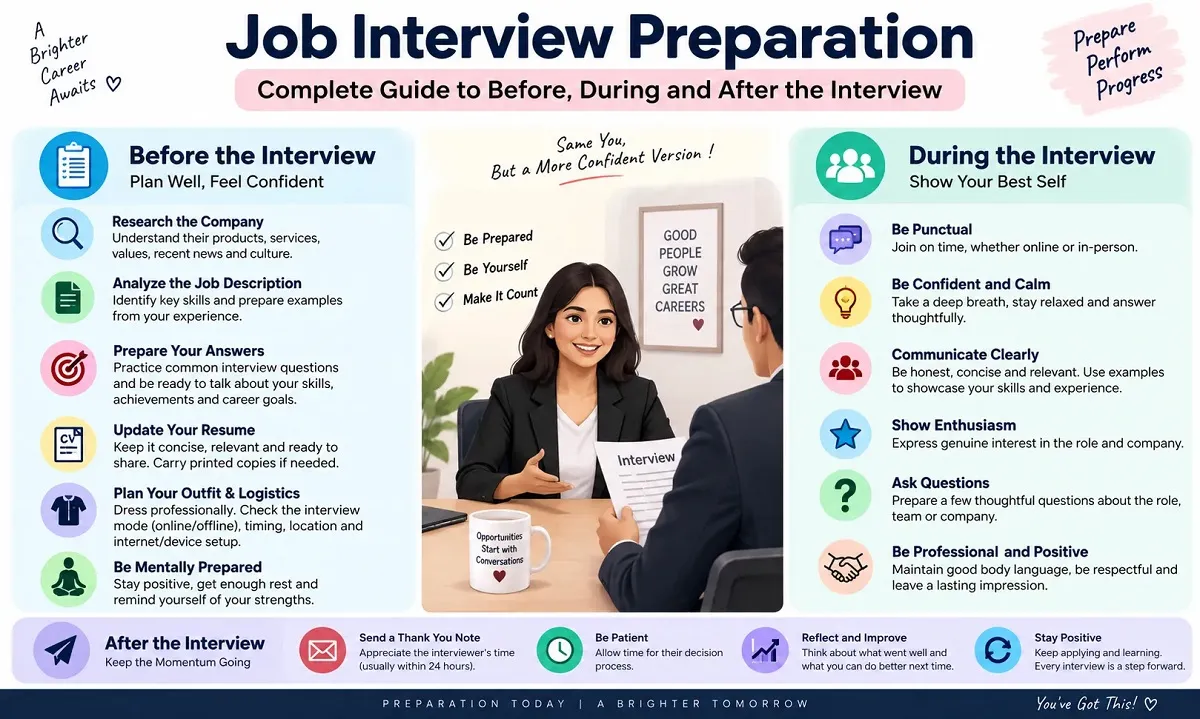
A job interview is your opportunity to show an employer how your skills, experience and approach match the role. Good preparation can make a major difference, especially when several candidates have similar qualifications.
This complete job interview preparation guide covers what to do before, during and after an interview. It also links to more detailed JobDoor guides on interview mistakes, remote interviews and competency-based questions.
How to Prepare for a Job Interview
Strong interview preparation starts before you think about possible questions. Read the vacancy carefully, understand what the employer needs and prepare clear examples from your own experience.
Read the job description carefully
Identify the main responsibilities, essential skills and experience requested. Then match each important requirement with an example from your work, education, volunteering or personal projects.
Research the employer
Look at the organisation’s website, recent announcements, products or services and the type of work it does. You do not need to memorise everything. The aim is to understand the employer well enough to explain why the role interests you.
Prepare your own reasons for applying
Be ready to answer why you want the job and why you want to work for that particular organisation. Avoid generic answers that could apply to any employer.
Create a Job Interview Preparation Checklist
- Read the job description again.
- Research the employer and the role.
- Prepare examples of relevant achievements and responsibilities.
- Review your CV so you can discuss everything on it confidently.
- Prepare answers to common interview questions.
- Choose suitable interview clothing.
- Confirm the location, travel time or video-call details.
- Prepare a few thoughtful questions for the interviewer.
Common Job Interview Questions to Prepare For
Tell me about yourself
Keep your answer relevant to your professional background. Briefly explain where you are now, the experience or skills most relevant to the role and why the opportunity makes sense for your next step.
Why do you want this job?
Connect your answer to the work itself. Mention responsibilities, skills you want to use or develop, and why the role fits your career direction.
Why should we hire you?
Focus on the strongest evidence you can offer. Choose two or three relevant strengths and support them with real examples rather than making broad claims.
What are your strengths and weaknesses?
For strengths, choose qualities that matter to the role. For weaknesses, be honest but show how you are managing or improving the area.
For more guidance, read our article on common job interview mistakes to avoid.
How to Answer Competency-Based Interview Questions?
Competency-based questions ask you to demonstrate how you handled a situation in the past. Employers may ask about teamwork, leadership, communication, problem solving, customer service or dealing with pressure.
Use the STAR method
A useful structure is STAR:
- Situation: Briefly explain the context.
- Task: Explain what you needed to achieve.
- Action: Describe what you personally did.
- Result: Explain the outcome and what you achieved or learned.
Keep the focus on your contribution
When describing a team project, make sure the interviewer understands your own actions and responsibilities.
See our detailed guide to competency-based interview questions and answers for further examples.
What Not to Do in a Job Interview?
Many candidates lose opportunities because of avoidable mistakes rather than a lack of qualifications. Common problems include arriving unprepared, speaking negatively about previous employers, giving vague answers and failing to listen carefully.
- Do not arrive without understanding the role.
- Do not exaggerate experience or claim skills you cannot explain.
- Do not interrupt repeatedly.
- Do not criticise former employers unnecessarily.
- Do not answer every question with a rehearsed speech.
- Do not forget to ask questions when given the opportunity.
For a deeper look at interview behaviour, read what not to do in a job interview.
How to Prepare for a Remote or Video Interview?
Remote interviews need the same preparation as face-to-face interviews, with additional attention to technology and your environment.
Check your technology in advance
Test your internet connection, camera, microphone and interview platform. Keep your device charged and have a backup plan if possible.
Create a professional environment
Choose a quiet location with good lighting and as few interruptions as possible. Keep the background simple and make sure your face can be seen clearly.
Look at the interviewer when speaking
On a video call, looking at the camera occasionally can create better eye contact than watching your own image on the screen.
Read our full guide on how to prepare for remote interviews.
Questions You Can Ask the Interviewer
When the interviewer asks whether you have questions, use the opportunity to understand the role better. Good questions can also show that you have thought seriously about the position.
Useful questions include
- What would success look like in the first few months?
- What are the biggest priorities for the person in this role?
- How is the team structured?
- What training or development opportunities are available?
- What are the next stages of the recruitment process?
How to Discuss Salary During an Interview?
If salary expectations come up, stay calm and professional. Research the typical range for similar roles and consider the responsibilities, location, benefits and your experience.
Give a considered answer
If you provide a range, make sure it is realistic and that you can explain the basis for your expectations. Avoid giving an answer you will later regret simply because you feel pressured to respond immediately.
What to Do After the Interview?
Reflect on your performance
Make notes while the interview is fresh in your mind. Record questions you found difficult and think about how you could improve your answers next time.
Follow up professionally
If appropriate, send a brief thank-you message. Keep it professional and do not repeatedly contact the employer before the stated decision date.
Keep applying for suitable roles
Do not pause your job search while waiting for one decision. Continue applying for suitable opportunities and improving your applications.
For wider job-search guidance, read how to get a job when there are fewer vacancies and our guide on using LinkedIn to find more job opportunities.
Frequently Asked Questions About Job Interviews
How early should I arrive for an interview?
For an in-person interview, arriving around 10 to 15 minutes early is usually sensible. Arriving extremely early may inconvenience the employer, while arriving late can create a poor first impression.
Should I memorise my answers?
Prepare key points and examples rather than memorising every word. Natural answers are easier to adapt when the interviewer asks follow-up questions.
How long should my answers be?
Answer the question directly and provide enough detail to show your experience. Competency questions may require a longer structured answer, while simple questions should not become lengthy speeches.
What if I do not know the answer?
Do not invent information. Take a moment to think, ask for clarification if needed and answer honestly based on what you do know.
Final Thoughts
Successful interviews are rarely about having a perfect script. The strongest preparation comes from understanding the role, researching the employer and having clear examples ready to demonstrate your skills.
Use this guide as your main interview preparation checklist, then read the more specialised JobDoor guides on interview mistakes, remote interviews and competency-based questions when you need additional help.



How to Write a CV With No Experience
Find out how to write a CV with no experience, what to include and how students, graduates and first-time job...


What Is a Job Description and What Should You Look For?
What is a job description? Understand what it means, what to look for and how to use it to decide...

Job Interview Preparation: Complete Guide to Before, During and After the Interview
A complete job interview preparation guide covering common questions, competency answers, remote interviews, interview mistakes and what to do after...
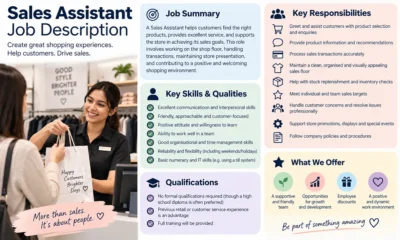

Sales Assistant Job Description: Duties, Skills, Salary and Career Guide UK
A Sales Assistant helps customers, processes purchases and supports the day-to-day running of a retail environment.


Web Developer Job Description: Duties, Skills, Salary and Career Guide UK
A Web Developer builds, maintains and improves websites and web applications. See the main duties, skills, qualifications, salary expectations and...
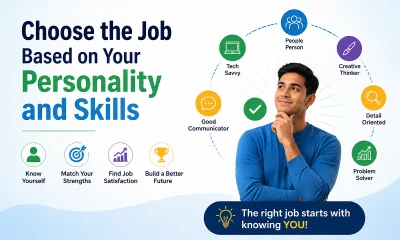

Choose an Entry-Level Jobs Based on Your Personality and Skills
Choosing your first job can be confusing. There are hundreds of entry-level jobs in the UK, but the best option...
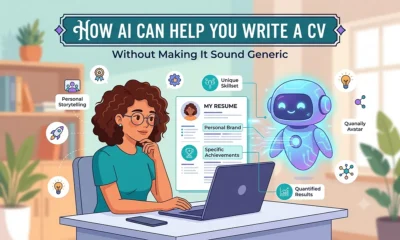

How AI Can Help You Write a CV Without Making It Sound Generic
Find out how to use AI to improve your CV, tailor your experience and write clearer applications without adding false...
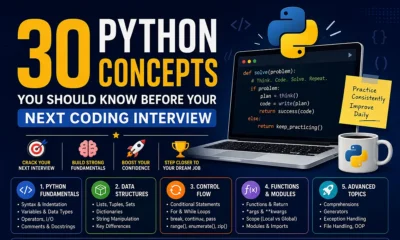

Python Interview Cheat Sheet: 30 Python Concepts You Should Know Before Your Next Coding Interview
Python is one of the most popular programming languages for beginners and professional developers. It is widely used in web...


AI Could Replace Millions of Entry-Level Jobs in the UK by 2035: Which Roles Are Most at Risk?
Artificial intelligence is changing the way people work across the UK. From customer service and administration to data processing and...

How to Get a Job When There Are Fewer Vacancies
Looking for a job can become much more frustrating when there are fewer vacancies available. You may be checking job...

How UK Job Seekers Can Use LinkedIn to Find More Job Opportunities?
LinkedIn is no longer just a website for experienced professionals. It can be a useful job-search tool for students, graduates,...


Why Is It So Hard to Get a Job in the UK in 2026?
If you have been applying for jobs in the UK and getting very few replies, you are not alone. Many...


Entry-Level Jobs in the UK Compared: Pay, Difficulty, Stress and Career Growth
Starting your career can be confusing, especially when there are so many entry-level jobs available in the UK. While some...


Why Are Graduate Jobs Becoming Harder to Find in the UK?
Graduating from university is supposed to feel like the beginning of a new chapter. You finish your degree, prepare your...

Why Good Candidates Fail Job Interviews: 10 Reasons You May Not Get the Job
Find out why qualified candidates sometimes fail job interviews, why another applicant may be chosen and what you can improve...


30 Entry-Level Jobs in the UK for People With Little or No Experience
Finding your first job can feel difficult, especially when many vacancies ask for previous work experience. The good news is...

IBM Internship UK: A Complete Guide to Opportunities, Eligibility and How to Apply
An IBM internship can be an attractive opportunity for students and early-career candidates who want practical experience at a major...


How to Find Green Jobs in the UK: A Practical Guide for Job Seekers
Green jobs are becoming an important part of the UK employment market. As businesses, local authorities and industries focus more...

Top 10 Hosting Providers for Developers
Developers assess hosting differently from most other webmasters. While absolute costs and total disk space matter, the best web hosting...


HR Consultant Job Description: Duties, Skills and Career Guide UK
An HR Consultant advises organisations on people, policies, employee relations and workplace change. See duties, skills, qualifications and career routes...
-
 Career3 years ago
Career Opportunities for Seniors: 7 Jobs that are Perfect for Older Adults
-
 Jobs8 months ago
15 Best Second Jobs to Boost Your Income in the UK for 2026
-

 Career2 years ago
5 Free Job Posting Sites in the UK (For Employers)
-
 How-to7 months ago
How to Make Money with Google Gemini: Practical Methods Anyone Can Start
-
 How-to7 months ago
How to Build Passive Income and Wealth: 26 Lucrative Ideas
-
 AI & Tools7 months ago
10 Insane Ways Google Gemini Will Explode Your Productivity in 2026
-

 Job Description2 years ago
Support Worker Job Description: Duties, Skills, Salary and Career Guide UK
-

 AI & Tools7 months ago
ChatGPT vs Copilot: Which AI Is Best for You in 2026?