
AI & Tools
Humanoid Robots and the Future of Work: What Workers Should Know
See how humanoid robots could change workplace tasks, automation and career skills, plus practical ways workers can prepare for physical AI.
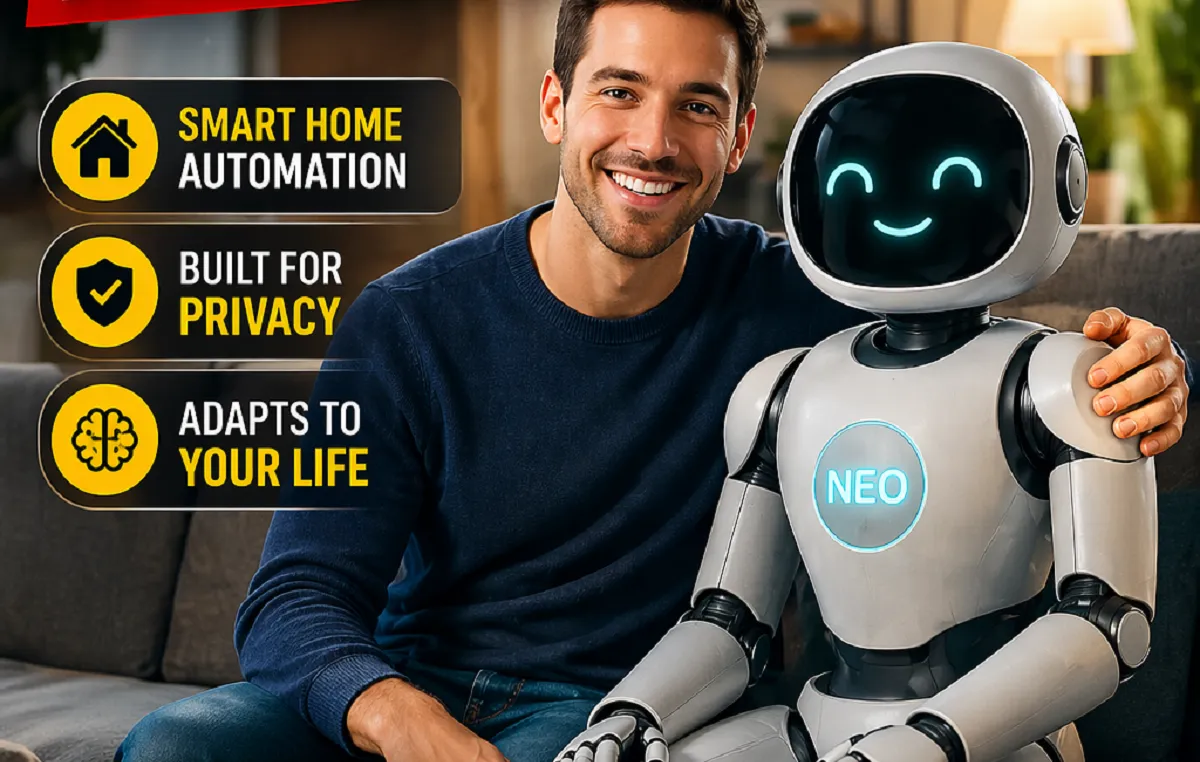
Humanoid robots are moving from science-fiction ideas toward real-world testing in homes, workplaces and other everyday environments. That raises a bigger question for workers: what happens when AI can control not only software, but also a physical machine?
Home robots such as NEO provide a useful example of this shift. The important story is not simply the robot itself. It is the combination of artificial intelligence, sensors, movement and automation that could eventually allow machines to carry out physical tasks with less direct human control.
This guide explains what humanoid robots could mean for work, which tasks are most suitable for automation, what skills may become more valuable and how workers can prepare.
What Are Humanoid Robots?
A humanoid robot is a machine designed with a human-like body shape so it can operate in environments built for people. Depending on its design, it may have cameras, sensors, motors, artificial intelligence and software that help it understand surroundings and perform tasks.
The key difference from a normal software assistant is physical capability. An AI system can draft an email or analyse information, while a robot can potentially move objects, navigate a room or perform repetitive physical work.
Why Humanoid Robots Matter for the Future of Work
Many workplaces already use automation, but most automated systems are built for specific environments. Humanoid robots could eventually work in spaces designed for people without requiring every workplace to be rebuilt around a specialised machine.
- They could support repetitive physical tasks.
- They could work alongside employees in selected environments.
- They could connect physical work with AI-based planning and decision support.
- They could reduce the need for people to perform some routine or hazardous activities.
- They could create new roles in robot operation, maintenance, safety and workflow design.
From AI Software to AI That Can Act
One of the biggest changes in AI is the move from generating information to completing multi-step tasks. When that intelligence is connected to a physical robot, the system can potentially observe an environment, plan an action, carry it out and respond to what happens next.
This creates a new type of workplace automation. Instead of asking only, “Can AI produce this piece of information?”, businesses may also ask, “Can an AI-powered machine complete this part of the workflow?”
Which Jobs Could Be Most Affected?
It is too early to say that humanoid robots will simply replace entire occupations. A more useful way to think about the change is by looking at individual tasks.
| Work type | Potential role for robots | Human value |
|---|---|---|
| Repetitive physical tasks | High potential for automation | Supervision and exception handling |
| Warehouse movement | Moving and sorting selected items | Planning and operational decisions |
| Cleaning and routine maintenance | Automated assistance | Quality checks and complex work |
| Hazardous environments | Remote or automated support | Safety planning and specialist judgement |
| Customer-facing work | Limited support in suitable situations | Communication, empathy and judgement |
Jobs Are More Than a List of Tasks
A job normally combines many different activities. Some may be repetitive and easy to automate, while others require judgement, communication, creativity, responsibility or relationships.
That is why AI and robotics may change jobs without removing the entire occupation. A warehouse employee, for example, could spend less time on repetitive movement and more time monitoring operations, handling exceptions or working with automated systems.
What Could Humanoid Robots Do at Work?
1. Handle Repetitive Physical Work
Tasks that involve repeating the same movement for long periods are natural candidates for automation. Robots could potentially move items, perform simple inspections or assist with routine handling.
2. Support Hazardous Work
Robots may eventually help with work that exposes people to dangerous temperatures, chemicals, unstable environments or other physical risks. Human oversight would still be important because automated systems can fail or misinterpret situations.
3. Assist With Logistics
Warehouses and other operational environments could use robots for selected movement, sorting and stocking tasks. Employees could focus more on coordination, quality control and unusual cases.
4. Work Alongside Employees
The most realistic workplace model may not be humans versus robots. It may be humans working with automated systems, where each handles the tasks it performs best.
The Skills Workers May Need
As AI and robotics take on more routine tasks, workers can benefit from building skills that complement automation rather than compete directly with it.
- AI literacy: Understand what AI systems can and cannot do.
- Problem-solving: Handle situations that do not fit a standard process.
- Communication: Explain problems, coordinate teams and work with customers.
- Technical confidence: Use workplace software, automation tools and digital systems.
- Quality control: Check whether automated work is accurate and safe.
- Adaptability: Learn new workflows as technology changes.
- Domain expertise: Combine technology skills with knowledge of a specific industry.
💼 Career tip: You do not need to become a robotics engineer to prepare for this shift. Start by understanding how AI and automation affect the tasks in your own job.
How Businesses Should Introduce Physical AI
Businesses should not adopt robots simply because the technology looks impressive. A useful implementation starts with a real operational problem.
- Identify repetitive or physically demanding tasks.
- Measure the current cost, time and error rate.
- Check whether a robot can perform the task safely and reliably.
- Start with a limited workflow instead of automating an entire operation.
- Keep people responsible for safety, exceptions and important decisions.
- Measure results before expanding the system.
The Risks of Humanoid Robots at Work
Physical AI also creates risks that businesses need to take seriously. A robot operating in a real environment can cause physical harm if it behaves incorrectly. AI systems can also make mistakes, misunderstand instructions or rely on incomplete information.
Privacy is another consideration when robots use cameras, microphones or other sensors. Businesses need clear rules about what information is collected, where it is stored and who can access it.
There is also a workforce issue. If automation changes the tasks people perform, employers should provide training and give workers a clear path to new responsibilities rather than treating technology adoption as only a cost-cutting exercise.
How Workers Can Prepare Now
You do not need to wait for humanoid robots to become common before preparing for automation. Many of the skills that matter in an AI-enabled workplace are useful today.
- List the repetitive tasks in your current role.
- Identify which tasks could be supported by AI or automation.
- Build basic AI literacy and practise using AI responsibly.
- Improve communication, problem-solving and decision-making skills.
- Learn the digital tools used in your industry.
- Keep evidence of improvements you make, such as time saved or fewer errors.
- Position yourself as someone who can work effectively with new technology.
What NEO Represents in the Bigger Picture
NEO is interesting not simply because it is a home robot, but because it illustrates a broader direction in technology: AI is increasingly being connected to systems that can act in the physical world.
For consumers, that could mean more household automation. For businesses, the same underlying idea could eventually support physical workflows in areas such as logistics, manufacturing, facilities and other operational environments.
Will Robots Replace Human Workers?
Some tasks will likely become more automated, but predicting complete job replacement is much harder. Cost, reliability, regulation, safety, workplace design and customer expectations all influence whether automation makes sense.
A more useful career strategy is to ask: Which parts of my job are routine, and which parts depend on skills that are harder to automate?
A Simple Future-of-Work Checklist
- ☐ I understand the basic capabilities and limits of AI.
- ☐ I know which tasks in my job are repetitive.
- ☐ I am improving skills that require judgement and communication.
- ☐ I can use digital tools confidently.
- ☐ I review AI-generated or automated work before relying on it.
- ☐ I keep building knowledge in my industry.
Frequently Asked Questions
Are humanoid robots ready to replace workers?
No. The technology is developing, and real-world deployment depends on reliability, safety, cost and the specific task. Some repetitive activities are more suitable for automation than others.
Which workers should pay attention to physical AI?
Workers in logistics, manufacturing, facilities, retail and other operational environments may see changes as physical automation develops. However, AI and automation can affect almost any workplace over time.
What skills are useful in an automated workplace?
AI literacy, digital skills, problem-solving, communication, adaptability, quality control and industry knowledge are useful because they help workers supervise, improve and work alongside automated systems.
Should job seekers be worried about humanoid robots?
It is better to prepare than to panic. Focus on understanding how automation affects your target industry and build skills that help you use technology, solve problems and make decisions.
Related JobDoor Guides
- AI Growth Is Accelerating: What It Means for Jobs and Work
- AI Agents at Work: How Autonomous AI Could Change Jobs and Business Workflows
- 7 Career Skills That Stay Valuable in the Age of AI
- AI Skills Every Job Seeker Should Learn
- How to Use AI Efficiently at Work
Final Thoughts
Humanoid robots could become an important part of the next stage of workplace automation, but the biggest change may be the combination of AI, physical machines and redesigned workflows.
For workers, the strongest response is not to compete with every automated task. It is to build the skills that help you use technology, supervise automated work, solve unfamiliar problems and contribute where human judgement matters most.
The future of work is unlikely to be simply humans versus robots. In many workplaces, it will be about how effectively people and intelligent machines work together.


How to Start a Career in Transport and Logistics in the UK
Planning a career in transport and logistics in the UK? See entry-level roles, apprenticeships, qualifications, skills and practical steps to...


Rolls-Royce Internship UK: Eligibility, Opportunities & How to Apply
Find Rolls-Royce internships in the UK with practical guidance on eligibility, opportunities, applications, assessments, skills and preparation.


JLR Internships in the UK: How to Find and Apply
Find JLR internships and undergraduate placements in the UK, with practical guidance on eligibility, applications, career areas, assessments and preparation.


Technology Internships in the UK: How to Find and Prepare
Find technology internships in the UK with practical guidance on choosing a tech career area, building skills, finding employers and...


Deloitte Internship UK: How to Apply and Prepare
A practical guide to Deloitte internships in the UK, covering programmes, eligibility, applications, assessments, skills, student visas and preparation.


How to Prepare for a Remote Interview: Complete Guide
Prepare for a remote or video interview with practical advice on technology, camera setup, communication, notes and handling technical problems.

How to Stay Employable: 12 Long-Term Career Strategies
No one can guarantee permanent employment. Employers change, industries evolve and personal circumstances can affect a career at any stage....


How AI Is Changing Recruitment: What Job Seekers Should Expect
Artificial intelligence is changing recruitment, but not in the simple way many headlines suggest. Employers may use AI to organise...


How to Use AI to Identify Your Transferable Skills
Changing careers can feel difficult because job titles often make people focus on what they have not done instead of...

How to Use AI Responsibly When Applying for Jobs
AI can help job seekers save time when researching roles, improving a CV, preparing a cover letter and practising for...

AI Skills Every Job Seeker Should Learn (Without Becoming an AI Expert)
Artificial intelligence is becoming part of everyday work in many industries. You do not need to become a programmer, data...


How to Get a Job in the UK: A Complete Step-by-Step Guide
Finding a job in the UK can feel difficult, especially when you are competing with many other applicants. The process...


How to Write a CV With No Experience
Find out how to write a CV with no experience, what to include and how students, graduates and first-time job...


What Is a Job Description and What Should You Look For?
What is a job description? Understand what it means, what to look for and how to use it to decide...

Job Interview Preparation: Complete Guide to Before, During and After the Interview
A complete job interview preparation guide covering common questions, competency answers, remote interviews, interview mistakes and what to do after...

Sales Assistant Job Description: Duties, Skills, Salary and Career Guide UK
A Sales Assistant helps customers, processes purchases and supports the day-to-day running of a retail environment.


Web Developer Job Description: Duties, Skills, Salary and Career Guide UK
A Web Developer builds, maintains and improves websites and web applications. See the main duties, skills, qualifications, salary expectations and...

Choose an Entry-Level Job Based on Your Personality and Skills
Choosing your first job can be confusing. There are hundreds of entry-level jobs in the UK, but the best option...

How AI Can Help You Write a CV Without Making It Sound Generic
Find out how to use AI to improve your CV, tailor your experience and write clearer applications without adding false...


Python Interview Cheat Sheet: 30 Python Concepts You Should Know Before Your Next Coding Interview
Python is one of the most popular programming languages for beginners and professional developers. It is widely used in web...
-
 Career3 years ago
Career Opportunities for Seniors: 7 Jobs that are Perfect for Older Adults
-
 Jobs8 months ago
Second Jobs in the UK: 15 Practical Ways to Earn Extra Income
-

 Career2 years ago
5 Free Job Posting Sites in the UK (For Employers)
-
 How-to8 months ago
How to Use Google Gemini for Freelance Work and Career Skills
-
 How-to8 months ago
Passive Income Ideas: Build Long-Term Income Streams
-

 AI & Tools8 months ago
How to Use Google Gemini for Productivity at Work
-

 Job Description2 years ago
Support Worker Job Description: Duties, Skills, Salary and Career Guide UK
-

 AI & Tools8 months ago
ChatGPT vs Microsoft Copilot: Which AI Is Best for You?