
How-to
How to Build a Website That Generates Revenue: A Practical Guide
Build a website that can generate revenue with a clear audience, useful content, realistic monetisation and practical systems for growth.

A website can become a useful income-producing asset when it solves a clear problem, attracts the right audience and has a sensible business model. The goal is not effortless money. It is to build a system where useful work, traffic and monetisation support each other.
Start With a Revenue Model
Before building dozens of pages, decide how the website could create value and generate revenue. Common models include:
| Model | How It Works | What You Need |
|---|---|---|
| Digital products | Sell templates, guides, tools or resources | A useful product and targeted audience |
| Affiliate content | Recommend relevant products or services | Trust, useful comparisons and purchase intent |
| Lead generation | Connect potential customers with service providers | Relevant traffic and a reliable lead process |
| Services | Use the site to attract clients | A clear offer and proof of expertise |
| Advertising | Earn from relevant site traffic | Sustained traffic and suitable content |
Choose a Specific Problem to Solve
Broad topics are difficult to compete in. A more focused website can serve a particular audience with a specific need.
- Productivity resources for remote workers
- Career resources for a particular profession
- Practical guides for small-business owners
- Specialised hobby equipment and buying advice
- Templates for a defined business process
- Educational resources for a specific learner group
Ask three questions before committing: Does the problem exist? Are people actively searching for solutions? Is there a realistic way to monetise the solution?
Build for the Visitor, Not Just Search Engines
A useful website should help visitors complete a task. A simple structure might include a clear homepage, detailed guides, comparison or decision pages, supporting resources and a relevant call to action.
Create Content Around Search Intent
Do not publish articles simply to increase the page count. Build content around questions people actually need answered.
- Informational: explain a problem or process.
- Commercial: help someone compare options.
- Transactional: support a buying decision.
- Local: connect people with a nearby service.
Depth, usefulness and clear intent are more valuable than publishing large numbers of thin pages.
Use AI to Improve the Workflow, Not Replace It
AI can help with research organisation, outlines, first drafts, editing, data analysis, content repurposing and repetitive administration. Human review remains important for accuracy, originality, privacy and business decisions.
For a practical publishing workflow, see our guide to AI content creation workflows. You can also read our guide to building income with AI skills.
Make the Website Easy to Convert
Once visitors arrive, make the next step obvious. Depending on the business model, that might be buying a product, requesting a quote, joining an email list or clicking through to a recommended service.
- Use clear page titles and introductions.
- Match calls to action to the visitor’s intent.
- Show evidence where appropriate, such as examples or case studies.
- Keep forms short and easy to complete.
- Make important pages easy to navigate.
Build an Owned Audience
Search and social platforms can change, so it is useful to build an audience you can reach directly. An email list, customer database or community can support repeat visits and future offers.
A useful free resource could be a checklist, template, short guide or calculator related to the website’s main topic.
Track the Numbers That Matter
| Metric | Why It Matters |
|---|---|
| Organic or referral traffic | Shows whether useful visitors are arriving |
| Conversion rate | Shows whether visitors take the desired action |
| Revenue per visitor | Connects traffic quality with business results |
| Customer acquisition cost | Shows how much it costs to gain customers |
| Profit | Shows whether the model is financially sustainable |
A Simple 30-Day Website Plan
- Days 1–7: choose an audience, problem and revenue model.
- Days 8–14: research competitors, customer questions and search intent.
- Days 15–21: create the core pages and first useful resources.
- Days 22–30: add conversion paths, analytics and one repeatable promotion channel.
After launch, improve the pages that already attract visitors before adding complexity. A small site with a clear purpose can be easier to manage than a large site with unrelated topics.
Common Mistakes to Avoid
- Choosing a topic only because it seems profitable
- Publishing large amounts of generic AI content
- Depending entirely on one traffic source
- Adding monetisation that does not match visitor intent
- Ignoring website speed, usability and mobile experience
- Focusing on revenue while ignoring costs and profit
- Expecting meaningful results without sustained improvement
Frequently Asked Questions
How much can a website realistically earn?
There is no dependable fixed amount. Earnings depend on the audience, business model, traffic, conversion rate, pricing, costs and execution. Avoid claims that promise a specific daily income.
Is advertising the best way to monetise a website?
Not always. Advertising can work with substantial relevant traffic, while products, services, affiliate relationships or lead generation may work better for smaller high-intent audiences.
Can AI help build a website business?
Yes. AI can support research, content production, analysis and routine workflows. It should be used as a productivity tool rather than a substitute for expertise, fact-checking or customer understanding.
Should I start with one website or several?
For most beginners, one focused project is easier to test and improve. Multiple websites spread time, money and attention before you know which model works.
Related JobDoor Guides
- Passive Income Ideas: Build Long-Term Income Streams
- Side Hustle Ideas: Practical Ways to Build Extra Income Around Your Skills
- How to Build Income With AI Skills and Freelance Services
- 30-Day AI Skills Plan for Work
Final Takeaway
A website becomes a stronger business asset when it solves a specific problem, serves a clear audience and has a realistic path to revenue. Start with one focused idea, validate demand, create useful content, build a conversion path and automate repetitive work only after the process is working.














How to Start a Career in Transport and Logistics in the UK
Planning a career in transport and logistics in the UK? See entry-level roles, apprenticeships, qualifications, skills and practical steps to...


Rolls-Royce Internship UK: Eligibility, Opportunities & How to Apply
Find Rolls-Royce internships in the UK with practical guidance on eligibility, opportunities, applications, assessments, skills and preparation.


JLR Internships in the UK: How to Find and Apply
Find JLR internships and undergraduate placements in the UK, with practical guidance on eligibility, applications, career areas, assessments and preparation.


Technology Internships in the UK: How to Find and Prepare
Find technology internships in the UK with practical guidance on choosing a tech career area, building skills, finding employers and...


Deloitte Internship UK: How to Apply and Prepare
A practical guide to Deloitte internships in the UK, covering programmes, eligibility, applications, assessments, skills, student visas and preparation.


How to Prepare for a Remote Interview: Complete Guide
Prepare for a remote or video interview with practical advice on technology, camera setup, communication, notes and handling technical problems.

How to Stay Employable: 12 Long-Term Career Strategies
No one can guarantee permanent employment. Employers change, industries evolve and personal circumstances can affect a career at any stage....


How AI Is Changing Recruitment: What Job Seekers Should Expect
Artificial intelligence is changing recruitment, but not in the simple way many headlines suggest. Employers may use AI to organise...


How to Use AI to Identify Your Transferable Skills
Changing careers can feel difficult because job titles often make people focus on what they have not done instead of...

How to Use AI Responsibly When Applying for Jobs
AI can help job seekers save time when researching roles, improving a CV, preparing a cover letter and practising for...
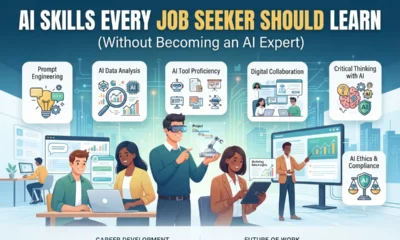

AI Skills Every Job Seeker Should Learn (Without Becoming an AI Expert)
Artificial intelligence is becoming part of everyday work in many industries. You do not need to become a programmer, data...


How to Get a Job in the UK: A Complete Step-by-Step Guide
Finding a job in the UK can feel difficult, especially when you are competing with many other applicants. The process...
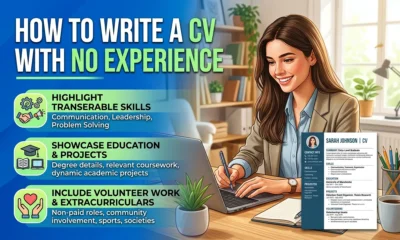

How to Write a CV With No Experience
Find out how to write a CV with no experience, what to include and how students, graduates and first-time job...


What Is a Job Description and What Should You Look For?
What is a job description? Understand what it means, what to look for and how to use it to decide...
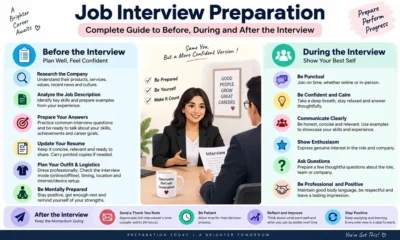

Job Interview Preparation: Complete Guide to Before, During and After the Interview
A complete job interview preparation guide covering common questions, competency answers, remote interviews, interview mistakes and what to do after...

Sales Assistant Job Description: Duties, Skills, Salary and Career Guide UK
A Sales Assistant helps customers, processes purchases and supports the day-to-day running of a retail environment.


Web Developer Job Description: Duties, Skills, Salary and Career Guide UK
A Web Developer builds, maintains and improves websites and web applications. See the main duties, skills, qualifications, salary expectations and...

Choose an Entry-Level Job Based on Your Personality and Skills
Choosing your first job can be confusing. There are hundreds of entry-level jobs in the UK, but the best option...

How AI Can Help You Write a CV Without Making It Sound Generic
Find out how to use AI to improve your CV, tailor your experience and write clearer applications without adding false...

Python Interview Cheat Sheet: 30 Python Concepts You Should Know Before Your Next Coding Interview
Python is one of the most popular programming languages for beginners and professional developers. It is widely used in web...
-
 Career3 years ago
Career Opportunities for Seniors: 7 Jobs that are Perfect for Older Adults
-
 Jobs8 months ago
Second Jobs in the UK: 15 Practical Ways to Earn Extra Income
-

 Career2 years ago
5 Free Job Posting Sites in the UK (For Employers)
-
 How-to8 months ago
How to Use Google Gemini for Freelance Work and Career Skills
-
 How-to8 months ago
Passive Income Ideas: Build Long-Term Income Streams
-
 AI & Tools8 months ago
How to Use Google Gemini for Productivity at Work
-

 Job Description2 years ago
Support Worker Job Description: Duties, Skills, Salary and Career Guide UK
-

 AI & Tools8 months ago
ChatGPT vs Microsoft Copilot: Which AI Is Best for You?