
Career
10 Things That May Be Sabotaging Your Success


There will always be stars and admirers, people wanting their 15 minutes of fame because what matters to every single one of us is to be Accepted, to be Significant and to be Valued.
When those three things are missing, there is a deviant person in the making; one who will be plagued by low confidence and, even worse, low self-esteem and the feeling of not being appreciated. Hence the constant craving to be accepted.
Lack of confidence and repeatedly ‘failing’ at what we do, does not come overnight. They gradually take hold through the following eight factors, which are listed in order of the magnitude of their effect on our lives:
10 Things That May Be Sabotaging Your Success
1. Negative life experiences:
From school to home these keep you feeling frustrated, developing and polishing your feelings of inferiority and hopelessness to perfection. A lifetime of hearing “You’re no good. You can’t do anything properly. You’re just like your dad. You’re useless. You’re not as good as your brother/sister”, without any corresponding praise, would have done nothing for your morale and sense of worth.
Negative life experiences have the power to cultivate strength, empathy, and a deeper understanding of one’s own capacities. In the tapestry of life, negative experiences are threads that, when woven thoughtfully, contribute to a resilient and nuanced fabric, illustrating the richness and complexity of the human journey.
According to the University of Minnesota Professor Kathleen Vohs and fellow researchers found that Happiness and meaningfulness are frequently characterized as types of positivity. Nonetheless, the researchers came to the conclusion that viewing meaningfulness as essentially good hides the ways in which bad experiences can give people purpose in their life. The study was just released in the psychology journal Current Opinion.
2. Too much pressure:
This usually comes from parents and/or peers to meet their demands and expectations, the ones they didn’t achieve themselves, that they now wish to live through you, regardless of what you want. This deprives you of the opportunity to develop your own goals, identity, independence and autonomy.
Excessive pressure can act as a double-edged sword, propelling individuals to great achievements but also risking burnout and mental fatigue. The weight of too much pressure can distort decision-making, leading to stress, anxiety, and a toll on both mental and physical well-being. Balancing ambition with self-care is crucial; acknowledging and managing the burden of excessive pressure is key to fostering long-term success and overall life satisfaction.
If you wanted to know more about “How to Deal with Too Much Pressure at Work” we will recommend you read the article from Harward Business Review by Tomas Chamorro-Premuzic.
3. Loss of a key family member or close friend:
This could include your parents’ break-up or even death, moving away from home for the first time and breaking up with a friend. Often we do not allow ourselves time to grieve, or we blame ourselves for the event, and the consequences soon reveal themselves in other distressing ways. Grieving the departure of a loved one is a complex journey, marked by waves of sorrow and moments of cherished memories, highlighting the enduring influence they had on our lives.
If you’re struggling to accept your loss or your grief feels overwhelming, try talking to a grief therapist. The NHS offers some therapy sessions for free. Often, these services are referred to as psychological wellbeing services or talking therapy. If you reside in England, you may be able to make the referral on your own or request one from your general practitioner. In the remaining parts of the UK, you should first consult your doctor.
To locate and get in touch with your local service, use the NHS talking therapies service locator online. Along with some information about yourself, you must include a contact method. Someone from the service ought to get in touch with you to do an assessment in a few weeks.
4. Fear of failure:
You internalize and interpret any negative result to mean that you are a ‘useless’ person instead of seeing yourself as a perfectly capable individual who had an off-day and can always attempt that task again, like attending another interview or learning a new skill.
When your job becomes redundant you equate yourself with the uselessness of the position and see yourself as the one being rejected. Suddenly you perceive yourself as a worthless person who will never get another job again a perception which dictates how you deal with the loss and the actual outcome.
The fear of failure can hinder personal growth and innovation, emphasizing the importance of cultivating a mindset that embraces mistakes as stepping stones toward success. Overcoming the fear of failure requires a shift in perspective, viewing setbacks not as permanent defeats but as opportunities for valuable lessons, resilience, and eventual triumph.
Rather from diverting your attention, try recognizing the fear you are experiencing. Accepting and being mindful of this feeling can help the situation more controllable. Reading more about mindfulness could be beneficial for you; here is a collection of self-help books.
5. Judging or criticizing yourself and abilities too harshly:
In your search for perfection, you never allow room for error or learning, for being a mere mortal. Instead, you mainly listen to your own negative voice, that confirms your worst perception and fears, especially when it comes to any appraisal of your efforts and worth.
Engaging in self-judgment and overly harsh self-criticism can create a destructive cycle, undermining confidence and hindering personal development. Embracing a mindset of self-acceptance and recognizing that growth comes from learning, not perfection, is essential in combating the detrimental effects of harsh self-criticism.
The two forms of self-criticism—comparative and internalized—are measured by Thompson and Zuroff’s 2004 Levels of Self-Criticism Scale. Comparative self-criticism typically involves comparing oneself to others and finding oneself to be lacking. And internalized self-criticism can include the conviction that one is insufficient in some manner or that one is incapable of upholding one’s own standards or aspirations.
6. Setting unrealistic goals for yourself:
Goals can sometimes be unrealistic, leading to disappointment:
Often, this is an attempt to seek approval and attain the unreachable. However, as you may not be quite ready for them, such actions mainly encourage you to procrastinate and to lower your achievement rate. They also increase your disappointment and confirm your already negative fears.
Unrealistic goal checklist:
- You are overburdened to handle everything.
- You are not motivated by the goals.
- Unrealistic goals make you lose all flexibility.
Setting unrealistic goals can lead to stress and frustration, as the gap between expectations and reality widens. Striking a balance between aspiration and feasibility is key; realistic goals not only promote a sense of accomplishment but also provide a sustainable path for personal and professional growth.
7. Negative evaluations:
You assess the outcome of situations as much worse than they really are in order to confirm your deepest fears about yourself, while deliberately ignoring or downplaying your strengths and achievements. You tend not to notice your blessings but always what you lack.
You will tend to:
- Withdraw or isolate yourself from family or friends,
- You will try to overcompensate for things.
- You will neglect opportunities, self-care, etc.
Receiving negative evaluations can be disheartening, but viewing them as constructive feedback offers an opportunity for growth and improvement. Instead of letting negative evaluations define one’s worth, they can serve as valuable insights, guiding individuals toward refining skills and addressing areas that may need attention.

8. Dwelling unnecessarily on negative events:
For example, on your failures and disappointments, instead of using them as learning experiences. The longer you stay in the same position, the harder it is to move forward. As the saying goes: “Often we are so busy staring longingly at the closed door behind us we fail to see the open one ahead!” That is the classic case for most people who lose their jobs.
Change your thoughts and you change the world.
Norman Vincent Peale
Overthinking past negative events can create a cycle of rumination, impacting mental well-being; practicing mindfulness and focusing on the present can break this cycle. Breaking the habit of dwelling on negativity involves acknowledging emotions, seeking perspective, and cultivating resilience, fostering a healthier mindset for navigating life’s challenges.
| Also Read: 11 Things Rich People Do That The Poor Don’t |
9. A low self-esteem:
Your perception of yourself is your self-esteem. Healthy self-esteem is the ability to appreciate oneself and recognize one’s accomplishments. Even while everyone experiences moments of insecurity, those with low self-esteem are often unhappy or dissatisfied with who they are.
Personal growth comes through a willingness to accept change from daily endeavors. But we are hampered by a fear of the consequences, a fear of taking risks, of creating opportunities and even a fear of handling success.
However, some people’s low opinion of themselves is so deep-rooted, and their resistance to change so strong, it would probably take years to show them that they are unique, talented human beings who can control their own future to great personal satisfaction.
Characteristics of low self-esteem:
- Is extremely critical of themselves.
- Downplays or ignores their positive qualities.
- Believes that they are not as good as their peers.
- Believes that all of their accomplishments are mostly the result of luck.
- Blames themselves when things go wrong.
- Doesn’t believe a person who compliments them.
10. Interpreting negative or distressing situations:
Negative thoughts have the potential to divert attention from priorities, drain one’s energy, and contribute to feelings of anxiety and depression. According to the research, prolonged negative thinking has been demonstrated to impair the brain’s capacity for logical reasoning, thoughtful analysis, and memory formation.
Negative thought processes deter us from positive acts simply because of our fear of change. There are many people like this alive today because of a preoccupation with the past and the desire to avoid, or not to repeat, any mistakes. In effect, they are caught in a continuous and futile attempt to be perfect.







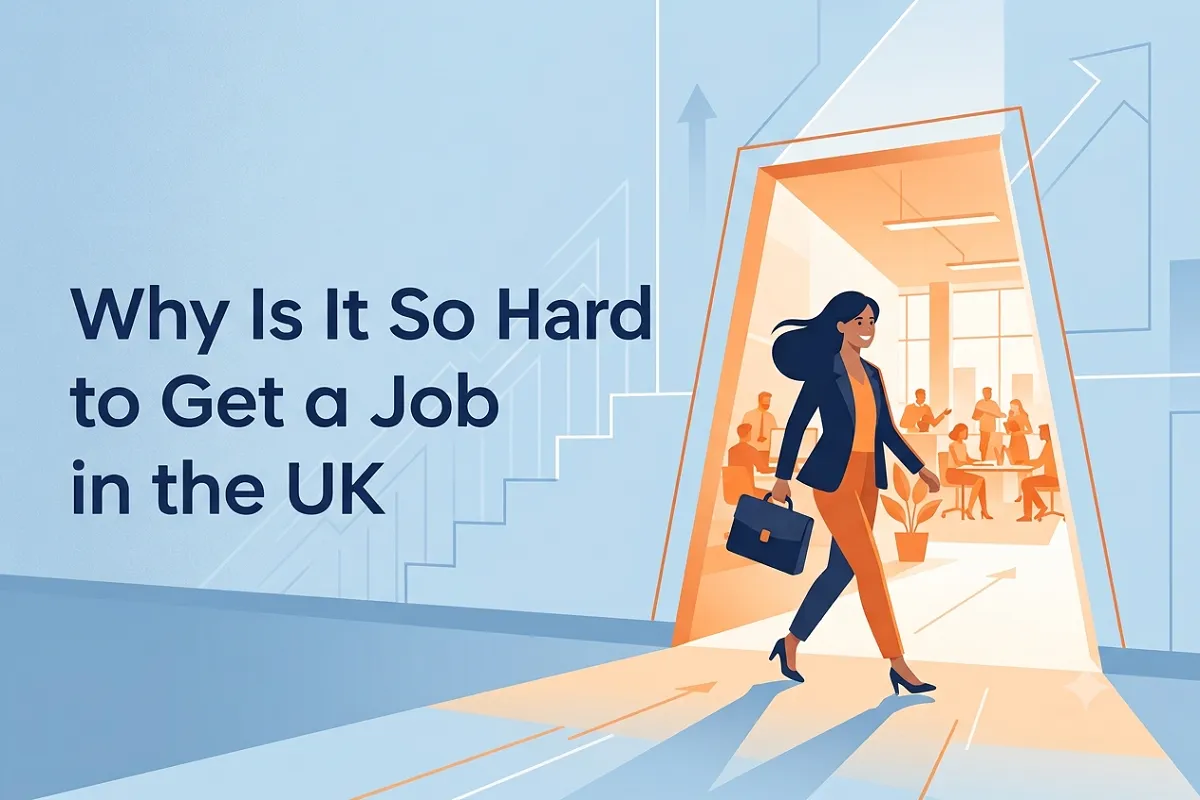
If you have been applying for jobs in the UK and getting very few replies, you are not alone.
Many job seekers are sending dozens of applications, attending interviews, updating their CVs and still struggling to secure a suitable role. For some people, the problem is not a lack of effort. The job market itself has become more competitive and employers are often more careful about hiring.
The latest UK labour market figures also show a softer hiring environment. In August 2026, the Office for National Statistics reported 707,000 vacancies, while the unemployment rate stood at 4.9%. Recent reporting on the same data described vacancies as being at their lowest level outside the pandemic period since 2014.
So, why is it so hard to get a job in the UK in 2026?
The answer is not just one thing. Fewer vacancies in some areas, stronger competition, cautious employers, changing skill requirements and the way companies recruit all play a part.
The good news is that understanding these changes can help you improve your job search.
The UK Job Market Has Become More Competitive:
One of the biggest reasons job hunting feels difficult is simple: more people may be competing for a limited number of suitable vacancies.
A job advert can receive applications from:
- Experienced professionals
- Recently redundant workers
- Career changers
- University graduates
- International candidates with the right to work
- People already working in similar roles
This means submitting a basic CV and waiting for a response is often no longer enough.
You may be qualified for a role but still face strong competition from people with more experience, industry-specific knowledge or a closer match to the employer’s requirements.
One vacancy does not mean one opportunity:
It is easy to see a job advert online and think:
“I have the skills for this. I should get an interview.”
But employers may receive a large number of applications.
Their goal is usually not to interview everyone who could potentially do the job. They are trying to identify candidates who appear to be the closest match.
That is why tailoring your application has become increasingly important.
There Are Fewer Vacancies Than During the Stronger Post-Pandemic Hiring Period:
The number of available jobs is an important part of the problem.
Official ONS data published in August 2026 put UK vacancies at 707,000. This was lower than earlier periods and reflected continued weakness in hiring demand.
This does not mean that there are no jobs.
There are still hundreds of thousands of vacancies across the UK.
However, when the number of opportunities falls, competition for each suitable role can increase.
Some sectors may also be affected more than others.
For example, an experienced worker in one industry may find plenty of opportunities, while a graduate looking for an entry-level office role may face a much tougher market.
This is why it is important not to judge the entire UK job market based only on your own experience.
Instead, look closely at:
- Your industry
- Your location
- Your experience level
- The type of job you want
- The skills employers are currently asking for
Employers Are Being More Careful About Hiring:
Recruiting a new employee is expensive.
An employer may need to pay for:
- Salary
- National Insurance contributions
- Pension contributions
- Training
- Recruitment
- Equipment
- Management time
When businesses are uncertain about future costs or demand, they may delay hiring.
Instead of immediately replacing an employee who leaves, a company might:
- Divide the work between existing staff
- Freeze recruitment
- Hire a temporary worker
- Use a contractor
- Wait until business conditions improve
Recent ONS vacancy data showed decreases across a number of industry sectors, with smaller businesses also experiencing a notable reduction in vacancies.
This can make the job market feel frustrating because you may see companies advertising less frequently than before.
Entry-Level Jobs Can Be Especially Difficult to Get:
Many people assume that entry-level jobs should be easy to obtain because they require less experience.
Unfortunately, this is not always the case.
Entry-level positions can attract a very large number of applicants.
A company advertising for a junior role may receive applications from:
- New graduates
- School leavers
- People with previous internships
- Candidates changing careers
- Applicants who already have one or two years of experience
As a result, even an “entry-level” position may have significant competition.
The experience problem:
One of the most frustrating situations for young job seekers is being told that they need experience to get a job.
But how do you gain experience if nobody gives you the first opportunity?
The answer is not always traditional full-time employment.
You may be able to build relevant experience through:
- Internships
- Apprenticeships
- Volunteering
- Freelance projects
- Temporary work
- Work experience
- Personal projects
- Online portfolios
- Part-time roles
For example, someone looking for a digital marketing role could create a small portfolio showing social media campaigns, blog articles or website projects.
Someone interested in data analysis could complete practical projects and demonstrate their skills.
Experience does not always have to come from a permanent job.
A Generic CV Is Less Likely to Work:
Many job seekers use the same CV for every application.
This saves time, but it can reduce your chances of getting noticed.
Imagine you are applying for:
- A customer service role
- An administrative role
- A sales role
- A marketing role
These jobs may share some skills, but employers are looking for different things.
Your CV should make it easy for each employer to understand why you are suitable for their specific role.
How to improve your CV?
Before applying, read the job description carefully.
Look for:
- Required skills
- Preferred experience
- Software or tools mentioned
- Main responsibilities
- Qualifications
- Personal qualities
Then make sure your CV honestly highlights the relevant experience you already have.
Do not simply copy keywords without evidence.
For example, instead of writing:
Excellent communication skills:
You could write:
Handled customer enquiries by phone and email, resolving common issues and providing clear information.
The second example gives the employer more useful evidence.
Applicant Tracking Systems Can Make Job Hunting More Difficult:
Many larger employers use Applicant Tracking Systems, often called ATS.
These systems help companies manage large numbers of applications.
An ATS may organise CVs, collect candidate information and help recruiters search for relevant skills or experience.
This does not mean a computer automatically rejects everyone.
However, a poorly structured or irrelevant CV may make it harder for recruiters to identify your suitability.
How to make your CV easier to read?
Keep your CV simple.
Use clear headings such as:
- Personal Profile
- Key Skills
- Work Experience
- Education
- Qualifications
Avoid overly complicated designs unless they are appropriate for your profession.
Make sure important skills and experience are clearly described.
A recruiter should quickly understand:
- What type of work you have done.
- What skills you have.
- What kind of role you are looking for.
- Why you could be suitable.
Some Job Seekers Are Applying for Too Many Jobs Without a Strategy:
When people become frustrated, they often start applying for everything.
This is understandable.
But sending 50 weak applications may be less effective than sending 10 strong and targeted applications.
A better approach is to divide jobs into categories.
For example:
Category 1: Strong match
You meet most of the requirements.
Spend more time tailoring your CV and application.
Category 2: Possible match
You meet some of the requirements but need to explain transferable skills.
Apply if you can clearly show why your previous experience is relevant.
Category 3: Weak match
You have very little connection to the role.
Instead of applying immediately, consider whether you need additional training or experience first.
This approach can save time and improve the quality of your applications.
Employers Are Asking for More Specific Skills:
The workplace is changing.
Technology, automation and artificial intelligence are becoming part of many jobs.
This does not mean everyone needs to become a programmer.
However, employers increasingly value people who can use modern tools effectively.
Depending on your career, useful skills may include:
- Microsoft Excel
- Data analysis
- Customer relationship management software
- Project management tools
- AI tools
- Digital communication
- Cybersecurity awareness
- Content management systems
- Social media tools
The important thing is to focus on skills that are relevant to your chosen career.
Do not spend months learning a skill simply because it is popular.
Ask yourself:
Will this skill help me get the type of job I actually want?
Online Job Applications Are Easier to Submit — and That Creates More Competition
Years ago, applying for a job could involve:
- Printing a CV
- Posting an application
- Visiting an employer
- Completing a paper form
Today, you can apply for many jobs within minutes.
That is convenient for job seekers, but it also means many other people can apply just as easily.
A vacancy posted online can quickly attract applications from across the country.
This creates a paradox.
It is easier to apply for jobs, but harder to stand out.
That is why your application needs to give the employer a clear reason to consider you.
Your Location Can Affect Your Job Search:
The job market is not the same everywhere in the UK.
London may have opportunities that are not available in smaller towns.
At the same time, competition for London jobs can be intense.
Other areas may have strong demand in particular industries.
For example, opportunities can vary depending on local demand for:
- Healthcare workers
- Construction workers
- Engineers
- Hospitality staff
- Logistics workers
- Teachers
- Technology professionals
- Care workers
If you are struggling to find work, consider widening your search.
This could mean looking at:
- Nearby towns and cities
- Hybrid roles
- Remote roles
- Different but related job titles
- Temporary positions
- Contract work
You may find opportunities by changing your search strategy rather than changing your entire career.
Some Job Advertisements Have a Very Long List of Requirements:
Job descriptions can sometimes feel intimidating.
You may see a list containing 15 or 20 skills and think:
“I only meet half of these requirements, so I should not apply.”
Not every requirement has the same importance.
Some are essential.
Others are desirable.
Read the job description carefully.
If you meet the main requirements and can demonstrate relevant transferable skills, you may still be a suitable candidate.
However, do not apply blindly to every role.
The goal is to apply strategically.
Recruiters Often Spend Limited Time Reviewing Applications:
Recruiters may need to review a large number of applications.
Your CV therefore needs to communicate the most important information quickly.
A recruiter should not have to search through three pages of unrelated information to understand what you do.
Put your strongest and most relevant experience where it can easily be seen.
Ask yourself this question:
If someone looked at your CV for 20 seconds, would they understand:
- What you do?
- What experience you have?
- What skills you offer?
- What type of job you want?
If the answer is no, your CV may need improvement.
Rejection Does Not Always Mean You Were Not Good Enough:
This is important to remember.
You can be a strong candidate and still not get the job.
An employer may choose someone because they:
- Have more direct experience
- Previously worked in the same industry
- Have a specific qualification
- Live closer to the workplace
- Have already used the company’s systems
- Were referred by someone
- Simply matched the employer’s immediate needs more closely
You cannot control every hiring decision.
What you can control is the quality of your application and how you improve after setbacks.
Instead of thinking:
“I was rejected, so I am not good enough.”
Try asking:
“What can I improve before my next application?”
That change in thinking can help you develop a more effective job search.
What Can You Do to Improve Your Chances of Getting a Job?
The UK job market may be competitive, but there are practical steps you can take.
1. Choose a Clear Career Direction:
Try not to apply randomly for completely different jobs.
Decide which type of role you are targeting.
For example:
- Customer Service Adviser
- Administrative Assistant
- Digital Marketing Assistant
- Warehouse Operative
- Healthcare Assistant
Once you have a clear target, you can build your CV around the skills needed for that type of work.
2. Tailor Your CV:
You do not need to rewrite your entire CV every time.
But you should adjust important sections to match the role.
Focus on:
- Relevant skills
- Relevant experience
- Relevant achievements
- Job-specific keywords
3. Write Better Application Answers:
Do not rush through application questions.
If an employer asks:
Why do you want this job?
Avoid a generic answer such as:
I am interested in this opportunity because I believe it will help me develop my career.
Instead, explain why that particular role interests you and how your skills relate to it.
Specific answers are usually more convincing.
4. Build Skills That Employers Actually Need:
Look at 20 job advertisements for your target role.
Write down the skills that appear repeatedly.
You may notice patterns.
For example, digital marketing roles might repeatedly mention:
- Google Analytics
- SEO
- Social media
- Content creation
- Paid advertising
This can help you identify useful areas for training.
5. Use More Than One Job Search Method:
Do not depend entirely on one job website.
Consider:
- Job boards
- Company career pages
- Recruitment agencies
- Professional networking
- Apprenticeship websites
- University career services
- Local employment services
- Industry events
Sometimes the best opportunities are found through a combination of methods.
6. Prepare Properly for Interviews:
Getting an interview is progress.
Before attending, research:
- The company
- The role
- The main responsibilities
- The skills required
- Common interview questions
Prepare examples from your previous experience.
A useful method is the STAR approach:
- Situation
- Task
- Action
- Result
This helps you give clear answers when discussing your experience.
7. Keep Improving While You Search:
Job hunting can take time.
Use that time productively.
You could:
- Complete a relevant course
- Improve your CV
- Practise interviews
- Build a portfolio
- Gain volunteer experience
- Work on personal projects
- Improve your digital skills
Small improvements can strengthen your future applications.
Common Mistakes to Avoid When Looking for a Job:
Applying With the Same CV Every Time:
A generic CV may not clearly show why you are suitable for a particular job.
Applying Without Reading the Job Description:
Take a few minutes to understand what the employer actually wants.
Focusing Only on Famous Companies:
Large companies receive huge numbers of applications.
Smaller businesses may also offer valuable opportunities.
Waiting Until You Feel Perfectly Qualified:
You do not need to meet every desirable requirement before applying.
Focus on whether you can realistically perform the main responsibilities.
Ignoring Transferable Skills:
Experience from retail, hospitality, volunteering or previous careers can provide valuable skills.
These may include:
- Communication
- Problem-solving
- Teamwork
- Organisation
- Customer service
- Leadership
Make sure you explain how those skills apply to the role you want.
Frequently Asked Questions:
Why is it so difficult to get a job in the UK in 2026?
The UK job market has become more competitive in many areas. Recent labour market data shows lower vacancy levels and a softer hiring environment, while job seekers may also face competition from candidates with similar or more direct experience.
How many job vacancies are there in the UK?
The ONS reported approximately 707,000 vacancies in its August 2026 labour market release. Vacancy figures change regularly, so it is useful to check the latest official data when assessing the job market.
Should I apply for a job if I do not meet every requirement?
Possibly. If you meet the main requirements and can demonstrate relevant transferable skills, you may still be worth considering. Read the job description carefully and focus on essential requirements.
How many jobs should I apply for each day?
There is no perfect number. It is usually better to submit a manageable number of strong, targeted applications than a large number of generic ones.
Why am I applying for jobs but getting no interviews?
Common reasons include a generic CV, poor alignment with the job requirements, lack of relevant keywords, unclear experience or strong competition. Review your CV and compare it carefully with the jobs you are applying for.
Is it worth using recruitment agencies?
Yes, depending on your industry. Recruitment agencies can help connect candidates with employers and may advertise opportunities that are not widely promoted elsewhere.
How can I get experience if I cannot get a job?
Consider internships, apprenticeships, volunteering, freelance work, temporary jobs, work experience or personal projects related to your chosen career.
Final Thoughts:
Getting a job in the UK in 2026 can feel difficult, especially when you are sending applications without receiving many responses.
But a difficult job market does not mean you should give up.
The most effective approach is to stop treating every job application as a numbers game.
Instead:
- Choose a clear career direction.
- Understand what employers want.
- Tailor your CV.
- Build relevant skills.
- Improve your interview technique.
- Apply strategically.
- Keep learning from rejection.
You cannot control how many people apply for a job or which candidate an employer chooses.
But you can control how clearly you present your skills and how effectively you approach your job search.
One strong application may be worth more than ten rushed ones.
Keep improving, stay consistent and focus on opportunities where your skills genuinely match the role.
Your next job may not come from applying to hundreds of random vacancies. It may come from one application where you clearly show an employer exactly why you are the right person for the role.

Graduating from university is supposed to feel like the beginning of a new chapter.
You finish your degree, prepare your CV and start applying for graduate jobs. But for many graduates in the UK, the process is taking longer and proving more difficult than expected.
You may apply for dozens of positions without receiving an interview. You may see a graduate programme with hundreds or even thousands of applicants. Some jobs labelled as “entry-level” may still ask for previous experience.
So, why are graduate jobs becoming harder to find?
The answer is not simply that graduates are not working hard enough. The wider UK labour market has weakened, employers have become more cautious about recruitment, and entry-level opportunities are changing.
Government analysis published in June 2026 found that UK hiring was 14% lower year-on-year as of April 2026. Entry-level hiring was also weak, with 30 of 38 tracked entry-level occupations declining.
This does not mean a university degree has become worthless. It also does not mean that artificial intelligence has suddenly removed all graduate jobs.
The situation is more complicated.
This article explains why finding a graduate job in the UK has become more difficult and, more importantly, what you can do to improve your chances.
The Overall UK Job Market Has Become More Difficult:
Graduate recruitment does not exist separately from the rest of the economy.
When employers across the UK become cautious about hiring, graduates are affected too.
Recent official and economic data shows that the labour market has weakened. UK job vacancies fell to around 707,000, while unemployment stood at 4.9% in the second quarter of 2026.
When companies reduce recruitment, they may decide to:
- Delay hiring new employees
- Reduce the number of graduate places
- Focus on experienced workers
- Avoid replacing staff who leave
- Use existing employees to cover additional work
For a graduate, this creates a difficult situation.
You are not only competing with other university leavers. You may also be competing with experienced professionals who are applying for the same or similar positions.
Entry-Level Hiring Has Been Falling:
One of the clearest reasons graduate job hunting feels difficult is that entry-level hiring has weakened.
The UK government’s 2026 analysis of LinkedIn hiring data found that, as of April 2026, overall UK hiring was down 14% year-on-year. Entry-level hiring broadly followed the same downward trend as the wider labour market.
However, the picture is not identical across every occupation.
Some entry-level roles have been hit harder than others.
Government analysis identified particularly sharp declines in several information-processing and knowledge-based occupations, including:
- Accountant
- Graphic Designer
- Software Engineer
At the same time, some sales and customer-facing occupations showed stronger growth.
This means graduates should avoid making assumptions based only on the word graduate.
The real question is:
What is happening in the specific career you want to enter?
A graduate searching for software roles may face a very different market from someone looking for sales, healthcare or customer-facing work.
There Are More Graduates Competing for Professional Roles:
University education has given more people access to higher-level careers.
That can be a positive thing, but it also means employers may receive applications from many qualified candidates.
Imagine a company advertising for a graduate marketing role.
The applicants could include:
- Recent graduates
- Graduates with internships
- People with a master’s degree
- Candidates with freelance experience
- Career changers
- People who have already worked in similar roles
A degree alone may therefore no longer make someone stand out.
Employers may look for additional evidence such as:
- Work experience
- Internships
- Relevant projects
- Technical skills
- Communication ability
- Industry knowledge
- A strong portfolio
This can feel unfair to graduates who were told that getting a degree would automatically lead to better job opportunities.
The reality is that a degree can still be valuable, but it is increasingly important to show what you can actually do.
Employers Often Prefer Candidates Who Can Start Quickly:
Training new employees requires time and money.
When companies are under financial pressure, they may prefer candidates who already understand the work.
Government analysis notes that when there is a surplus of applicants, employers may favour more experienced candidates, particularly where entry-level candidates lack operational skills needed for the role.
This creates a frustrating cycle.
Graduates need a job to gain experience.
But some employers prefer candidates who already have experience.
The solution is not necessarily to wait for someone to give you a perfect opportunity.
You may need to build evidence of your skills through other routes.
These could include:
- Internships
- Placements
- Part-time work
- Volunteering
- Freelance projects
- University projects
- Personal projects
- Work experience
For many employers, relevant experience does not always have to come from a full-time graduate job.
AI Is Changing Entry-Level Work — But It Is Not the Whole Story:
Artificial intelligence is often blamed for the difficult graduate job market.
There is some reason for concern.
The UK government’s entry-level hiring analysis found that some of the occupations experiencing the biggest hiring declines are also roles where AI capabilities have become more visible. However, the report clearly states that this does not prove that AI caused the decline.
The government’s Skills England report also says that it is too early to determine exactly how much AI is affecting graduate jobs because several factors are happening at the same time. These include the post-pandemic adjustment, wider economic conditions and longer-term changes in recruitment.
So the honest answer is:
AI may be changing the type of work graduates do, but it is not accurate to say that AI alone is responsible for fewer graduate jobs.
Some traditional junior tasks can now be automated or completed more quickly with AI tools.
As a result, employers may expect graduates to contribute in different ways.
For example, instead of spending all day on repetitive tasks, a graduate may increasingly be expected to:
- Analyse information
- Check AI-generated work
- Solve problems
- Communicate with clients
- Use AI tools responsibly
- Make informed decisions
- Bring creative or human judgement
This means graduates should think about how technology is changing their chosen profession.
Graduate Employers Are Looking for More Than a Degree:
A degree demonstrates academic achievement.
But employers often want to know how you will perform in a real workplace.
For example, a business graduate may have studied:
- Management
- Marketing
- Finance
- Economics
But an employer may still ask:
- Can you use Excel?
- Can you analyse data?
- Can you communicate with clients?
- Can you manage deadlines?
- Can you work in a team?
- Can you solve practical problems?
This is why practical skills are becoming increasingly important.
The strongest graduate candidates often combine:
Education + practical skills + evidence of experience.
You do not need to become an expert in everything.
Instead, focus on the skills that repeatedly appear in job advertisements for your chosen career.
Some Graduate Jobs Have Become Extremely Competitive:
Large graduate schemes are particularly attractive because they may offer:
- Structured training
- Career development
- Recognised employers
- Permanent employment
- Clear progression
Because of this, they can receive a huge number of applications.
If you apply only to famous graduate programmes, you may be competing against a very large number of candidates.
This does not mean you should avoid them.
Apply if they suit you.
But do not build your entire job search around a small number of major employers.
Also look at:
- Small businesses
- Medium-sized companies
- Local employers
- Start-ups
- Specialist companies
- Charities
- Public sector organisations
A smaller company may not call its vacancy a graduate scheme, but it could still offer an excellent starting point.
The Job Title You Search For Matters:
One common mistake is searching only for jobs with the word graduate in the title.
Many suitable jobs may instead be listed as:
- Junior
- Assistant
- Coordinator
- Executive
- Trainee
- Administrator
- Associate
- Officer
For example, someone looking for a graduate marketing job could also search for:
- Marketing Assistant
- Marketing Executive
- Digital Content Assistant
- Social Media Coordinator
- SEO Executive
Expanding your search terms can reveal opportunities that other graduates may miss.
Employers Want Evidence, Not Just Claims
A CV that says:
Excellent communication skills.
does not tell an employer very much.
A stronger approach is to show how you used that skill.
For example:
Presented research findings to a group of 30 students and responded to questions during a final-year university project.
Or:
Worked part-time in a customer-facing role, handling enquiries and resolving routine problems.
The same principle applies to many skills.
Instead of simply listing:
- Teamwork
- Leadership
- Problem-solving
- Organisation
Give examples.
Your university experience may provide useful evidence through:
- Group projects
- Research
- Presentations
- Society activities
- Events
- Dissertation work
- Student employment
Do not underestimate experiences that are outside your degree.
A part-time retail or hospitality job may have helped you develop communication, organisation and customer service skills.
The Rise of AI Skills Does Not Mean Every Graduate Must Become a Programmer:
Recent reporting has shown growing demand for AI-related skills even while the wider UK hiring market has weakened.
However, this does not mean every graduate needs to learn advanced programming.
AI skills can mean different things in different careers.
For example:
Marketing:
Understanding how to use AI for research, content support and campaign analysis.
Finance:
Using AI-assisted tools while checking accuracy and understanding the underlying data.
Human Resources:
Understanding how AI may support recruitment while recognising issues around bias and responsible use.
Design:
Using AI tools as part of a wider creative process rather than relying on them to replace professional judgement.
The important point is to understand how technology relates to your chosen career.
Some Young People Are Also Competing for Fewer Traditional Starter Jobs:
The difficulty is not limited to university graduates.
The wider entry-level market is changing.
The government has acknowledged concerns about young people entering the workforce and launched initiatives including the Early Careers Job Alliance to examine how entry-level work is changing and how pathways into employment can be maintained.
This is important because graduate careers have traditionally depended on junior roles.
Those roles allowed people to:
- Start with basic tasks.
- Gain experience.
- Learn from senior colleagues.
- Take on more responsibility.
If the nature of junior work changes, graduates may need different ways to demonstrate that they are ready for professional employment.
What Can Graduates Do to Improve Their Chances?
The job market may be difficult, but there are practical steps you can take.
1. Choose a Clear Career Direction:
Avoid applying for completely unrelated roles without a clear reason.
Choose one or two career directions.
For example:
- Digital marketing
- Data analysis
- Human resources
- Finance
- Software development
Once you know your direction, you can identify the skills employers expect.
2. Study Real Job Advertisements:
Look at 20 to 30 job adverts in your chosen field.
Write down the skills that appear repeatedly.
You may notice patterns.
For example, a digital marketing graduate might repeatedly see:
- SEO
- Google Analytics
- Content creation
- Social media
- Paid advertising
Those repeated skills can help you decide what to learn next.
3. Build a Portfolio:
A portfolio is not only for designers.
Many careers can benefit from evidence of practical work.
Examples include:
Marketing
Campaign ideas, blog posts, SEO projects or social media examples.
Data Analysis
Reports, dashboards or analysis projects.
Software Development
Coding projects and examples of completed applications.
Business
Research reports, presentations or case studies.
A good portfolio gives you something concrete to discuss during an interview.
4. Gain Experience in Different Ways:
Do not wait only for a graduate scheme.
Consider:
- Internships
- Volunteering
- Freelance work
- Temporary employment
- Part-time roles
- Work placements
Even a small project can help you build experience.
The important thing is to choose opportunities relevant to your long-term direction where possible.
5. Tailor Every Important Application:
Your CV should not look completely different for every job.
But your strongest relevant experience should be easy to see.
Read the job description carefully and adjust:
- Your personal profile
- Key skills
- Relevant experience
- Examples of achievements
A recruiter should quickly understand why you applied for that particular role.
6. Do Not Ignore Smaller Employers:
Many graduates focus heavily on famous companies.
Smaller employers may offer:
- More responsibility
- Broader experience
- Closer contact with managers
- Faster practical learning
Search beyond the biggest graduate programmes.
7. Build Professional Relationships:
Networking does not mean asking strangers for jobs.
You can:
- Speak to alumni
- Attend career events
- Join professional groups
- Connect with people in your industry
- Ask for career advice
A useful question could be:
I am interested in starting a career in this field. What skills do you think employers value most in new graduates?
Advice from someone already working in the industry can be extremely useful.
Common Mistakes Graduates Should Avoid:
Applying Only for Graduate Schemes
Many suitable entry-level jobs do not use the word “graduate”.
Using the Same CV Everywhere
Tailor your application to show the most relevant experience.
Ignoring Part-Time Experience
Customer service, retail, hospitality and other jobs can demonstrate valuable transferable skills.
Waiting Until You Feel Completely Ready
You may never meet every desirable requirement.
Apply when you meet the main requirements and can realistically do the job.
Blaming Everything on AI
AI is one part of a much bigger change. The wider labour market, employer costs and competition also matter. Current government analysis does not establish AI as the sole or proven cause of weaker entry-level hiring.
Applying Without a Clear Career Direction
A focused strategy makes it easier to build relevant skills and present a convincing application.
Frequently Asked Questions:
Are graduate jobs disappearing in the UK?
No. Graduate and entry-level jobs have not disappeared, but hiring has weakened in many areas. Government analysis found that overall UK hiring was down 14% year-on-year as of April 2026, with significant variation between occupations.
Why is it difficult to get a graduate job?
The main reasons include a weaker overall job market, fewer opportunities in some sectors, strong competition and employers placing greater value on practical experience and specific skills.
Is AI replacing graduate jobs?
There is evidence that some entry-level occupations experiencing weaker hiring are also areas where AI capabilities have improved. However, UK government analysis says this is not causal evidence that AI is responsible for the decline.
Is a university degree still worth having?
A degree can still provide valuable knowledge, skills and access to many careers. However, graduates may need to combine academic qualifications with practical experience and job-relevant skills.
Should I accept a job that is not related to my degree?
It depends on your career goals. A job outside your degree subject can still provide transferable skills, income and professional experience. It may also act as a stepping stone towards your preferred career.
How can I get experience after university?
Consider internships, temporary work, volunteering, freelance projects, personal projects and work placements.
Final Thoughts:
Graduate job hunting in the UK has become more difficult, but the situation is not hopeless.
The wider labour market is weaker, entry-level hiring has declined in many occupations and employers are increasingly focused on practical skills. At the same time, the evidence does not support a simple explanation that AI has single-handedly removed graduate opportunities.
For graduates, the most useful approach is to focus on what you can control.
Choose a career direction. Study the job market in your field. Build practical skills. Gain experience where you can. Create evidence of your abilities and tailor your applications.
A degree may open a door, but in a competitive job market, you often need to show an employer why they should invite you through it.
Your first job may not be your dream job.
It may be a junior position, a small company, a temporary role or a stepping stone.
What matters is building experience and moving forward.
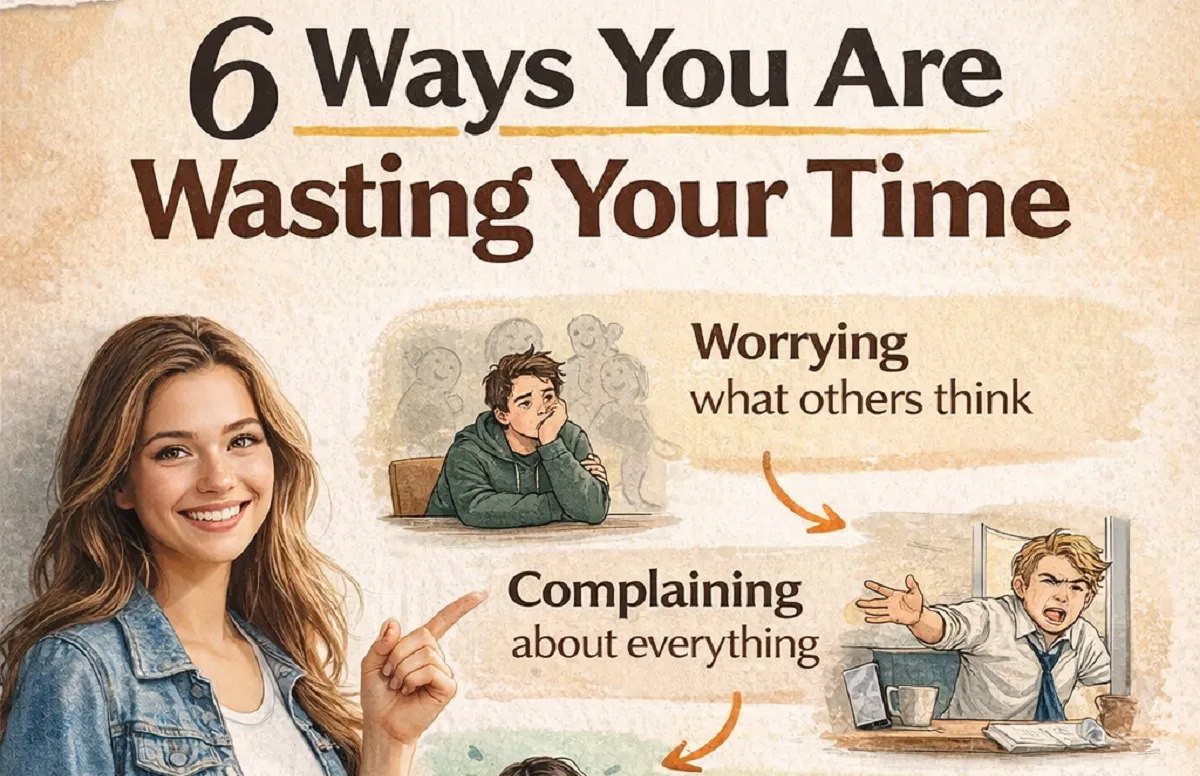
Time slips quietly.
Not with loud warnings. Not with alarms. But in small, unnoticed habits you repeat every day.
You tell yourself:
“I’ll start tomorrow.”
“I just need more time.”
“I’m not ready yet.”
But what if the problem isn’t time at all?
What if you are wasting your time without realizing it?
The truth is, most people don’t lose time in big ways. They lose it in small, daily patterns—thoughts, behaviors, and habits that slowly hold them back.
In this guide, you’ll discover 6 powerful ways you might be wasting your time—and more importantly, how to stop.
No complicated advice. No lectures.
Just clear, honest truth.
1. Worrying What Others Think:
Why This Is Wasting Your Time?
You hesitate before speaking.
You second-guess your decisions.
You hold back your ideas.
Why?
Because you’re thinking:
“What will they say?”
This habit is one of the biggest ways people waste time.
Instead of moving forward, you stay stuck in your head.
The Reality:
Most people are too busy thinking about themselves to judge you.
And even if they do—so what?
You can’t control opinions. But you can control your actions.
What You Should Do Instead?
- Make decisions based on your values
- Accept that not everyone will agree
- Focus on progress, not approval
The moment you stop seeking approval, you start saving time.
2. Complaining About Everything:
Why This Is Wasting Your Time?
You complain about:
- Your job
- Your situation
- Other people
It feels like release. But it changes nothing.
Complaining is action without results.
The Hidden Cost:
Every minute you spend complaining is a minute not spent improving.
It drains your energy. It keeps you stuck.
What You Should Do Instead?
Ask yourself:
- Can I fix this? → Take action
- Can I not fix this? → Let it go
Simple.
Less complaining. More doing.
3. Trying to Please Everyone:
Why This Is Wasting Your Time?
You say “yes” when you want to say “no.”
You adjust your life to fit others’ expectations.
And slowly, you lose yourself.
Trying to please everyone is impossible—and exhausting.
The Truth:
No matter what you do:
- Someone will disagree
- Someone will judge
- Someone will be unhappy
So why waste your time chasing approval?
What You Should Do Instead?
- Set clear boundaries
- Learn to say “no” without guilt
- Respect your own priorities
When you stop pleasing everyone, you finally start living your own life.
4. Being a Perfectionist:
Why This Is Wasting Your Time?
You wait for the perfect moment.
You delay until everything feels “just right.”
But perfection never comes.
So you keep waiting.
The Trap:
Perfectionism looks productive—but it’s actually procrastination in disguise.
You spend:
- Too much time planning
- Too much time fixing small details
- Too little time taking action
What You Should Do Instead?
- Aim for “good enough”
- Start before you feel ready
- Improve as you go
Progress beats perfection. Every single time.
5. Repeating the Same Mistake:
Why This Is Wasting Your Time?
You make a mistake.
You regret it.
Then… you repeat it.
Different day. Same pattern.
This is one of the most frustrating ways to waste time.
The Real Problem:
The mistake isn’t the issue.
Not learning from it is.
What You Should Do Instead?
After every mistake, ask:
- What went wrong?
- What can I do differently next time?
Write it down if needed.
Awareness turns mistakes into lessons.
Without reflection, mistakes become habits.
6. Fearing Failure:
Why This Is Wasting Your Time?
You want to start something new.
But fear stops you:
- “What if I fail?”
- “What if I look foolish?”
So you don’t try at all.
The Irony:
By avoiding failure… you guarantee no progress.
And that is the biggest failure of all.
What You Should Do Instead?
- Accept that failure is part of growth
- Start small
- Focus on learning, not winning
Every successful person has failed—many times.
Fear wastes time. Action creates results.
Bonus Section: A Simple Reality Check
Ask yourself honestly:
- Are you waiting too much?
- Are you overthinking small decisions?
- Are you holding back because of others?
If yes, you’re not alone.
But now you’re aware.
And awareness is the first step to change.
Why You Must Stop Wasting Your Time Now?
Time doesn’t pause.
It doesn’t wait for you to feel ready.
Every day you delay:
- Opportunities pass
- Confidence decreases
- Regret increases
But here’s the good news:
You don’t need a complete life reset.
You just need small changes.
Conclusion:
Wasting your time doesn’t always look obvious.
It hides in:
- Overthinking
- Fear
- People-pleasing
- Complaining
- Perfectionism
These habits feel normal. Comfortable even.
But they quietly hold you back.
Let’s quickly recap the 6 ways you might be wasting your time:
- Worrying what others think
- Complaining about everything
- Trying to please everyone
- Being a perfectionist
- Repeating the same mistake
- Fearing failure
Now the question is simple:
What will you do next?
You can keep waiting.
Or you can start today.
Take one small step:
- Say no when you mean it
- Start that task you’ve been delaying
- Stop overthinking one decision
That’s all it takes.
Because the truth is—
The biggest way to waste time… is knowing all this and still doing nothing.

Why Is It So Hard to Get a Job in the UK in 2026?
If you have been applying for jobs in the UK and getting very few replies, you are not alone. Many...


Why Are Graduate Jobs Becoming Harder to Find in the UK?
Graduating from university is supposed to feel like the beginning of a new chapter. You finish your degree, prepare your...


Top 10 Hosting Providers for Developers
Developers assess hosting differently from most other webmasters. While absolute costs and total disk space matter, the best web hosting...


Meta and Microsoft Announce Massive Layoffs
Big tech companies like Meta Platforms and Microsoft are reducing their workforce as they spend more money on artificial intelligence...


GPT-5.5 vs Claude: Nano Banana Killer & Claude’s New Design Tool
Artificial Intelligence is evolving at an incredible pace. Every few months, new models and tools are released that push the...


Moltbook: The First Social Network for AI Agents
Artificial Intelligence is evolving rapidly. We’ve moved from simple tools to powerful AI systems that can write, design, analyze, and...


Volkswagen Uses AI Agents to Transform Its Cars in China
The automotive industry is changing faster than ever before—and at the center of this transformation is Artificial Intelligence (AI). One...


AI Is Growing Faster Than You Think
Artificial Intelligence (AI) is no longer something we only see in movies or imagine about the future. It is already...


Could AI Eliminate Humans in the Next 10 Years?
Artificial Intelligence (AI) is advancing at an incredible speed. Every day, new tools, smarter systems, and powerful technologies are being...


Meet NEO: Your New Home Robot Buddy
Imagine coming home after a long day, and instead of doing chores, managing devices, or worrying about security, everything is...


You’ve Been Using AI the Hard Way: Why Most People Use AI Inefficiently?
Artificial Intelligence is one of the most powerful tools available today. Millions of people are using AI for writing, design,...

Master AI Engineering: 20 Key Concepts Explained Simply
Artificial Intelligence (AI) is no longer a futuristic idea—it is already shaping our daily lives. From voice assistants to recommendation...


6 Ways You Are Wasting Your Time (And Don’t Even Realize It)
Time slips quietly. Not with loud warnings. Not with alarms. But in small, unnoticed habits you repeat every day. You...


How to Take Nothing Personally: 6 Powerful Ways to Protect Your Peace
Have you ever replayed a single comment in your head for hours… maybe even days? Someone said something small. Maybe...


9 Habits for Clearer Speaking I Wish I Knew Sooner
You start explaining something simple… and somehow it turns complicated. You add more words. More details. More explanation. But instead...

15 Types of Negativity to Stop (Before They Quietly Control Your Life)
Negativity doesn’t arrive loudly. It creeps in—through small doubts, silent worries, and habits you barely notice. One day, you feel...


6 Habits to Articulate Your Thoughts Like the Top 1%
Have you ever listened to someone speak and thought, “Wow… they make everything sound so simple and powerful”? And then...


The 3-2-1 Speaking Trick That Forces You To Stop Rambling
Have you ever started explaining something and then suddenly realized… you’re going in circles? You keep talking. Adding more words....


7 Skills That Will Pay You Forever – Future-Proof Your Career
In a world where industries are changing faster than ever, one thing remains constant—skills are the real currency of success....


Hard Skills vs Soft Skills: Why You Need Both to Succeed
In today’s competitive world, success is no longer determined by just what you know—it’s also about how you apply it...
-
 Career3 years ago
Career Opportunities for Seniors: 7 Jobs that are Perfect for Older Adults
-
 Jobs7 months ago
15 Best Second Jobs to Boost Your Income in the UK for 2026
-

 Career2 years ago
5 Free Job Posting Sites in the UK (For Employers)
-
 Money7 months ago
20 Ways to Make Money with Google Gemini: Practical Methods Anyone Can Start
-
 Money7 months ago
26 Lucrative Passive Income Ideas to Build Wealth in 2026
-

 AI & Tools7 months ago
10 Insane Ways Google Gemini Will Explode Your Productivity in 2026
-

 Job Description2 years ago
Support Worker Job Description: Qualifications, Skills, Salary, Working Hours
-

 AI & Tools7 months ago
ChatGPT vs Copilot: Which AI Is Best for You in 2026?