
AI & Tools
AI and Public Trust: Why People Are Concerned About Artificial Intelligence
Why are people concerned about AI? This practical guide covers job fears, accuracy, privacy, bias, human oversight and how workers can prepare.
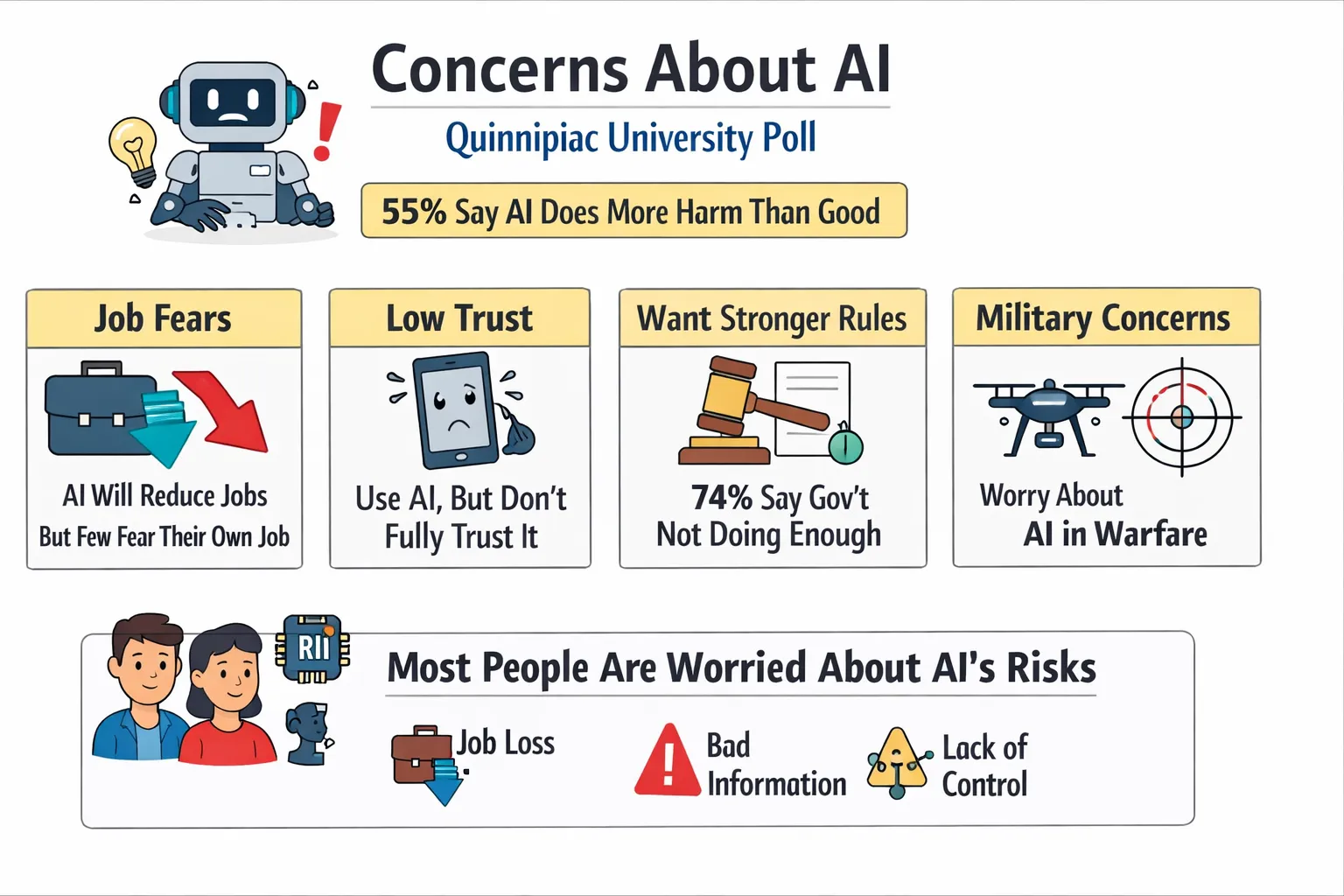
AI is becoming part of everyday work, education and business, but public confidence has not always moved at the same speed. Concerns about job loss, unreliable answers, privacy, bias and weak oversight can make people cautious about using AI.
That caution is not necessarily a rejection of the technology. It can also be a reminder that useful AI adoption depends on trust, clear rules and human judgement.
Why Are People Concerned About AI?
AI can change how tasks are completed, which creates both opportunities and uncertainty. People may worry about what happens when an automated system makes a mistake or when a job changes faster than workers can adapt.
1. Fear of Job Loss
One of the biggest concerns is employment. AI can automate parts of some jobs, reduce repetitive work and change the skills employers need. However, a task being automated does not automatically mean an entire occupation disappears.
A better question for workers is: Which parts of my job can AI change, and which skills become more valuable because of that change?
2. Worries About Incorrect Information
AI systems can produce confident-sounding answers that contain errors. This matters when people use AI for research, business decisions, applications, finance, health information or other important tasks.
- Check important facts against reliable sources.
- Ask for evidence or supporting information where appropriate.
- Review numbers, names, dates and quotations.
- Never treat fluent writing as proof that an answer is correct.
3. Privacy and Data Security
People may also worry about what happens to information entered into AI tools. Employees should understand their employer’s AI policy and avoid placing confidential business information, private customer data or sensitive personal details into tools that are not approved for that purpose.
4. Bias and Unfair Decisions
AI can reflect problems in its training data, design or the way an organisation uses it. This is especially important when AI supports hiring, performance reviews, lending, education or other decisions that affect people’s opportunities.
Human review, appropriate testing and clear accountability are important safeguards when AI is used for high-impact decisions.
5. Fear of Losing Human Control
As AI systems become capable of handling longer workflows, people naturally ask how much control should be given to an automated system. The answer depends on the task.
| Task | Suitable AI role | Human role |
|---|---|---|
| Drafting an email | Create a first draft | Check tone and accuracy |
| Summarising documents | Organise key points | Verify important details |
| Research | Suggest information and questions | Check sources and conclusions |
| Hiring decisions | Support administration or matching | Make accountable decisions |
| Business automation | Handle defined repeatable steps | Set permissions and review outcomes |
How Workers Can Prepare for More AI at Work
- Understand which AI tools are approved in your workplace.
- Identify repetitive tasks where AI can safely save time.
- Build basic AI literacy rather than relying on one tool.
- Improve human skills such as communication, judgement and problem-solving.
- Learn how to review AI output instead of accepting it automatically.
- Keep evidence of how you use AI to improve quality, speed or service.
💼 Career tip: Workers who can combine AI fluency with domain knowledge and good judgement can be better prepared for changing job requirements.
How Businesses Can Build Trust in AI
- Define which AI uses are allowed and which require approval.
- Protect confidential and personal information.
- Test AI systems before relying on them in important workflows.
- Keep humans accountable for high-impact decisions.
- Monitor results and investigate recurring errors.
- Give employees practical training rather than simply providing access to tools.
AI Should Not Be a Choice Between Fear and Hype
It is reasonable to question AI while also recognising its potential. The most useful approach is neither blind optimism nor automatic rejection. Organisations and workers can test AI on suitable tasks, measure the results and increase its role only when the benefits and safeguards are clear.
A Simple AI Trust Checklist
- Is the task suitable for AI?
- Could an error cause serious harm?
- Are the inputs safe to share?
- Can a person review the output?
- Can the result be checked against reliable information?
- Is there a clear owner responsible for the final decision?
Frequently Asked Questions
Why do people distrust AI?
Common reasons include incorrect answers, privacy concerns, bias, job uncertainty and uncertainty about who is responsible when an AI system makes a mistake.
Will AI replace all jobs?
There is no simple yes-or-no answer. AI is more likely to change the tasks inside many jobs, while some roles may shrink and others may grow. Workers can prepare by developing AI literacy alongside valuable human and professional skills.
How can employees use AI safely?
Follow workplace policies, protect sensitive information, verify important outputs and keep human responsibility for decisions that require judgement.
Can AI be useful even when people do not fully trust it?
Yes. AI can be useful for low-risk tasks such as drafting, organising information and generating ideas, provided users understand its limitations and review the results.
Related JobDoor Guides
- AI Myths and Facts: What Workers and Job Seekers Should Know
- AI Skills Every Job Seeker Should Learn
- AI Growth and the Future of Work
- AI Agents at Work
- How to Use AI Efficiently at Work
Final Takeaway
Concerns about AI are useful when they lead to better questions about accuracy, jobs, privacy, bias and accountability. The goal is not to trust every AI system or reject the technology altogether. The practical path is to use AI where it adds value, keep people responsible for important decisions and build the skills needed for a changing workplace.








How to Start a Career in Transport and Logistics in the UK
Planning a career in transport and logistics in the UK? See entry-level roles, apprenticeships, qualifications, skills and practical steps to...


Rolls-Royce Internship UK: Eligibility, Opportunities & How to Apply
Find Rolls-Royce internships in the UK with practical guidance on eligibility, opportunities, applications, assessments, skills and preparation.


JLR Internships in the UK: How to Find and Apply
Find JLR internships and undergraduate placements in the UK, with practical guidance on eligibility, applications, career areas, assessments and preparation.


Technology Internships in the UK: How to Find and Prepare
Find technology internships in the UK with practical guidance on choosing a tech career area, building skills, finding employers and...


Deloitte Internship UK: How to Apply and Prepare
A practical guide to Deloitte internships in the UK, covering programmes, eligibility, applications, assessments, skills, student visas and preparation.


How to Prepare for a Remote Interview: Complete Guide
Prepare for a remote or video interview with practical advice on technology, camera setup, communication, notes and handling technical problems.

How to Stay Employable: 12 Long-Term Career Strategies
No one can guarantee permanent employment. Employers change, industries evolve and personal circumstances can affect a career at any stage....


How AI Is Changing Recruitment: What Job Seekers Should Expect
Artificial intelligence is changing recruitment, but not in the simple way many headlines suggest. Employers may use AI to organise...


How to Use AI to Identify Your Transferable Skills
Changing careers can feel difficult because job titles often make people focus on what they have not done instead of...

How to Use AI Responsibly When Applying for Jobs
AI can help job seekers save time when researching roles, improving a CV, preparing a cover letter and practising for...
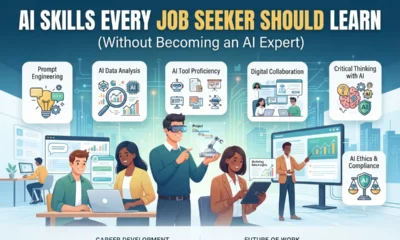

AI Skills Every Job Seeker Should Learn (Without Becoming an AI Expert)
Artificial intelligence is becoming part of everyday work in many industries. You do not need to become a programmer, data...


How to Get a Job in the UK: A Complete Step-by-Step Guide
Finding a job in the UK can feel difficult, especially when you are competing with many other applicants. The process...
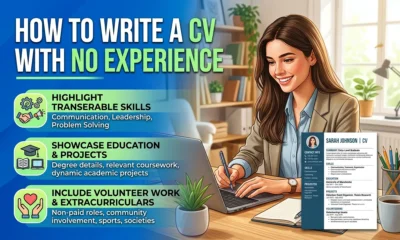

How to Write a CV With No Experience
Find out how to write a CV with no experience, what to include and how students, graduates and first-time job...


What Is a Job Description and What Should You Look For?
What is a job description? Understand what it means, what to look for and how to use it to decide...
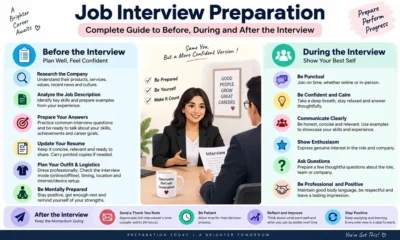

Job Interview Preparation: Complete Guide to Before, During and After the Interview
A complete job interview preparation guide covering common questions, competency answers, remote interviews, interview mistakes and what to do after...
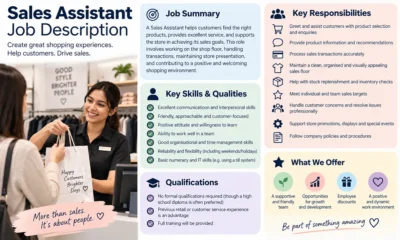

Sales Assistant Job Description: Duties, Skills, Salary and Career Guide UK
A Sales Assistant helps customers, processes purchases and supports the day-to-day running of a retail environment.


Web Developer Job Description: Duties, Skills, Salary and Career Guide UK
A Web Developer builds, maintains and improves websites and web applications. See the main duties, skills, qualifications, salary expectations and...

Choose an Entry-Level Job Based on Your Personality and Skills
Choosing your first job can be confusing. There are hundreds of entry-level jobs in the UK, but the best option...

How AI Can Help You Write a CV Without Making It Sound Generic
Find out how to use AI to improve your CV, tailor your experience and write clearer applications without adding false...


Python Interview Cheat Sheet: 30 Python Concepts You Should Know Before Your Next Coding Interview
Python is one of the most popular programming languages for beginners and professional developers. It is widely used in web...
-
 Career3 years ago
Career Opportunities for Seniors: 7 Jobs that are Perfect for Older Adults
-
 Jobs8 months ago
Second Jobs in the UK: 15 Practical Ways to Earn Extra Income
-

 Career2 years ago
5 Free Job Posting Sites in the UK (For Employers)
-
 How-to8 months ago
How to Use Google Gemini for Freelance Work and Career Skills
-
 How-to8 months ago
Passive Income Ideas: Build Long-Term Income Streams
-

 AI & Tools8 months ago
How to Use Google Gemini for Productivity at Work
-

 Job Description2 years ago
Support Worker Job Description: Duties, Skills, Salary and Career Guide UK
-

 AI & Tools8 months ago
ChatGPT vs Microsoft Copilot: Which AI Is Best for You?