
AI & Tools
AI Engineering Skills: A Practical Guide to the Core Concepts
A practical guide to AI engineering skills, covering machine learning, data, deployment, MLOps, security, generative AI and career preparation.
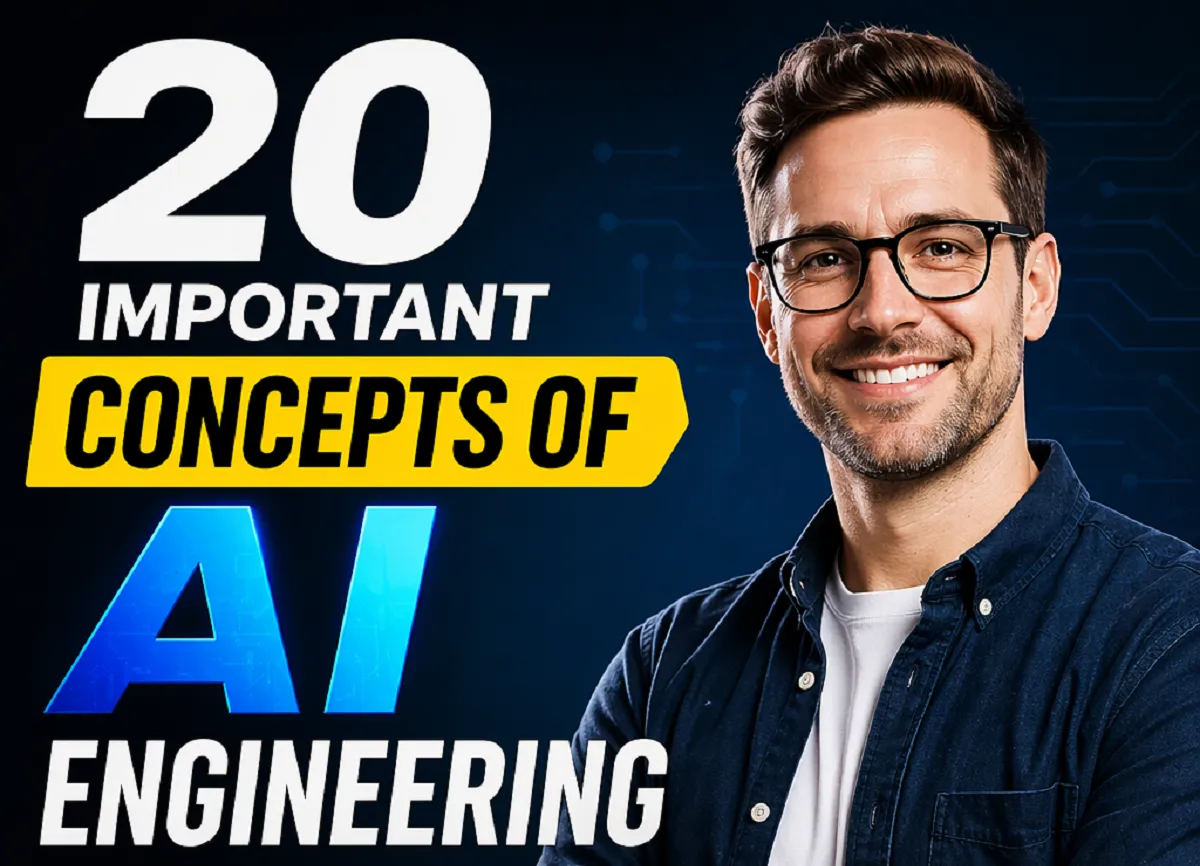
AI engineering is becoming an important technical career as organisations build systems that can work with data, generate content, automate tasks and support decisions. You do not need to master every part of AI at once. A better approach is to understand the main building blocks and how they fit together.
What Is AI Engineering?
AI engineering combines software development, data work, machine learning and system design. An AI engineer may build a model, connect it to an application, monitor its performance and improve the system after it reaches users.
20 Core AI Engineering Concepts
The following concepts give beginners a practical map of the field.
1. Machine Learning
Machine learning allows systems to identify patterns in data and use those patterns to make predictions or decisions. Common approaches include supervised, unsupervised and reinforcement learning.
2. Deep Learning
Deep learning uses multi-layer neural networks to process complex data. It is widely used for language, images, speech and other tasks where traditional rules are difficult to write.
3. Data Engineering
AI systems depend on usable data. Data engineering covers collecting, storing, cleaning and organising data so it can be used reliably by applications and models.
4. Model Training
Training is the process through which a model adjusts itself using examples. The quality, relevance and variety of the training data can strongly affect the result.
5. Model Evaluation
A model should be tested before it is trusted in a real application. Depending on the task, engineers may use measures such as accuracy, precision, recall, F1 score or task-specific evaluation.
6. Deployment and Scaling
A useful model still needs to become a reliable product. Deployment involves serving the model or AI capability through an application, while scaling helps the system handle changing demand.
7. AI Ethics and Bias
- Check for unfair patterns in data and outputs.
- Consider how automated decisions affect people.
- Provide appropriate human review for high-impact decisions.
- Protect personal and confidential information.
8. Prompt and Context Design
Modern AI applications often depend on clear instructions, useful context and well-defined output requirements. Good prompt design is about giving the system the information and constraints needed for the task.
9. MLOps and AI Operations
MLOps brings software engineering practices into machine learning. It can include deployment pipelines, monitoring, versioning, testing and model updates. The goal is to keep AI systems dependable after launch.
10. Feature Engineering
Feature engineering means selecting or transforming useful information from raw data for a model. Strong features can make traditional machine learning systems more effective.
11. Natural Language Processing
Natural language processing, or NLP, focuses on working with human language. Applications include search, classification, translation, summarisation, chat systems and information extraction.
12. Computer Vision
Computer vision enables software to analyse images and video. Examples include object detection, image classification, document processing and visual inspection.
13. Neural Networks
Neural networks are computational models made from connected layers that transform inputs into outputs. They are the foundation of many deep learning systems.
14. Data Preprocessing
Raw data often contains missing values, duplicates, inconsistent formats or other problems. Preprocessing prepares the information for analysis or model training.
15. Overfitting and Underfitting
Overfitting happens when a model performs well on training examples but struggles with new data. Underfitting happens when the model is too limited to capture useful patterns.
16. Hyperparameter Tuning
Hyperparameters are settings chosen around the training process. Examples include learning rate, batch size and model configuration. Testing different settings can improve results.
17. AI Frameworks and Development Tools
Engineers use frameworks and libraries to build AI applications efficiently. Common examples include PyTorch, TensorFlow and scikit-learn, alongside newer tools for generative AI applications.
18. Cloud Computing
Cloud platforms can provide storage, computing resources, managed services and scalable infrastructure for AI applications.
19. AI and Data Security
AI applications may handle business, customer or personal information. Security should cover access controls, data handling, application permissions and monitoring for misuse.
20. Continuous Improvement
AI engineering does not end when a system goes live. Engineers need to monitor quality, review failures, respond to changing data and improve the system as requirements change.
How These Concepts Fit Together
| Stage | Key concepts | Main question |
|---|---|---|
| Data | Data engineering, preprocessing, security | Is the information usable and protected? |
| Model | Machine learning, deep learning, neural networks | Can the system produce useful results? |
| Testing | Evaluation, overfitting, tuning | Does it work on new cases? |
| Application | Deployment, cloud, NLP, computer vision | Can people use it reliably? |
| Production | MLOps, security, continuous improvement | Can the system remain dependable? |
A Practical Roadmap for Beginners
- Build a foundation in Python and programming.
- Study statistics, probability and data handling.
- Understand machine learning before advanced models.
- Build small projects using real datasets.
- Learn how models are tested, deployed and monitored.
- Study generative AI applications and responsible AI practices.
- Create a portfolio showing your problem, approach, evaluation and results.
💡 Career tip: You do not need to know every AI concept before applying for technical roles. Strong fundamentals, practical projects and the ability to explain your decisions can be more useful than memorising a long list of terms.
Common Mistakes to Avoid
- Trying to learn every framework at once.
- Building projects without understanding the data.
- Measuring a model only on training examples.
- Ignoring security and privacy until the end.
- Treating an AI model as finished after launch.
Frequently Asked Questions
Is AI engineering the same as machine learning?
No. Machine learning is one part of AI engineering. AI engineering also includes data, software integration, deployment, security, evaluation and ongoing system management.
Do I need advanced mathematics to start?
Basic statistics and probability are useful starting points. More advanced mathematics becomes important for specialised AI and research roles.
Which programming language should an AI beginner start with?
Python is a common starting point because it has a large ecosystem for data, machine learning and AI development.
What makes an AI project useful for a portfolio?
A useful project should show a clear problem, suitable data, your technical approach, evaluation method and result. Explain what went wrong as well as what worked.
Related JobDoor Guides
- AI Skills Every Job Seeker Should Learn
- How to Use AI Efficiently at Work
- How to Choose AI Tools for Work
- Career Skills That Stay Valuable in the Age of AI
Final Takeaway
AI engineering is broad, but its foundations are easier to understand when viewed as a complete workflow: prepare data, build or select a model, evaluate it, deploy it, secure it and improve it over time. Build those fundamentals step by step and connect them to real projects and career goals.










How to Start a Career in Hospitality in the UK
Thinking about hospitality as a career in the UK? Compare hotel, restaurant and guest service roles, entry routes, skills, apprenticeships...


How to Start a Career in Retail in the UK
Thinking about a retail career in the UK? Compare retail roles, entry routes, apprenticeships, skills, experience, CV tips and ways...


How to Start a Career in Science and Research in the UK
Planning a science or research career in the UK? Compare career paths, qualifications, apprenticeships, skills and practical ways to get...


How to Start a Career in Law in the UK
Thinking about a career in law? This guide explains UK legal career routes, qualifications, solicitor and barrister pathways, apprenticeships, skills,...


How to Start a Career in Education in the UK
Thinking about a career in education? Compare teaching and non-teaching roles, qualifications, apprenticeships, experience, skills and practical steps for getting...


How to Start a Career in Marketing in the UK
Marketing is a broad career field that combines communication, creativity, research, data and business thinking. It includes traditional marketing as...


How to Start a Career in Healthcare in the UK
Healthcare is one of the UK’s broadest career areas. It includes doctors and nurses, but also healthcare assistants, laboratory staff,...


How to Start a Career in Human Resources (HR) in the UK
Photo by Vitaly Gariev on Unsplash Human resources, usually called HR, is a people-focused career that combines communication, organisation, business...


How to Start a Career in Construction in the UK
Construction is one of the UK’s broadest career sectors. It includes hands-on trades such as bricklaying, carpentry and plumbing, as...


How to Start a Career in Energy and Utilities in the UK
Planning a career in energy and utilities in the UK? See job options, apprenticeships, qualifications, skills and practical steps to...


How to Start a Career in Media and Communications in the UK
Planning a media and communications career in the UK? Compare job options, entry routes, apprenticeships, skills, experience and practical steps...


How to Start a Career in Environmental and Sustainability Jobs in the UK
Environmental and sustainability careers are becoming an important part of many UK workplaces. Jobs in this area can involve protecting...


How to Start a Career in Cybersecurity in the UK
Thinking about a cybersecurity career in the UK? Here is a practical guide to skills, qualifications, entry-level roles, applications and...


How to Start a Career in Engineering in the UK
Thinking about engineering as a career in the UK? Here is a practical guide to engineering fields, qualifications, apprenticeships, skills,...


How to Start a Career in Government and Public Services in the UK
Thinking about a career in government or public services? This guide covers job options, entry routes, apprenticeships, skills, applications and...


Rolls-Royce Internship UK: Eligibility, Opportunities & How to Apply
Find Rolls-Royce internships in the UK with practical guidance on eligibility, opportunities, applications, assessments, skills and preparation.


How to Start a Career in Transport and Logistics in the UK
Planning a career in transport and logistics in the UK? See entry-level roles, apprenticeships, qualifications, skills and practical steps to...
JLR Internships in the UK: How to Find and Apply
Find JLR internships and undergraduate placements in the UK, with practical guidance on eligibility, applications, career areas, assessments and preparation.


How to Start a Career in Architecture and Design in the UK
How to Start a Career in Architecture and Design in the UK Architecture and design careers combine creativity with practical...


Technology Internships in the UK: How to Find and Prepare
Find technology internships in the UK with practical guidance on choosing a tech career area, building skills, finding employers and...
-
 Career3 years ago
Flexible Jobs for Older Adults in the UK: 7 Career Options
-
 Jobs8 months ago
Second Jobs in the UK: 15 Practical Ways to Earn Extra Income
-
 How-to8 months ago
How to Use Google Gemini for Freelance Work and Career Skills
-

 Career2 years ago
Free Job Posting Sites in the UK: Options for Employers
-
 How-to8 months ago
How to Build Passive Income: 20 Income-Producing Assets for Long-Term Financial Growth
-

 AI & Tools8 months ago
How to Use Google Gemini for Productivity at Work
-

 Job Description3 years ago
Support Worker Job Description: Duties, Skills, Salary and Career Guide UK
-

 AI & Tools8 months ago
ChatGPT vs Microsoft Copilot: Which AI Is Best for You?