Connect with us

Career

CV vs Resume: What are the Key Differences?

Published

on

CV vs Resume

This guide will show you the differences between a CV and a resume and give you everything you need to know to create either one!

I still remember the night before my big job interview, and I was frantically updating my resume. I had spent hours perfecting the layout, choosing the right words, and double-checking for any typos. As I stared at the screen, I couldn’t help but wonder – should I be creating a CV instead?

The truth is the lines between a CV (curriculum vitae) and a resume can get a bit blurry. They’re both important tools in your job search, but there are some key differences you need to know. Whether you’re a recent graduate or an experienced professional, understanding these distinctions can give you a major advantage.

So, let’s explore the world of CVs and resumes, shall we?

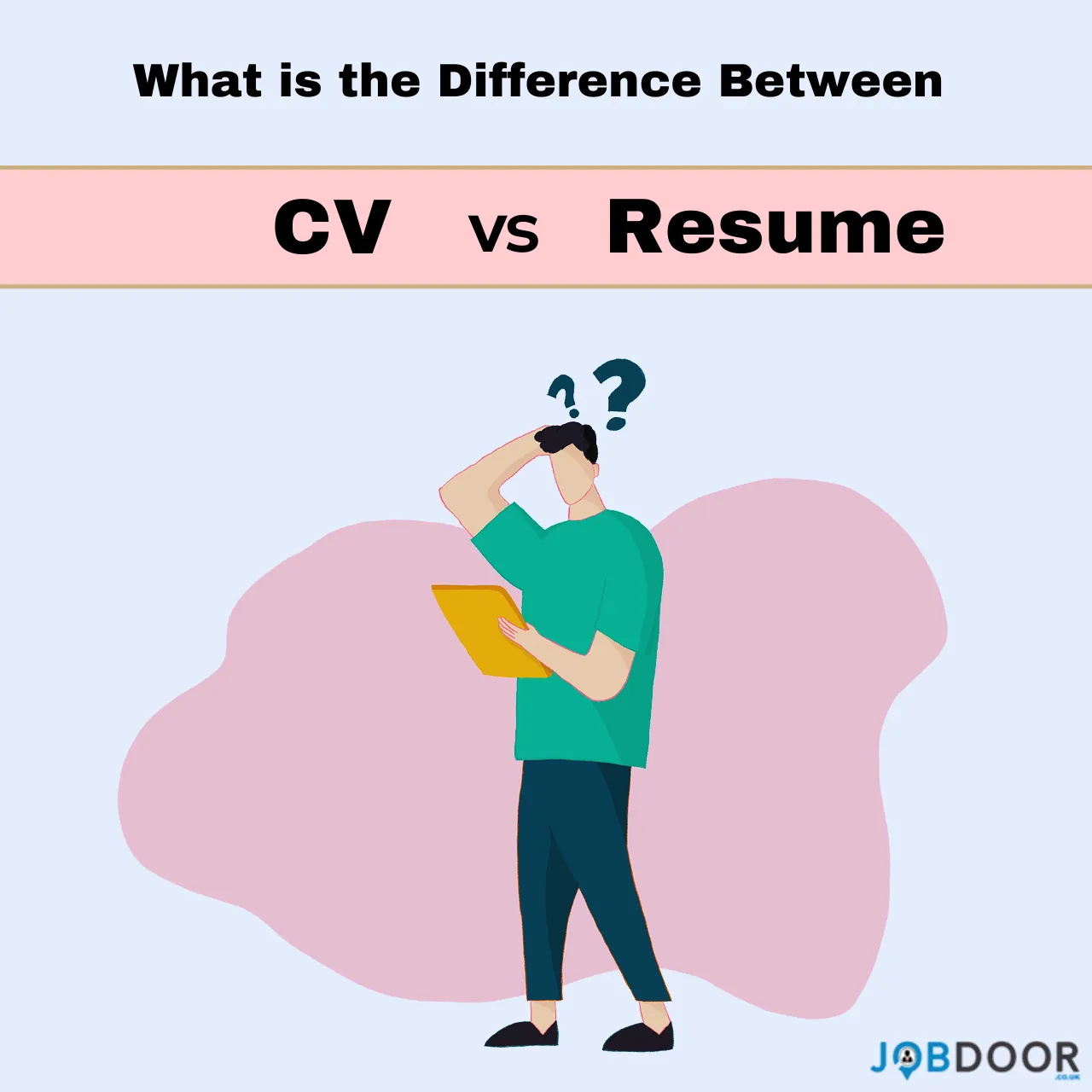
What is the Difference Between CV vs Resume

What is the Difference Between CV and Resume?

At their core, a CV and a resume serve the same purpose – to showcase your skills, work experience, and qualifications to a potential employer. However, the way they’re formatted and the amount of information they contain can vary greatly.

Also Read: 5 Simple Job Hunting Tips for Fresh Graduates

Resume:

A resume is typically a concise, one-page document that highlights your most relevant work history, education, and key achievements. It’s designed to give the employer a quick, high-level overview of your background. Resumes are often used for more traditional job applications, especially in the United Kingdom.

CV:

On the other hand, a CV is a more detailed and comprehensive document that can span multiple pages. It provides a complete chronological record of your academic and professional history, including publications, awards, certifications, and other accomplishments. CVs are more commonly used in academia, research, or international job searches.

The Length Factor:

One of the most obvious differences between a CV and a resume is the length. As mentioned above, a resume should typically be just one page, while a CV can be several pages long. To precise resumes are to be no longer than 1-2 pages, while for CVs, there is no real rule or limit to how many pages it can have. However, it would seem that most CVs fall between 2-8 pages.

See also  Which Month Has the Most Job Openings in the UK? A Simple Guide for Job Seekers

This is because a CV is meant to be a more in-depth representation of your entire career journey. It allows you to showcase the breadth and depth of your experience, education, and achievements. A resume, on the other hand, is designed to be a concise summary of your most relevant qualifications.

The level of detail you include in a CV can also vary depending on your field and the specific requirements of the job you’re applying for. For example, an academic CV for a research position might be much more extensive than a CV for a corporate job. One of more we would like to add here is that more than 80% of CVs are only fit for the dustbin so be care when writing one read our full guide.

What to Include in CV?

What to include on a CV:

  • Contact information
  • Education
  • Skills
  • Certificates
  • Publications
  • Presentations
  • Research interests and experience
  • Awards & honors
  • Work experience
  • Languages
  • References
Also Read: A Cover Letter is NOT Optional! Here Are Some Valid Reasons

What to include on a Resume:

  • Personal Details
  • Qualification
  • Skills
  • Work experience
  • Certifications
  • Current job
  • Languages
  • Contact information
How to Write CV or Resume?

Tailoring Your Approach:

Another key difference is the level of customization required for each application. With a resume, you’ll want to tailor it to the specific job you’re applying for, highlighting the skills and experience that are most relevant. This might mean rearranging the order of your work history, emphasizing certain accomplishments, or even removing irrelevant information.

CVs, on the other hand, tend to be more static documents that you can use across multiple applications. While you may still want to adjust the order or emphasis of certain sections, the overall structure and content of your CV will typically remain the same.

See also  Top Universities to Study Political Science in the UK

That said, it’s important to remember that both your resume and CV should be regularly updated to ensure they accurately reflect your current skills and experience.

The Positive and Negative Sides:

Now that we’ve covered the basics, let’s explore the pros and cons of each approach.

The Positive Side of Resumes:

  • Concise and easy to scan, making it more likely to catch the employer’s attention
  • Allows you to highlight your most relevant and impressive qualifications
  • Faster and easier to customize for each job application

The Negative Side of Resumes:

  • Limited space means you may have to omit important details or achievements
  • Employers may perceive a one-page resume as lacking depth or substance
  • Harder to showcase the full breadth of your experience and qualifications
Also Read: How to Prepare for Remote Interviews?

The Positive Side of CVs:

  • Provides a comprehensive and detailed record of your academic and professional background
  • Allows you to showcase a wider range of accomplishments, publications, and certifications
  • Demonstrates your depth of knowledge and expertise in your field

The Negative Side of CVs:

  • Can be time-consuming to create and update
  • Longer length may make it harder for employers to quickly identify your most relevant qualifications
  • Some employers may prefer a more concise and focused resume
CV vs Resume

Which One Do You Use CV or Resume?

So, how do you know which one to use? The answer really depends on the specific job and industry you’re targeting.

If you’re applying for a more traditional corporate or business role, a resume is probably the way to go. But if you’re pursuing an academic, research, or international position, a CV may be the better choice.

Regardless of which route you choose, here are some tips to help you create a standout document:

  1. Research the employer’s preferences. Some job postings may explicitly state whether they want a resume or CV. Make sure to follow their instructions.
  2. Highlight your most impressive and relevant accomplishments. Don’t be afraid to showcase your achievements, awards, and special skills.
  3. Use clear, concise language and formatting. Make it easy for the employer to quickly scan and understand your qualifications.
  4. Tailor your document to the specific job. Emphasize the skills and experience that directly match the role you’re applying for.
  5. Proofread, proofread, proofread. Double-check for any typos or errors before submitting your application.
See also  How to Get an Apprenticeship in UK? Here’s what you need to know:
Also Read: 12 IT Jobs That Don’t Require Coding Skills

Examples and Case Studies:

To bring these concepts to life, let’s take an example:

Let’s say Sarah, a recent college graduate, was applying for entry-level marketing positions. She created a one-page resume that highlighted her internship experience, relevant coursework, and impressive academic achievements. This allowed her to showcase her qualifications in a concise and compelling way.

On the other hand, Dr. Michael, a tenured professor, used a detailed CV when applying for a research fellowship. His CV included a comprehensive list of his published papers, conference presentations, and awards, demonstrating his extensive expertise in the field.

By understanding the differences between a CV and resume, both Sarah and Dr. Michael were able to tailor their application materials to the specific requirements of the roles they were pursuing.

So, if you want to describe this in one sentence then “Resume is like a fresher (beginner) and CV is an experienced professional”.

Visual Example of a CV:

CV Example

Visual Example of Resume:

Resume Example

Creating a Connection:

At the end of the day, whether you choose a CV or a resume, the goal is to present your qualifications in the most effective way possible. By understanding the nuances between these two important documents, you can position yourself as the ideal candidate and make a lasting impression on potential employers.

So, the next time you’re preparing for a big job interview, don’t stress about whether to use a CV or resume. Instead, embrace the opportunity to showcase your unique story and experience. After all, you’ve got this – and I’m rooting for you every step of the way!

Share With Your Friends:
Click to comment

Leave a Reply

Your email address will not be published. Required fields are marked *

Career

12 Underrated Apps To Learn Something New Every Day

Published

on

Underrated Apps To Learn Something New

Let’s be honest.

Most of us spend 3–5 hours a day on our phones. Scrolling social media. Watching random videos. Jumping from one app to another.

But imagine something different.

What if your phone helped you become smarter every single day?

Not with boring lectures. Not with complicated courses. But with simple, bite-sized lessons you actually enjoy.

That’s exactly what microlearning apps are designed for.

Microlearning means learning small pieces of knowledge in short sessions, often just 5–15 minutes at a time. This approach makes it easier to stay consistent and build real skills over time.

The problem?

Most blog posts recommend the same apps over and over — Duolingo, Coursera, Khan Academy.

You already know those.

So in this guide, we’ll explore 12 rare, underrated apps that most people have never heard of, but that can teach you something new every day.

These apps can help you learn:

  • Critical thinking
  • Coding
  • Visual knowledge
  • General intelligence
  • Creativity
  • Business and life skills

And the best part?

Many lessons take less than 10 minutes a day.

Let’s dive in.

Why Microlearning Apps Work So Well?

Before we explore the apps, let’s answer a simple question.

Why do these learning apps actually work?

Because they remove the biggest barrier to learning:

Time.

Instead of forcing you to study for hours, they deliver knowledge in short, focused lessons.

Benefits include:

  • Easier to stay consistent
  • Less mental fatigue
  • Faster learning progress
  • Learning anywhere (bus, lunch break, etc.)

Think of it like daily exercise for your brain.

Small steps. Big results.

12 Underrated Apps To Learn Something New Every Day:

1. Imprint – Learn Big Ideas Through Visual Stories

If you love beautiful visuals and quick explanations, Imprint is incredible.

Instead of long articles or boring lectures, it teaches complex topics using interactive visual storytelling.

Topics include:

  • Psychology
  • Philosophy
  • Science
  • Business
  • History

The app breaks big ideas into 5–10 minute visual lessons.

See also  10+ Best Remote Jobs You Can Do While on Vacation

For example, you might learn:

  • Why humans procrastinate
  • How successful people think
  • The psychology behind habits

Many people call it “Netflix for knowledge.”

Best For:

Visual learners who want deep ideas explained simply.

2. Learny – Daily Micro Knowledge:

Learny is a daily brain training and knowledge app that delivers quick lessons and facts to help you become smarter every day.

Instead of traditional courses, it focuses on microlearning.

That means:

  • Small learning sessions
  • Personalized knowledge paths
  • Quick brain exercises

You might learn:

  • Random science facts
  • Historical insights
  • Logic puzzles
  • Memory training

Best For:

People who want a few minutes of learning every day.

3. Mimo – Learn Coding in Small Lessons

Coding sounds intimidating.

But Mimo makes it surprisingly simple.

Instead of long tutorials, it teaches programming through small interactive exercises.

You can learn:

  • Python
  • HTML
  • JavaScript
  • SQL

Lessons feel like mini games, not classes.

Many learners say it’s one of the easiest ways to start coding.

Best For:

Beginners who want to learn programming from zero.

4. Brainscape – Learn Anything Faster

Brainscape uses science-backed flashcards to help you learn faster.

It uses a technique called spaced repetition.

Simple explanation:

The app shows you information right before you’re about to forget it.

This improves memory dramatically.

You can learn:

  • Languages
  • Science
  • Business
  • Test preparation

Brainscape focuses on efficient learning based on cognitive science.

Best For:

People who want better memory and faster learning.

5. SoloLearn – Learn Tech Skills for Free

SoloLearn is one of the best underrated apps for learning tech skills.

It offers bite-sized lessons in:

  • Python
  • Java
  • C++
  • Data science
  • Web development

Each lesson includes:

  • Quick explanations
  • Coding exercises
  • Community discussions

Why It’s Great:

You can complete many lessons in under 5 minutes.

Best For:

Future developers or tech enthusiasts.

6. EdApp – Micro Courses That Take Minutes

EdApp is designed for microlearning courses.

See also  Which Month Has the Most Job Openings in the UK? A Simple Guide for Job Seekers

Instead of traditional courses, it offers short learning modules with quizzes and interactive lessons.

Features include:

  • Gamified learning
  • Push notifications
  • Interactive quizzes

Many organizations use EdApp for employee training because of its short, engaging lessons.

Best For:

People who enjoy structured mini-courses.

7. BeFreed – AI Learning Companion

BeFreed is a modern AI-powered learning platform that creates personalized learning experiences.

Instead of fixed courses, the AI recommends topics based on:

  • Your goals
  • Your interests
  • Your knowledge level

This makes learning more personal and efficient.

Best For:

People who want custom learning paths.

8. Quizizz – Learning Through Games

Quizizz transforms learning into a quiz game.

You answer questions and compete with others.

Topics include:

  • Science
  • History
  • Geography
  • Business
  • Technology

The fun part?

It feels like playing a game, not studying.

Best For:

People who love gamified learning.

9. GeoGebra – Learn Math Visually

Math can feel difficult when it’s just numbers.

GeoGebra changes that.

It teaches math through interactive visuals and simulations.

You can explore:

  • Algebra
  • Geometry
  • Calculus
  • Statistics

Instead of memorizing formulas, you see how math works.

Best For:

Visual learners who struggle with math.

10. Jellypod – Learn Through Podcasts

Not everyone likes reading.

Some people learn better by listening.

Jellypod allows you to create AI-powered educational podcasts based on topics you want to learn.

You can learn while:

  • Walking
  • Driving
  • Cooking
  • Exercising

Best For:

Audio learners.

11. Forage – Real Career Simulations

Forage is very different from normal learning apps.

It lets you experience real job simulations from companies.

For example:

  • Marketing projects
  • Finance analysis
  • Tech problem solving

You learn by doing real work tasks.

Best For:

Students exploring careers.

12. Instanerd – Curiosity-Based Learning

Instanerd focuses on curiosity-driven learning.

It offers quick explanations for interesting questions like:

  • Why do we dream?
  • How does inflation work?
  • Why do humans procrastinate?

Each topic takes just a few minutes to understand.

See also  10 Resume Mistakes Job Seekers Don’t Realize They’re Making

Best For:

Curious minds who love random knowledge.

How to Build a Daily Learning Habit (Simple System)?

Having great apps isn’t enough.

You also need a simple system.

Here’s one that works for almost everyone.

Step 1: Choose Only 1–2 Apps

Too many apps = overwhelm.

Start with just two.

Example:

  • Imprint (ideas)
  • Mimo (coding)

Step 2: Learn 10 Minutes Daily

Set a rule:

10 minutes every day.

That’s it.

Consistency beats intensity.

Step 3: Stack Learning With Habits

Attach learning to something you already do.

Examples:

  • After breakfast
  • During commute
  • Before bed

This makes the habit automatic.

Step 4: Track Your Progress

Seeing progress motivates you.

Many apps track:

  • Streaks
  • Points
  • Completed lessons

Protect your streak.

Best App Combinations (Recommended):

Here are some great combinations:

For curiosity:

  • Imprint
  • Learny

For career growth:

  • Mimo
  • Forage

For general knowledge:

  • Instanerd
  • Quizizz

For brain training:

  • Brainscape
  • EdApp

Common Mistakes When Using Learning Apps:

Avoid these mistakes.

1. Installing Too Many Apps:

More apps = less focus.

Pick 2 or 3 max.

2. Learning Without Action:

Knowledge becomes powerful when you use it.

Example:

  • Practice coding
  • Discuss ideas
  • Apply concepts

3. Skipping Days:

Consistency matters more than speed.

Even 5 minutes counts.

Conclusion: Your Future Self Will Thank You

Learning something new every day doesn’t require hours of studying.

You don’t need expensive courses.

You don’t even need a laptop.

All you need is your smartphone and a few minutes a day.

Apps like Imprint, Mimo, Brainscape, and Learny prove that learning can be simple, fun, and even addictive.

Remember this powerful idea:

Small knowledge daily creates massive growth over time.

Just imagine where you’ll be in one year if you learn something new every day.

  • New skills
  • New ideas
  • New confidence

So here’s your challenge.

Pick one app from this list.

Install it today.

And commit to 10 minutes of learning starting now.

Your smarter future self is waiting.

Share With Your Friends:
Continue Reading

Career

5 Underrated Digital Skills You Can Learn at Home That Most People Still Ignore

Published

on

Underrated Digital Skills

If you’ve read even a few career blogs, you’ve seen the same advice again and again.

Learn content writing.
Learn graphic design.
Learn digital marketing.

And at some point, you think:

“Okay… but everyone already knows this. What now?”

That feeling is valid.

The internet keeps recycling the same beginner skills, while quietly ignoring newer, less crowded opportunities. Skills that don’t look flashy on Instagram—but actually create leverage.

This article is for people who:

  • Are tired of generic advice
  • Want skills with less competition
  • Prefer quiet, long-term value over hype
  • Want control, not constant hustle

In this guide, you’ll learn 5 overlooked digital skills you can learn at home, why they matter, who they’re for, and how to start without overwhelm.

No buzzwords. No trend-chasing. Just practical direction.

Why “Popular Skills” Are Becoming Harder to Monetize?

Let’s be honest for a moment.

Popular skills aren’t useless—but they are crowded.

When everyone learns the same thing:

  • Prices drop
  • Competition rises
  • Anxiety increases

That’s why the smarter move today is not popular skills, but supporting, system-level skills.

Skills that:

  • Sit behind the scenes
  • Are hard to replace
  • Are learned by fewer people

That’s where stability lives.

1. No-Code Automation (Making Tools Talk to Each Other):

What This Skill Really Is?

No-code automation means connecting apps so work happens automatically, without writing code.

Example:

  • When someone fills a form → data goes to a spreadsheet → email is sent automatically.

Tools do the work. You design the flow.

Why This Skill Is Powerful (and Ignored)?

Most people:

  • Hate repetitive tasks
  • Don’t know automation exists
  • Think it requires programming
See also  5 Underrated Digital Skills You Can Learn at Home That Most People Still Ignore

It doesn’t.

Businesses lose hours daily on manual work. Automation fixes that quietly.

Tools You’d Learn:

  • Zapier
  • Make (formerly Integromat)
  • Airtable

Who This Skill Is Perfect For?

  • Organized thinkers
  • Process lovers
  • People who enjoy efficiency

This skill pays well because it saves time, not because it looks creative.

2. Data Cleanup & Organization (The Skill Nobody Wants—but Everyone Needs):

What It Is?

This skill involves:

  • Cleaning messy spreadsheets
  • Organizing data
  • Removing duplicates
  • Making information usable

Not analysis. Not coding. Just clarity.

Why This Skill Is Underrated?

Data is everywhere.
Clean data is rare.

Most businesses have information—but it’s unusable. They need someone who can bring order.

Why Beginners Can Learn This Easily?

  • Learn Google Sheets or Excel basics
  • Practice sorting, filtering, formatting
  • Build patience and precision

It’s calm work. Focused work.

And surprisingly valuable.

3. AI Prompt Design (Talking to AI the Right Way):

What This Skill Actually Is

AI prompt design means knowing how to ask AI tools the right questions to get high-quality results.

Most people type vague prompts and get poor outputs.

A prompt designer:

  • Structures instructions clearly
  • Adds context
  • Guides outcomes

Why This Is a New Opportunity?

AI tools are everywhere now.
But most people use them badly.

Those who know how to guide AI properly save:

  • Time
  • Money
  • Effort

This skill is about thinking clearly, not being technical.

Who This Is For?

  • Writers
  • Managers
  • Researchers
  • Anyone working with AI tools daily

It’s a thinking skill. And thinking skills age well.

4. Digital Product Operations (Running the Backend Nobody Sees):

What This Skill Means?

Digital product operations involves managing:

  • Product uploads
  • File organization
  • Customer access
  • Updates and versions
See also  Career Opportunities for Seniors: 7 Jobs that are Perfect for Older Adults

It’s the engine room behind online products.

Why This Skill Is Rare?

Everyone wants to:

  • Create
  • Sell
  • Promote

Very few want to maintain systems.

But creators desperately need help keeping things running smoothly.

What You’d Learn?

  • File management
  • Platform dashboards
  • Version control (simple, not technical)
  • Customer access workflows

This skill brings stability and long-term work.

5. Knowledge Management (Turning Information Into Systems):

What Is Knowledge Management?

It’s the skill of:

  • Organizing notes
  • Structuring information
  • Building personal or team knowledge systems

Think:

  • Notion dashboards
  • Documentation systems
  • Learning libraries

Why This Skill Is Becoming Valuable?

Information overload is real.

People don’t lack information.
They lack structure.

Those who can turn chaos into clarity are quietly in demand.

Who This Is Perfect For?

  • Deep thinkers
  • Note-takers
  • People who love systems

It’s not loud work. But it’s respected work.

How to Choose the Right “Unpopular” Skill for You?

Ask yourself:

  1. Do I enjoy structure or creativity?
  2. Do I prefer solving problems quietly?
  3. Do I like improving systems?

Choose the skill that feels mentally calm, not exciting.

Calm skills are sustainable skills.

A Simple Learning System:

Use this 3–2–1 system:

  • 3 days a week: learning
  • 2 days a week: practice
  • 1 day a week: review

Track:

  • What confused you
  • What clicked
  • What improved

This reduces anxiety and builds confidence naturally.

Why These Skills Give You an Advantage?

These skills:

  • Have less competition
  • Are harder to replace
  • Support other roles
  • Age well over time

They don’t depend on trends.
They depend on thinking and structure.

Conclusion:

The internet rewards noise.
The real world rewards reliability.

You don’t need another popular skill.
You need one overlooked skill you can grow steadily.

See also  Why Job Seekers Must Use LinkedIn in 2026 | Simple Guide

Pick one from this list.
Learn it slowly.
Apply it calmly.

That’s how real careers are built—without panic.

👉 Choose the skill that feels boring but useful. Start today.

Share With Your Friends:
Continue Reading

Career

9 Free AI Courses with Certificates in 2026 (Step-by-Step Guide)

Published

on

“AI Sounds Important… But Is It Really for Me?”

Let’s be honest.

When you hear Artificial Intelligence, what comes to mind?
Complex math? Coding? Long hours? Expensive courses?

You’re not wrong to feel confused or even intimidated.

Many students and beginners think free AI courses are low quality, too technical, or a waste of time. Some even tried one before… and quietly quit halfway.

Here’s the truth most people don’t tell you:

You don’t need to be smart, technical, or experienced to learn AI. You just need the right starting point.

In this guide, I’ll walk you through:

  • What AI really means?
  • The right mindset for learning AI without stress
  • 9 genuinely free AI courses with certificates in 2026
  • How to choose the right course for you
  • How to track your progress and stay consistent

No jargon.
No pressure.
Just a clear path forward.

Let’s begin.

What Is AI?

Artificial Intelligence (AI) simply means teaching computers to think and learn like humans—at least a little.

AI is already around you:

  • Google search suggestions
  • YouTube recommendations
  • Chatbots
  • Face recognition on phones
  • Spam email filters

You don’t need to build AI to benefit from it.
First, you just need to understand how it works and how it’s used.

That’s exactly what these free AI courses with certificates help you do.

The Right Mindset Before You Start Any AI Course:

Most beginners fail not because AI is hard—but because they start with the wrong mindset.

Common Fears (Totally Normal):

  • “Free courses won’t be respected”
  • “I’m not good at math”
  • “I don’t have a technical background”
  • “What if I don’t understand anything?”

Take a breath.

The Correct Beginner Mindset:

  • You are learning concepts, not becoming a scientist
  • Progress matters more than speed
  • Certificates are proof of effort, not perfection
See also  How to Bullet-proof Your CV in 8 Easy Steps?

Think of AI like learning to drive.
You don’t start with a Formula 1 car.
You start with basics.

Why Free AI Courses with Certificates Are Worth It in 2026?

Let’s clear this doubt once and for all.

Yes, free AI courses can be valuable.
When they come from trusted platforms.

They help you:

  • Understand AI fundamentals
  • Improve your resume
  • Build confidence
  • Decide if AI is right for your career

And most importantly…

You lose nothing except time—and you gain clarity.

Now, let’s get to the list you came for.

9 Best Free AI Courses with Certificates in 2026:

Below are carefully chosen courses that are:

  • Free (or free with certificate option)
  • Beginner-friendly
  • Recognized globally
  • Easy to follow at your own pace

1. AI for Everyone – Andrew Ng:

Platform: Coursera

This is one of the best starting points for absolute beginners.

What You’ll Learn?

  • What AI can and cannot do
  • How AI is used in real businesses
  • Common myths about AI

Why It’s Beginner-Friendly?

  • No coding
  • No math
  • Pure concepts, explained simply

Certificate:

  • Free to learn
  • Certificate available via financial aid

Best for: Non-technical learners, students, managers

2. Introduction to Artificial Intelligence – IBM:

Platform: IBM (via Coursera)

What You’ll Learn?

  • Basics of AI, ML, and deep learning
  • AI use cases in real industries
  • Ethics of AI

Key Highlights:

  • Taught by a global tech company
  • Beginner-level explanations
  • Short modules

Certificate:

  • Free with financial aid

Best for: Resume builders and corporate learners

3. Google AI for Beginners:

Platform: Google

Google offers simple learning paths under its AI initiative.

See also  Which Month Has the Most Job Openings in the UK? A Simple Guide for Job Seekers

What You’ll Learn?

  • Machine learning basics
  • AI tools used by Google
  • Real-world examples

Why It’s Powerful?

  • Trusted brand
  • Clean explanations
  • Practical insights

Certificate:

  • Free certificate available

Best for: Students and job seekers

4. Introduction to AI – Microsoft Learn:

Platform: Microsoft

What You’ll Learn?

  • AI workloads
  • Machine learning basics
  • Responsible AI concepts

Why Beginners Love It?

  • Short lessons
  • Interactive learning
  • Clear structure

Certificate:

  • Free completion badge

Best for: Beginners who like step-by-step learning

5. AI Basics for Everyone – Udemy (Free):

Platform: Udemy

What You’ll Learn?

  • AI terminology
  • How AI impacts jobs
  • Everyday AI tools

Things to Know:

  • Certificate available
  • Course quality varies (check ratings)

Best for: Casual learners and fast starters

6. Elements of AI:

Provider: University of Helsinki

This course is famous worldwide.

What You’ll Learn?

  • How AI works
  • Societal impact of AI
  • Logical thinking behind AI

Why It’s Special?

  • No coding required
  • Used by governments and universities
  • Extremely beginner-friendly

Certificate:

  • Free certificate

Best for: First-time learners

7. AI Foundations – LinkedIn Learning:

Platform: LinkedIn

What You’ll Learn?

  • AI fundamentals
  • Career relevance
  • Business use cases

Certificate:

  • Free certificate during trial period

Best for: Professionals and fresh graduates

8. Machine Learning Crash Course:

Platform: Google Developers

What You’ll Learn?

  • Core ML concepts
  • Visual explanations
  • Practical understanding

Note:

  • Slightly technical
  • Still beginner-friendly

Certificate:

  • Free completion badge

Best for: Curious learners ready to go deeper

9. AI Ethics and Responsible AI:

Platform: Microsoft / IBM

What You’ll Learn?

  • Ethical AI use
  • Bias and fairness
  • Real-world implications

Why It Matters?

AI is not just about technology—it’s about responsibility.

Certificate:

  • Free
See also  Why Job Seekers Must Use LinkedIn in 2026 | Simple Guide

Best for: Students and future professionals

How to Choose the Right Free AI Course?

Ask yourself three simple questions:

  1. Do I want concepts or coding?
    • Concepts → AI for Everyone
    • Coding later → Google or IBM
  2. Do I need a certificate?
    • Yes → Coursera, Microsoft, Google
  3. How much time can I give daily?
    • 30 minutes is enough

👉 Choose ONE course. Not three.

Step-by-Step System to Complete Any AI Course Successfully:

Step 1: Block Small Time Slots

  • 20–30 minutes a day
  • Same time every day

Step 2: Learn, Don’t Rush

  • Pause videos
  • Take notes
  • Rewatch if needed

Step 3: Apply Light Learning

  • Explain concepts in your own words
  • Share what you learn with a friend

Step 4: Finish and Claim Certificate

  • Certificates boost confidence
  • Add them to LinkedIn or resume

How to Track Your AI Learning Progress?

You don’t need fancy tools.

Just track:

  • Course started
  • Lessons completed
  • Date finished
  • Certificate earned

Use:

  • A notebook
  • Google Docs
  • Notes app

Consistency beats intensity.

Common Mistakes Beginners Make (Avoid These):

  • Starting too many courses
  • Quitting halfway
  • Comparing yourself to experts
  • Expecting instant results

Remember:

You’re building knowledge, not racing.

Conclusion: Start Your AI Journey Today, Not “Someday”

AI is no longer optional.
But learning AI does not have to be hard, expensive, or scary.

With these 9 free AI courses with certificates in 2026, you now have:

  • A clear starting point
  • Trusted platforms
  • Zero financial risk
  • A step-by-step system to succeed

Don’t wait for confidence.
Confidence comes from starting.

Choose one free AI course today.
Spend just 20 minutes.
Finish what you start.

Your future self will thank you.

Start now. AI is waiting.

Share With Your Friends:
Continue Reading

Latest Posts

AI Tools for HR Professionals AI Tools for HR Professionals
AI & Tools1 week ago

5 AI Tools for HR Professionals: Simplify Hiring & Management

Human Resources has always been about people. But today, HR professionals are expected to manage recruitment, employee engagement, performance tracking,...

How to Make Viral AI Solo Camping ASMR Videos How to Make Viral AI Solo Camping ASMR Videos
AI & Tools1 week ago

How to Make Viral AI Solo Camping ASMR Videos?

Creating AI solo camping ASMR videos has become one of the fastest-growing content niches on YouTube and short-form platforms. Videos...

AI Tools for Software Engineer AI Tools for Software Engineer
AI & Tools1 week ago

7 AI Tools Every Software Engineer Should Learn Before 2026

Artificial Intelligence is no longer a futuristic concept. It is already transforming how software is built, tested, and deployed. If...

How to Use SORA 2 to Create Videos How to Use SORA 2 to Create Videos
How-to1 week ago

How to Use SORA 2 to Create Viral Faceless YouTube Videos?

Have you ever wondered how some YouTube channels grow incredibly fast without ever showing a face on camera? You see...

Companies Pay $10K for This AI Masterclass Companies Pay $10K for This AI Masterclass
AI & Tools1 week ago

Companies Pay $10K for This AI Masterclass: Learn the Skills That Are Reshaping the Future

Companies don’t pay for tools. They pay for systems, strategy, and transformation. A high-end AI masterclass teaches employees how to...

AI for Kids AI for Kids
AI & Tools1 week ago

AI for Kids: The Fun and Easy Way to Understand Artificial Intelligence

Artificial Intelligence sounds like something from a science-fiction movie. Robots. Smart computers. Machines that think like humans. For many people,...

Companies Pay $10K for This AI Masterclass Companies Pay $10K for This AI Masterclass
AI & Tools1 week ago

10 AI Myths and Facts Most People Still Believe (And the Truth Behind Them)

Artificial Intelligence is everywhere right now. You hear about it in the news. You see it in social media discussions....

Simple Things Successful People Do Simple Things Successful People Do
Motivation1 week ago

5 Simple Things Successful People Do Before 8 AM

Have you ever wondered why some people seem to start their day full of energy, focus, and confidence? While others...

Best YouTube Channels to Learn Tech Skills Best YouTube Channels to Learn Tech Skills
Social Media2 weeks ago

Best YouTube Channels to Learn Tech Skills for Free

Learning technology skills today is easier than ever. You don’t need expensive courses or a computer science degree anymore. YouTube...

Underrated Apps To Learn Something New Underrated Apps To Learn Something New
Career2 weeks ago

12 Underrated Apps To Learn Something New Every Day

Let’s be honest. Most of us spend 3–5 hours a day on our phones. Scrolling social media. Watching random videos....

Advertisement

Latest Posts

Gemini 3.1 Pro Gemini 3.1 Pro
News2 weeks ago

Google Launches Gemini 3.1 Pro: A Big Step Forward in Artificial Intelligence

Google has officially introduced Gemini 3.1 Pro, its newest and most powerful artificial intelligence model. This launch is part of...

How to Create Unlimited AI Videos in One Click How to Create Unlimited AI Videos in One Click
AI & Tools2 weeks ago

How to Create Unlimited AI Videos in One Click for Free (2026 Guide)

Artificial Intelligence is changing how we create content online. Today, you don’t need expensive software, video editing skills, or hours...

How to Make AI Survival ASMR Video How to Make AI Survival ASMR Video
AI & Tools2 weeks ago

How to Make AI Survival ASMR Videos in 2026: New Viral YouTube Niche

YouTube trends change very quickly. Every few months, a new content style appears and suddenly thousands of creators start using...

How to Run Meta Ads on a Small Budget How to Run Meta Ads on a Small Budget
Social Media2 weeks ago

How to Run Meta Ads on a Small Budget ($100/Day Strategy That Actually Works)

Most businesses believe you need a huge advertising budget to get results from Meta Ads. That’s simply not true. In...

Free Facebook AI Tools Free Facebook AI Tools
AI & Tools2 weeks ago

5 Free Facebook AI Tools to Solve 90% of Your Ad Problems

Running Facebook ads used to mean endless guesswork. You would test audiences manually, duplicate ad sets endlessly, refresh creatives every...

How to Automate Meta Ads Using Manus AI How to Automate Meta Ads Using Manus AI
AI & Tools2 weeks ago

How to Automate Meta Ads Using Manus AI?

Meta Ads are evolving faster than ever. Manual optimization, endless A/B testing, creative fatigue, reporting stress — all of it...

How to Build Automated Online Income How to Build Automated Online Income
Money2 weeks ago

How to Build Automated Online Income in 2026 – The “Sleepy” Side Hustle Blueprint

“Stop ignoring this.”“Boost your income.”“Get paid while you sleep.” You’ve seen headlines like that everywhere. Screenshots of large payouts. Smiling...

how to sell on amazon fba how to sell on amazon fba
Money2 weeks ago

How to Sell on Amazon FBA in 2026: The Complete, Future-Proof Blueprint for Beginners & Growth Sellers

Amazon FBA (Fulfillment by Amazon) is no longer just a side-hustle trend. It’s a sophisticated eCommerce ecosystem where brand building,...

How to Outrank Your Competitors in ChatGPT How to Outrank Your Competitors in ChatGPT
AI & Tools2 weeks ago

How to Outrank Your Competitors in ChatGPT? (2026 AI Guide)

You Google your brand inside ChatGPT… and nothing. Or worse — your competitors are everywhere. They’re recommended. They’re cited. They’re...

How to Get Instagram Followers with Meta Ads How to Get Instagram Followers with Meta Ads
Social Media2 weeks ago

How to Get Instagram Followers with Meta Ads (Step-by-Step Funnel Strategy)

If your goal is to consistently add 20, 50, even 100+ new Instagram followers per day, and turn those followers...

Trending