
AI & Tools
Will AI Eliminate Jobs? What Workers Should Expect

AI is changing the workplace faster than many people expected. Software can now draft text, analyse information, support customers, generate designs and assist with many routine tasks. That raises a more useful question than whether machines will somehow replace humanity:
Will AI eliminate jobs, and what should workers do about it?
The short answer is that some roles and tasks are likely to shrink, while many existing jobs will change. New responsibilities will also appear. For job seekers and employees, the practical goal is not to predict every future job. It is to build skills that remain useful as technology changes.
AI Is More Likely to Change Jobs Than Remove Every Job
A job is usually made up of many different tasks. AI may automate some of them without removing the whole occupation.
| Work area | How AI may help | Human value |
|---|---|---|
| Customer service | Handle common questions | Empathy, escalation and relationship building |
| Marketing | Draft ideas and analyse campaigns | Strategy, brand judgement and customer insight |
| Finance | Process data and flag unusual results | Interpretation, risk decisions and accountability |
| Administration | Summarise documents and automate routine work | Coordination, judgement and communication |
| Software development | Generate and review code | Architecture, testing, security and problem-solving |
Which Tasks Are Most Exposed to AI?
Work is more exposed when it is repetitive, digital, predictable and based on well-defined rules. Examples can include basic data entry, routine document processing, simple content variations and some first-line support tasks.
That does not automatically mean the people doing these jobs will have no future. Employers may redesign roles, combine responsibilities or expect workers to handle higher-value activities alongside AI systems.
Why Human Skills Still Matter
Technology can produce an answer without taking responsibility for the consequences. People still need to judge whether an output is accurate, appropriate and useful.
Critical Thinking
Workers need to check information, question weak assumptions and spot errors rather than accepting an AI response automatically.
Communication
Clear writing, speaking, listening and collaboration remain important because work involves customers, colleagues, managers and stakeholders.
Problem-Solving
AI can suggest possible solutions, but defining the real problem and choosing the right approach still requires human judgement.
Emotional Intelligence
Managing relationships, handling difficult conversations and understanding people are important in almost every workplace.
Adaptability
Tools will change. Workers who can adjust their processes and keep building relevant skills will be better positioned for change.
AI Skills Are Becoming Workplace Skills
You do not need to become an AI engineer to work effectively with AI. A useful starting point is AI literacy: knowing what these systems can do, where they can fail and how to use them responsibly.
Useful AI Workplace Skills
- Writing clear instructions and prompts
- Checking AI-generated information
- Using AI for research and summarisation
- Automating suitable repetitive tasks
- Protecting confidential company information
- Comparing outputs before making important decisions
- Explaining when human review is required
These skills can complement professional knowledge rather than replace it.
What This Means for Job Seekers
Job seekers should avoid treating AI as either a threat or a magic solution. Instead, show employers that you can use technology while still applying sound judgement.
1. Build One Practical AI Workflow
Choose a real task connected to your target role. For example, practise using AI to organise research, summarise a long document, prepare interview questions or analyse a simple dataset.
2. Keep Your Core Professional Skills Strong
AI skills are more valuable when combined with a real area of expertise. A marketer who understands customers, a recruiter who understands people and a finance professional who understands financial controls can use AI more effectively than someone who only knows how to operate a chatbot.
3. Show Evidence on Your CV
Instead of simply writing “AI skills”, describe what you actually did. For example: “Used AI-assisted analysis to organise customer feedback and identify recurring themes.”
4. Prepare for AI-Assisted Recruitment
Recruitment is also changing. Employers may use software to organise applications, assess information and support parts of the hiring process. Your application should therefore be clear, accurate and tailored to the role rather than filled with generic AI-generated language.
See our guide on how AI is changing recruitment for more practical advice.
What Workers Can Do Today
- List your regular tasks. Separate repetitive work from tasks requiring judgement or relationships.
- Identify one task AI could assist with. Start with something low-risk.
- Test the workflow. Compare the time and quality with your normal process.
- Review every important output. Do not treat AI-generated information as automatically correct.
- Build a repeatable process. Save useful instructions and quality checks.
- Strengthen human skills. Use the time saved to improve analysis, communication, customer work or other valuable responsibilities.
What Employers Should Do
The impact of AI is not only a worker issue. Employers also need to redesign work carefully.
- Identify tasks rather than assuming whole jobs will disappear.
- Give employees clear rules for responsible AI use.
- Protect customer, employee and business data.
- Provide training that matches real workplace needs.
- Measure quality as well as time saved.
- Keep humans responsible for important decisions.
AI Will Create New Types of Work Too
As businesses adopt AI, they also need people who can manage AI-supported processes. Responsibilities may include AI workflow design, model evaluation, data quality, AI governance, automation management, AI-assisted customer operations and training teams to use new systems.
Not every new role will have “AI” in its job title. Many existing professions will simply include more technology-related responsibilities.
Common Myths About AI and Jobs
Myth: AI Will Replace Every Office Worker
Reality: AI can automate parts of office work, but jobs contain different tasks and responsibilities. The effect will vary by occupation and employer.
Myth: Only Technical Workers Need AI Skills
Reality: AI is being used across administration, marketing, finance, HR, customer service, education and many other fields.
Myth: Using More AI Tools Means Better Performance
Reality: A small number of well-designed workflows can be more useful than a large collection of disconnected tools.
Myth: AI Output Does Not Need Human Review
Reality: AI systems can produce inaccurate, incomplete or unsuitable results. Human checking remains important, especially for high-impact work.
How to Prepare for the Next Few Years
A practical career strategy is to combine domain expertise + AI literacy + human skills.
For example, an HR professional can combine recruitment knowledge with AI-assisted research and strong communication. A sales professional can combine customer knowledge with AI-supported analysis and relationship building. A software developer can combine coding expertise with AI-assisted development, testing and security practices.
AI Job Risk: A Better Way to Think About It
Instead of asking only, “Will AI replace my job?”, ask these five questions:
- Which parts of my work are repetitive?
- Which parts require human judgement?
- Which AI tools are becoming common in my industry?
- What skills would make me more effective with those tools?
- Can I show evidence that I can use technology responsibly?
This approach turns a vague fear about the future into a career planning exercise.
Related JobDoor Guides
- AI skills for job seekers
- How to use AI responsibly when applying for jobs
- How to use AI efficiently at work
- AI growth and the future of work
- ChatGPT vs Microsoft Copilot for work
Frequently Asked Questions
Will AI eliminate jobs?
AI is likely to automate some tasks and change many jobs. The effect will vary by occupation, industry, technology and how employers redesign work.
Which jobs are most at risk from AI?
Roles with a high share of repetitive, predictable and digital tasks may face greater automation pressure. Exposure does not automatically mean the entire occupation will disappear.
What skills should workers build?
Build a combination of AI literacy, professional expertise, critical thinking, communication, problem-solving and adaptability.
Do I need to know coding to stay relevant?
No. Coding can be valuable for some careers, but many workers can benefit from understanding AI tools, workflows, limitations and responsible use without becoming programmers.
Final Thoughts
The important workplace question is not whether AI will suddenly make people unnecessary. It is how quickly work will change and whether workers and employers are ready for that change.
Some tasks will be automated. Some roles will be redesigned. New responsibilities will emerge. The strongest position is to combine technology with professional knowledge, human judgement and the ability to adapt.





How AI Is Changing Recruitment: What Job Seekers Should Expect
Artificial intelligence is changing recruitment, but not in the simple way many headlines suggest. Employers may use AI to organise...


How to Use AI to Identify Your Transferable Skills
Changing careers can feel difficult because job titles often make people focus on what they have not done instead of...
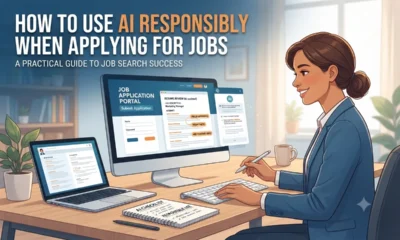

How to Use AI Responsibly When Applying for Jobs
AI can help job seekers save time when researching roles, improving a CV, preparing a cover letter and practising for...

AI Skills Every Job Seeker Should Learn (Without Becoming an AI Expert)
Artificial intelligence is becoming part of everyday work in many industries. You do not need to become a programmer, data...


How to Get a Job in the UK: A Complete Step-by-Step Guide
Finding a job in the UK can feel difficult, especially when you are competing with many other applicants. The process...

How to Write a CV With No Experience
Find out how to write a CV with no experience, what to include and how students, graduates and first-time job...


What Is a Job Description and What Should You Look For?
What is a job description? Understand what it means, what to look for and how to use it to decide...

Job Interview Preparation: Complete Guide to Before, During and After the Interview
A complete job interview preparation guide covering common questions, competency answers, remote interviews, interview mistakes and what to do after...

Sales Assistant Job Description: Duties, Skills, Salary and Career Guide UK
A Sales Assistant helps customers, processes purchases and supports the day-to-day running of a retail environment.


Web Developer Job Description: Duties, Skills, Salary and Career Guide UK
A Web Developer builds, maintains and improves websites and web applications. See the main duties, skills, qualifications, salary expectations and...
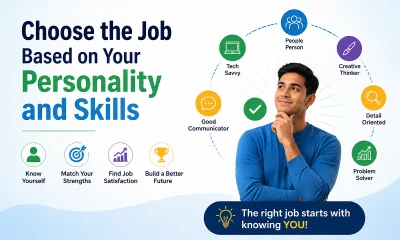

Choose an Entry-Level Job Based on Your Personality and Skills
Choosing your first job can be confusing. There are hundreds of entry-level jobs in the UK, but the best option...
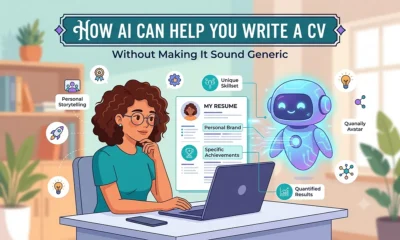

How AI Can Help You Write a CV Without Making It Sound Generic
Find out how to use AI to improve your CV, tailor your experience and write clearer applications without adding false...
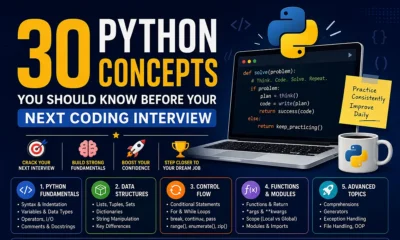

Python Interview Cheat Sheet: 30 Python Concepts You Should Know Before Your Next Coding Interview
Python is one of the most popular programming languages for beginners and professional developers. It is widely used in web...
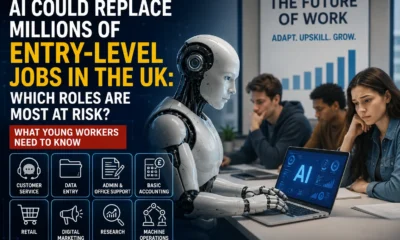

AI Could Replace Millions of Entry-Level Jobs in the UK by 2035: Which Roles Are Most at Risk?
Artificial intelligence is changing the way people work across the UK. From customer service and administration to data processing and...

How to Get a Job When There Are Fewer Vacancies
Finding a job can become more difficult when fewer suitable vacancies are available. You may see the same roles repeatedly,...


How UK Job Seekers Can Use LinkedIn to Find More Job Opportunities
Use LinkedIn more effectively in your UK job search with practical advice on improving your profile, finding jobs, networking and...


Why Is It So Hard to Get a Job in the UK?
If you have been applying for jobs in the UK and getting very few replies, you are not alone. Many...


Entry-Level Jobs in the UK Compared: Pay, Difficulty, Stress and Career Growth
Starting your career can be confusing, especially when there are so many entry-level jobs available in the UK. While some...


Why Are Graduate Jobs Becoming Harder to Find in the UK?
Graduating from university is supposed to feel like the beginning of a new chapter. You finish your degree, prepare your...

Why Good Candidates Fail Job Interviews: 10 Reasons You May Not Get the Job
Find out why good candidates can fail job interviews, what may affect an employer's decision and how to improve before...
-
 Career3 years ago
Career Opportunities for Seniors: 7 Jobs that are Perfect for Older Adults
-
 Jobs8 months ago
15 Best Second Jobs to Boost Your Income in the UK for 2026
-

 Career2 years ago
5 Free Job Posting Sites in the UK (For Employers)
-
 How-to8 months ago
How to Make Money with Google Gemini: Practical Methods Anyone Can Start
-
 How-to8 months ago
How to Build Passive Income and Wealth: 26 Lucrative Ideas
-

 AI & Tools8 months ago
10 Insane Ways Google Gemini Will Explode Your Productivity in 2026
-

 Job Description2 years ago
Support Worker Job Description: Duties, Skills, Salary and Career Guide UK
-

 AI & Tools8 months ago
ChatGPT vs Microsoft Copilot: Which AI Is Best for You?