
AI & Tools
How to Use AI to Identify Your Transferable Skills

Changing careers can feel difficult because job titles often make people focus on what they have not done instead of what they already know.
Someone moving from retail into customer service, administration into project coordination, hospitality into sales, or one industry into another may already have valuable skills. The challenge is identifying those skills and explaining how they apply to a new role.
Artificial intelligence can help job seekers analyse their experience and spot transferable skills. However, AI should help you recognise genuine abilities rather than invent qualifications or experience you do not have.
This guide explains how to use AI to identify your transferable skills and use them more effectively in your CV, job applications and interviews.
What Are Transferable Skills?
Transferable skills are abilities that can be useful across different jobs and industries.
For example, you may have developed communication skills while working in hospitality, problem-solving skills through customer service, organisation skills through administration, or leadership skills while managing a small team.
The same skill can be valuable in a completely different role.
Common Examples of Transferable Skills
- Communication
- Teamwork
- Problem-solving
- Time management
- Organisation
- Customer service
- Leadership
- Adaptability
- Research
- Planning
- Attention to detail
- Digital skills
- Project coordination
The important part is not simply listing these skills. You need to connect them with genuine examples from your own experience.
How AI Can Help Identify Transferable Skills
AI can analyse information that you provide and help identify patterns in your experience.
For example, you can provide a list of previous responsibilities and ask an AI tool to identify skills that may transfer to a different type of role.
If you worked in retail, your responsibilities may have included helping customers, handling complaints, organising stock, meeting targets and working with colleagues. AI may help you recognise that these responsibilities involved communication, problem-solving, organisation, teamwork and commercial awareness.
The skills already existed. AI simply helped organise and describe them.
Step 1: Create a List of What You Have Actually Done
Start with facts rather than skills.
For each previous job, course, project or voluntary activity, write down:
- Your main responsibilities
- Problems you regularly solved
- Tools or software you used
- People you worked with
- Tasks you completed independently
- Projects you contributed to
- Situations where you improved something
Do not worry about making this list sound professional at first. The goal is to collect genuine information.
Step 2: Ask AI to Identify Possible Skills
Once you have your list, AI can help group responsibilities into skills.
You can use a prompt such as:
“Review the responsibilities below and identify transferable skills demonstrated by this experience. Only use information provided. Do not invent skills, qualifications or achievements.”
This instruction is important because it keeps the AI focused on analysing your real background.
Step 3: Compare Your Skills With a Target Role
Choose a job you are genuinely interested in and carefully read the job description.
Then ask AI to compare the requirements with your existing experience.
For example:
“Compare my experience with the requirements in this job description. Identify genuine transferable skills and relevant connections. Do not claim that I meet requirements that are not supported by my experience.”
This can help you understand where your strongest connections are and where you may need further training or experience.
Step 4: Separate Genuine Matches From Gaps
AI can sometimes make connections that sound convincing but are too broad.
Always review the results and divide them into two groups:
Skills You Can Genuinely Demonstrate
These are abilities supported by your previous work, education or other experience.
Skills You Still Need to Develop
These may require training, practice or further experience.
This honest approach is much more useful than trying to make every job requirement appear to be a perfect match.
Example: Moving From Retail Into Office Administration
A retail employee may believe that they have no office experience. However, their previous responsibilities may include several transferable abilities.
| Retail Experience | Possible Transferable Skill |
|---|---|
| Helping customers with questions | Communication |
| Handling complaints | Problem-solving |
| Managing daily tasks | Organisation |
| Working with colleagues | Teamwork |
| Following procedures | Attention to detail |
| Using tills or systems | Digital confidence |
AI can help identify these connections, but you should decide which ones are genuinely relevant to the role you want.
Example: Moving From Hospitality Into Customer Success or Sales
Hospitality work often involves more than serving customers.
A person may have developed:
- Communication with different types of people
- The ability to remain calm under pressure
- Problem-solving during difficult situations
- Team coordination
- Customer relationship skills
- Time management during busy periods
These skills may be relevant to customer success, account support, sales and other people-focused roles.
Using AI to Find Skills Hidden in Your CV
If you already have a CV, you can ask AI to review it and identify skills that are demonstrated but not clearly stated.
For example:
“Review my CV and identify transferable skills that are supported by the responsibilities and examples already included. Do not infer qualifications or experience that are not stated.”
The AI may help you notice patterns across several jobs.
However, do not automatically add every suggested skill to your CV. Choose the skills that are relevant to the jobs you want.

How to Use AI When Changing Careers
Career changers can use AI to create a clearer picture of the transition.
A useful process is:
- List your previous responsibilities.
- Identify genuine skills developed through those responsibilities.
- Choose a target career or role.
- Study several relevant job descriptions.
- Compare common requirements with your existing skills.
- Identify gaps honestly.
- Create a plan to develop missing skills.
This helps you move from a vague idea of “changing careers” to a more practical plan.
How to Use Transferable Skills in Your CV
Your CV should not simply contain a long list of generic skills.
Instead, show evidence.
For example, instead of writing:
“Excellent problem-solving skills.”
Use a genuine example that shows how you solved a problem.
AI can help improve the wording of an example, but the situation and result must be accurate.
Related guide: How AI Can Help You Write a CV Without Making It Sound Generic.
How to Use Transferable Skills in a Cover Letter
A cover letter is a useful place to explain why experience from another role is relevant.
Rather than apologising for not having the exact job title before, focus on the abilities you have developed.
AI can help structure this explanation, but you should provide the genuine examples and reasons for your career move.
Related guide: How to Use AI to Write a Cover Letter Without Sounding Generic.
How to Talk About Transferable Skills in an Interview
Interviewers may ask how your previous experience prepares you for a role that is different from your current job.
Prepare examples that explain:
- The situation
- Your responsibility
- What you did
- The skill you used
- Why that skill is relevant to the new role
AI can help you practise explaining these examples, but the final answer should come from your real experience.
Useful AI Prompts for Identifying Transferable Skills
Prompt 1: Analyse Previous Experience
“Analyse the responsibilities below and identify transferable skills supported by this experience. Group the skills into communication, organisation, problem-solving, teamwork and technical abilities where appropriate. Do not invent information.”
Prompt 2: Compare Experience With a Job
“Compare my experience below with this job description. Identify genuine transferable skills that connect my background with the role. Clearly separate strong matches from skills that I may still need to develop.”
Prompt 3: Find Hidden Strengths
“Review this CV and identify abilities that are demonstrated through the examples but are not clearly described as skills. Only use evidence contained in the CV.”
Prompt 4: Prepare an Interview Answer
“Help me organise a concise interview answer explaining how my previous experience has prepared me for this new role. Use only the experience I provide and do not invent achievements.”
Common Mistakes to Avoid
Letting AI Invent Skills
If you cannot support a skill with genuine experience, do not claim it.
Making Every Skill Sound Relevant
Focus on the abilities that genuinely connect with the target role.
Ignoring Skill Gaps
AI can help identify strengths, but it should not hide areas where you need development.
Using Generic Skill Lists
Employers gain more useful information from evidence than from long lists of broad terms.
Forgetting Your Own Judgement
AI can suggest patterns, but you know your experience best. Review every suggestion.
A Simple Transferable Skills Checklist
- List your genuine responsibilities.
- Identify the skills used to complete them.
- Review several target job descriptions.
- Identify common requirements.
- Match genuine experience with relevant requirements.
- Separate strengths from development gaps.
- Collect examples that demonstrate each important skill.
- Update your CV and applications carefully.
Related AI and Job Search Guides
- How to Use AI to Find a Job
- Best AI Prompts for Job Seekers
- AI Skills Every Job Seeker Should Learn
- How to Use AI Responsibly When Applying for Jobs
- How AI Is Changing Recruitment
Frequently Asked Questions
Can AI tell me what my transferable skills are?
AI can analyse the experience you provide and help identify possible transferable skills. You should review the suggestions and make sure every skill is supported by genuine experience.
What if I do not have experience in the industry I want to enter?
Look at the skills you developed in previous roles, education, projects or voluntary work. Some may be relevant to the new industry, while others may need further development.
Can I use AI to change careers?
AI can help organise your career research, identify transferable skills and compare your background with target roles. It should support your decision-making rather than make career decisions for you.
Should I list transferable skills on my CV?
Yes, where they are relevant, but support important skills with examples from your actual experience.
Final Thoughts
Changing direction does not mean starting from zero. Your previous experience may contain valuable skills that are useful in a new role.
AI can make those connections easier to identify, organise and explain. The key is to keep the process honest. Use AI to recognise genuine strengths, identify real gaps and prepare better applications.
The most convincing transferable skill is one you can clearly demonstrate and confidently discuss.


How to Use AI to Identify Your Transferable Skills
Changing careers can feel difficult because job titles often make people focus on what they have not done instead of...

How to Use AI Responsibly When Applying for Jobs
AI can help job seekers save time when researching roles, improving a CV, preparing a cover letter and practising for...

AI Skills Every Job Seeker Should Learn (Without Becoming an AI Expert)
Artificial intelligence is becoming part of everyday work in many industries. You do not need to become a programmer, data...

How to Get a Job in the UK: A Complete Step-by-Step Guide
Finding a job in the UK can feel difficult, especially when you are competing with many other applicants. The process...

How to Write a CV With No Experience
Find out how to write a CV with no experience, what to include and how students, graduates and first-time job...


What Is a Job Description and What Should You Look For?
What is a job description? Understand what it means, what to look for and how to use it to decide...
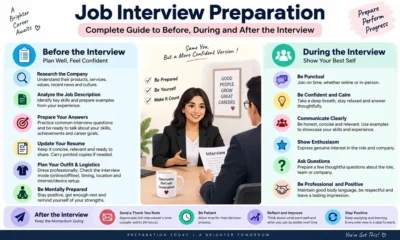

Job Interview Preparation: Complete Guide to Before, During and After the Interview
A complete job interview preparation guide covering common questions, competency answers, remote interviews, interview mistakes and what to do after...
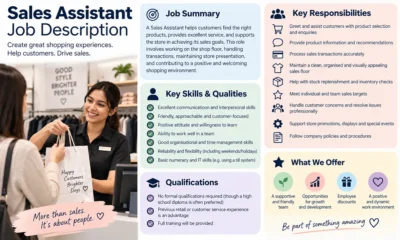

Sales Assistant Job Description: Duties, Skills, Salary and Career Guide UK
A Sales Assistant helps customers, processes purchases and supports the day-to-day running of a retail environment.


Web Developer Job Description: Duties, Skills, Salary and Career Guide UK
A Web Developer builds, maintains and improves websites and web applications. See the main duties, skills, qualifications, salary expectations and...
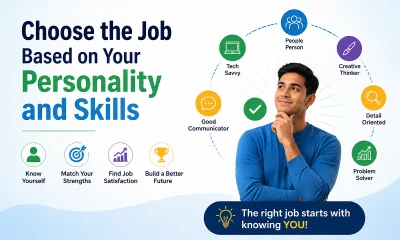

Choose an Entry-Level Job Based on Your Personality and Skills
Choosing your first job can be confusing. There are hundreds of entry-level jobs in the UK, but the best option...
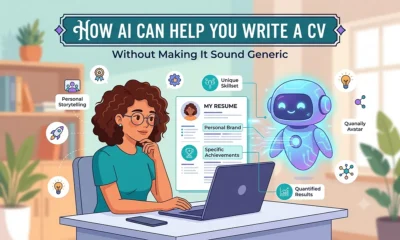

How AI Can Help You Write a CV Without Making It Sound Generic
Find out how to use AI to improve your CV, tailor your experience and write clearer applications without adding false...

Python Interview Cheat Sheet: 30 Python Concepts You Should Know Before Your Next Coding Interview
Python is one of the most popular programming languages for beginners and professional developers. It is widely used in web...

AI Could Replace Millions of Entry-Level Jobs in the UK by 2035: Which Roles Are Most at Risk?
Artificial intelligence is changing the way people work across the UK. From customer service and administration to data processing and...

How to Get a Job When There Are Fewer Vacancies
Finding a job can become more difficult when fewer suitable vacancies are available. You may see the same roles repeatedly,...

How UK Job Seekers Can Use LinkedIn to Find More Job Opportunities
Use LinkedIn more effectively in your UK job search with practical advice on improving your profile, finding jobs, networking and...

Why Is It So Hard to Get a Job in the UK?
If you have been applying for jobs in the UK and getting very few replies, you are not alone. Many...


Entry-Level Jobs in the UK Compared: Pay, Difficulty, Stress and Career Growth
Starting your career can be confusing, especially when there are so many entry-level jobs available in the UK. While some...


Why Are Graduate Jobs Becoming Harder to Find in the UK?
Graduating from university is supposed to feel like the beginning of a new chapter. You finish your degree, prepare your...

Why Good Candidates Fail Job Interviews: 10 Reasons You May Not Get the Job
Find out why good candidates can fail job interviews, what may affect an employer's decision and how to improve before...

30 Entry-Level Jobs in the UK for People With Little or No Experience
Finding your first job can feel difficult, especially when many vacancies ask for previous work experience. The good news is...
-
 Career3 years ago
Career Opportunities for Seniors: 7 Jobs that are Perfect for Older Adults
-
 Jobs8 months ago
15 Best Second Jobs to Boost Your Income in the UK for 2026
-

 Career2 years ago
5 Free Job Posting Sites in the UK (For Employers)
-
 How-to8 months ago
How to Make Money with Google Gemini: Practical Methods Anyone Can Start
-
 AI & Tools7 months ago
10 Insane Ways Google Gemini Will Explode Your Productivity in 2026
-

 Job Description2 years ago
Support Worker Job Description: Duties, Skills, Salary and Career Guide UK
-

 AI & Tools7 months ago
ChatGPT vs Microsoft Copilot: Which AI Is Best for You?
-
 Career3 years ago
13 Best Jobs That AI Can’t Replace: A Guide to Future-proof Careers