Internships
UK Internships: How to Find, Apply and Choose the Right Opportunity
Find UK internships for students and graduates, compare career areas, prepare stronger applications and choose an opportunity that fits your goals.

Finding the right UK internship is easier when you know what type of experience you want and where to search. Internships can give students and graduates practical exposure to an industry, useful workplace skills and a clearer idea of their next career step.
This guide focuses on how to compare internship types, find suitable opportunities, prepare your application and make the experience useful for your CV. If you are also looking for flexible work while studying, see our guide to online jobs for students in the UK.
There are internships in technology, engineering, marketing, consulting, media, healthcare, law, government and many other industries. Some programmes are designed for university students, while others may be suitable for recent graduates or school leavers.
The bigger challenge is not simply finding an internship.
It is choosing one that matches your skills, interests, personality and future career goals.
An internship can help you gain professional experience, understand how an industry works and decide whether a particular career path is right for you. The UK National Careers Service describes internships as periods of work experience that can last from around two weeks to 12 months, with many programmes helping students test career ideas and develop workplace skills.
This guide explains the main types of UK internships, the industries that offer them and how to choose the right opportunity for your future.
Quick Overview of UK Internship Opportunities:
| Internship Area | Best For Students Who Enjoy | Key Skills | Competition | Typical Career Direction |
|---|---|---|---|---|
| Technology | Computers and problem-solving | Technical and analytical skills | High | Software, IT and digital careers |
| Banking and Finance | Numbers and business | Analysis and commercial awareness | Very High | Banking, finance and investment |
| Consulting | Solving business problems | Analysis and communication | Very High | Consulting and business strategy |
| Engineering | Technology and practical problem-solving | Maths and technical skills | High | Engineering and manufacturing |
| Marketing | Creativity and understanding people | Communication and commercial awareness | High | Digital, brand and marketing careers |
| Media and Journalism | Writing and storytelling | Research and communication | High | Journalism, media and publishing |
| Healthcare and Science | Research and helping people | Scientific and analytical skills | High | Healthcare and scientific careers |
| Government and Public Sector | Society and public issues | Research and communication | Medium to High | Public service and policy |
| Law | Research and structured thinking | Writing and attention to detail | Very High | Legal careers |
| Retail and Business | Customers and commercial work | Communication and teamwork | Medium | Retail and business management |
| Creative and Design | Ideas and visual work | Creativity and technical skills | High | Design and creative industries |
These are general career-guidance comparisons. Individual internships can have very different requirements.
What Is an Internship?
An internship is a period of work experience that gives you exposure to a professional workplace.
Depending on the programme, you may:
- Work with an experienced team
- Support a real project
- Attend meetings
- Research information
- Analyse data
- Learn industry tools
- Complete specific tasks
- Shadow experienced professionals
The length and structure of internships can vary considerably. The National Careers Service states that internships can range from two weeks to 12 months and may be full-time, part-time or virtual.
Many student internships take place during university holidays, particularly in the summer.
However, internships are not all the same.
Some are highly structured programmes with formal applications, online tests and assessment centres. Others may be smaller opportunities at individual businesses.
Internship vs Work Experience vs Placement Year:
Students often use these terms interchangeably, but they can describe different types of opportunities.
| Opportunity | Typical Purpose | Typical Length | Main Benefit |
|---|---|---|---|
| Internship | Professional experience | Weeks to months | Career experience |
| Work Experience | Understanding a job | Days to weeks | Career exploration |
| Work Shadowing | Observing professionals | Days or short periods | Understanding daily work |
| Placement Year | Work as part of a degree | Around one academic year | Extended professional experience |
| Graduate Scheme | Structured career training after university | 1 to 4 years | Long-term career development |
The National Careers Service describes a placement year as a period of paid workplace experience that forms part of a higher education course, while graduate schemes are structured entry-level training programmes for graduates.
The important point is not simply the title of the opportunity.
Look at what you will actually do, what you will learn and whether the experience supports your career goals.
Why Should You Do an Internship?
An internship can provide benefits that university study alone may not provide.
Test a Career Before Committing to It
You may think you want to work in a particular industry.
But professional work can be very different from studying a subject at university.
For example:
- A student who enjoys coding may discover they enjoy product development more than software testing.
- A business student may discover they prefer marketing to finance.
- An engineering student may become more interested in project management than technical design.
- A journalism student may discover a stronger interest in digital publishing.
An internship gives you a chance to test these ideas.
Gain Workplace Experience:
University teaches knowledge and academic skills.
Professional work also requires you to:
- Work with colleagues
- Meet deadlines
- Communicate professionally
- Manage tasks
- Attend meetings
- Ask questions
- Take responsibility
These skills become easier to understand when you experience a real workplace.
Build Professional Contacts:
Internships can introduce you to:
- Managers
- Colleagues
- Other interns
- Industry professionals
Building professional relationships can be valuable throughout your career.
Understand Your Strengths:
An internship can help you identify what you are good at.
You may discover strengths in:
- Analysis
- Communication
- Leadership
- Creativity
- Technology
- Research
- Organisation
This can help you make better career decisions after graduation.
What Will You Actually Do as an Intern?
Many students worry that an internship will only involve basic administrative work.
The reality depends on the employer, team and programme.
A typical intern may spend time on activities such as:
| Activity | What You May Learn |
|---|---|
| Team meetings | Professional communication |
| Research tasks | Analytical and research skills |
| Project work | Problem-solving |
| Presentations | Communication and confidence |
| Data analysis | Analytical thinking |
| Working with software | Technical skills |
| Client or customer work | Professional awareness |
| Reports and documentation | Business writing |
A longer internship may involve greater responsibility than a short placement.
The National Careers Service notes that shorter internships may involve more observation and learning, while longer programmes can involve project work and teamwork.
The Main Types of Internships in the UK:
The right internship depends heavily on the type of work you enjoy.
Technology Internships:
Technology is one of the most popular areas for students looking for internships.
Technology internships can include:
- Software development
- Data analysis
- Cybersecurity
- Cloud technology
- IT
- Artificial intelligence
- Product development
Some major employers to monitor include:
- IBM Internship UK
- Google Internship UK
- Microsoft Internship UK
- Amazon Jobs
- Apple Careers
- Meta Careers
- Cisco Careers
- Oracle Careers
- Intel Careers
- Dell Technologies Careers
- SAP Careers
- Adobe Careers
- Salesforce Careers
- TikTok Careers
- Atlassian Careers
Best for:
Technology internships may suit students who enjoy:
- Programming
- Building software
- Solving technical problems
- Data analysis
- Artificial intelligence
- Cybersecurity
- Learning new technologies
IBM describes its internship programmes as opportunities for interns to contribute to projects and collaborate on major work.
Consulting Internships:
Consulting can involve helping organisations solve business, technology, operational or strategic problems.
Internship opportunities may be available in areas such as:
- Management consulting
- Technology consulting
- Strategy
- Risk consulting
- Business transformation
- Data and analytics
Major employers to check include:
- PwC UK Careers
- Deloitte UK Careers
- EY UK Careers
- KPMG UK Careers
- Accenture Careers
- McKinsey Careers
- Boston Consulting Group Careers
- Bain Careers
- Capgemini Careers
- CGI Careers
- PA Consulting Careers
Best for:
Consulting may suit people who enjoy:
- Analysing problems
- Working with different industries
- Research
- Presentations
- Teamwork
- Understanding how businesses operate
Career reality check:
Consulting can provide exposure to interesting projects, but it may also involve demanding deadlines, complex client work and significant preparation. It may suit people who enjoy variety and problem-solving rather than those looking for highly repetitive work.
Engineering Internships:
Engineering opportunities can include:
- Mechanical engineering
- Civil engineering
- Electrical engineering
- Aerospace
- Automotive
- Manufacturing
Companies worth monitoring include:
- Rolls-Royce Careers
- BAE Systems Careers
- Jaguar Land Rover Careers
- BMW Group Careers
- Airbus Careers
- Siemens Careers
- Shell Careers
- BP Careers
- Thales Careers
- GSK Careers
Marketing Internships:
Marketing internships can provide experience in both creative and analytical work.
Possible areas include:
- Digital marketing
- SEO
- Social media
- Content marketing
- Brand management
- Advertising
- Market research
Companies and organisations worth monitoring include:
- Unilever Careers
- L’Oréal Careers
- Procter & Gamble Careers
- Nestlé Careers
- Diageo Careers
- Mars Careers
Best for:
Students who enjoy creativity, communication and understanding customers.
Media and Journalism Internships:
Media internships can cover much more than journalism.
Possible areas include:
- Broadcasting
- Production
- Journalism
- Digital content
- Marketing
- Social media
- Communications
- Advertising
Organisations to monitor include:
- BBC Careers
- ITV Careers
- Sky Careers
- The Guardian Careers
- Channel 4 Careers
- WPP Careers
- Publicis Groupe Careers
Best for:
Creative and media internships may suit people who enjoy:
- Writing
- Storytelling
- Content creation
- Communication
- Video
- Social media
Healthcare and Science Internships:
Opportunities may include:
- Scientific research
- Laboratory work
- Healthcare projects
- Pharmaceutical research
- Clinical research support
Organisations worth monitoring include:
Best for:
Students who enjoy science, research and evidence-based work.
Students interested in science, healthcare, pharmaceuticals and research may also find internship or placement opportunities.
Government and Public Sector Internships:
Government internships and placements can be particularly useful for students interested in public policy, economics, research, administration, analysis and public service.
The UK government’s official guidance says students can search for internships through the Find a Job service and seek help from university or college careers services.
The National Careers Service also recommends checking university careers services, graduate recruitment sites and employer websites directly.
Areas worth investigating include:
- UK Civil Service Careers
- Civil Service Summer Internship Programme
- Home Office Careers
- UK Parliament Careers
- UK Research and Innovation Opportunities
- Bank of England Careers
Public-sector programmes often have specific eligibility rules, so applicants should carefully read current requirements before applying.
Best for:
Students interested in society, public issues and policy.
Law Internships:
Legal internships and work experience opportunities may involve:
- Legal research
- Case preparation
- Client support
- Commercial law
- Public law
Best for:
Students who enjoy research, reading, writing and detailed analysis.
Retail and Business Internships:
Retail companies can offer student opportunities beyond working in shops.
Potential career areas include:
- Marketing
- Supply chain
- Finance
- Buying
- Merchandising
- Technology
- Human resources
- Business operations
Companies worth checking include:
- Tesco Careers
- Marks & Spencer Careers
- John Lewis Partnership Careers
- Nike Careers
- IKEA Careers
- Sainsbury’s Careers
Best for:
Students interested in customers, business operations and commercial decision-making.
Creative and Design Internships:
Possible areas include:
- Graphic design
- UX and UI
- Content design
- Advertising
- Digital design
Best for:
Students who enjoy creativity, visual communication and developing ideas.
Which Internship Is Best for Your Personality?
Academic qualifications are important.
But your personality and natural interests can also influence whether you enjoy a career.
You May Prefer Technology If You:
- Enjoy solving logical problems
- Like understanding how systems work
- Are comfortable learning new tools
- Enjoy working independently for long periods
You May Prefer Consulting If You:
- Enjoy different types of problems
- Like analysing situations
- Enjoy communication
- Prefer variety in your work
You May Prefer Marketing If You:
- Enjoy creativity
- Are interested in people and customer behaviour
- Like communication
- Enjoy generating ideas
You May Prefer Engineering If You:
- Enjoy mathematics and technical subjects
- Like practical problem-solving
- Are interested in how things work
- Enjoy structured projects
You May Prefer Journalism or Media If You:
- Enjoy writing
- Are naturally curious
- Like researching information
- Enjoy telling stories
You May Prefer Banking or Finance If You:
- Enjoy numbers
- Like analysing information
- Are interested in business
- Prefer structured and detailed work
These are not strict rules. They are starting points for thinking about career fit.
UK Internship Career Comparison:
| Career Area | Creativity | Analysis | Communication | Technical Knowledge | Variety |
|---|---|---|---|---|---|
| Technology | High | Very High | Medium | Very High | Medium |
| Banking and Finance | Medium | Very High | High | High | Medium |
| Consulting | High | Very High | Very High | Medium | Very High |
| Engineering | High | Very High | Medium | Very High | Medium |
| Marketing | Very High | High | Very High | High | High |
| Media and Journalism | Very High | High | Very High | Medium | High |
| Healthcare and Science | Medium | Very High | Medium | Very High | Medium |
| Government | Medium | High | Very High | Medium | High |
| Law | Medium | Very High | Very High | High | Medium |
| Retail and Business | High | High | Very High | Medium | High |
| Creative and Design | Very High | Medium | High | High | High |
How Competitive Are UK Internships?
Competition varies significantly.
Some of the most well-known employers receive a large number of applications.
General Competition Guide:
| Internship Area | General Competition Level |
|---|---|
| Investment Banking | ⭐⭐⭐⭐⭐ |
| Strategy Consulting | ⭐⭐⭐⭐⭐ |
| Law | ⭐⭐⭐⭐⭐ |
| Major Technology Companies | ⭐⭐⭐⭐⭐ |
| Engineering | ⭐⭐⭐⭐ |
| Marketing | ⭐⭐⭐⭐ |
| Media and Journalism | ⭐⭐⭐⭐ |
| Healthcare and Science | ⭐⭐⭐⭐ |
| Government | ⭐⭐⭐⭐ |
| Retail and Business | ⭐⭐⭐ |
These ratings are general career-guidance estimates rather than official statistics.
Competition can depend on:
- The employer
- The location
- The number of available places
- Academic requirements
- Previous experience
- The application process
Large graduate employers often use structured internship programmes as part of their wider recruitment strategy, and some programmes can lead to consideration for future graduate roles.
Skills You May Need Before Applying:
Requirements vary between industries, but several skills are valuable across many internships.
Communication:
You may need to:
- Write clearly
- Participate in meetings
- Explain your ideas
- Work with colleagues
Teamwork:
Professional workplaces require people to work with others.
University group projects, volunteering and part-time jobs can all provide useful examples.
Problem-Solving:
Employers often want evidence that you can understand problems and think about possible solutions.
Digital Skills:
Basic confidence with workplace technology can be useful across many industries.
Commercial Awareness:
For many business-focused internships, it helps to understand:
- How organisations operate
- Who their customers are
- What challenges they face
- How their industry is changing
Skills You Can Gain During an Internship:
One reason to choose an internship carefully is the opportunity to develop skills.
You may gain:
- Professional communication
- Time management
- Teamwork
- Industry knowledge
- Technical skills
- Research skills
- Presentation skills
- Problem-solving ability
The value of an internship is not only the company name on your CV.
It is also what you actually learned.
Common Degree Backgrounds:
Your degree may influence the internships you can apply for, but it does not always determine your entire career.
| Internship Area | Common Degree Backgrounds |
|---|---|
| Technology | Computer Science, IT, Engineering, Mathematics |
| Banking and Finance | Finance, Economics, Mathematics, Business |
| Consulting | Business, Economics, Engineering, Science and other disciplines |
| Engineering | Engineering, Physics, Mathematics |
| Marketing | Marketing, Business, Media, Psychology and other disciplines |
| Media | Journalism, Media, English, Communications |
| Healthcare and Science | Biology, Chemistry, Medicine and related subjects |
| Government | Politics, Economics, Law and many other disciplines |
| Law | Law and other degree subjects, depending on the route |
| Creative and Design | Design, Media, Arts and related subjects |
Some employers recruit from a broad range of academic backgrounds, while others require specific degrees.
Always check the individual programme requirements.
Is an Internship Career Path Right for You?
Use this simple self-assessment before focusing your applications.
Rate each statement from 1 to 5.
| Question | Score |
|---|---|
| Am I genuinely interested in this industry? | /5 |
| Do I enjoy the type of work involved? | /5 |
| Do my current skills suit this career area? | /5 |
| Am I willing to develop the skills I lack? | /5 |
| Can I imagine doing this type of work regularly? | /5 |
Your Score:
21–25: Strong potential career match
16–20: Worth exploring seriously
11–15: Research the industry further before committing
5–10: Consider other internship areas that may suit you better
This is not a scientific career test.
It is simply a useful way to think before applying to dozens of internships without a clear direction.
The Reality of Doing an Internship:
Internships can be valuable, but students should have realistic expectations.
The Positive Side:
An internship can help you:
- Gain professional experience
- Build confidence
- Understand an industry
- Meet professionals
- Develop useful skills
The Challenges:
An internship can also involve:
- Adapting to a new environment
- Learning unfamiliar systems
- Managing deadlines
- Receiving feedback
- Competing with strong applicants
- Balancing applications with university work
The best internship is not necessarily the most famous programme.
A less well-known company may provide more direct responsibility and practical experience.
Are UK Internships Paid?
Pay and employment rights depend on the intern’s employment status and the nature of the arrangement.
According to GOV.UK, interns who are classed as workers are normally entitled to the National Minimum Wage. However, different rules can apply to certain student placements that are required as part of a UK further or higher education course, voluntary roles and genuine work-shadowing arrangements.
Before accepting an internship, check:
- Whether it is paid
- Your employment status
- Working hours
- Expenses
- The responsibilities involved
Do not assume that every opportunity described as an “internship” follows the same rules.
How to Choose the Right Internship?
Before applying, ask yourself these questions.
What Type of Work Do I Enjoy?
Think about whether you prefer:
- Writing
- Numbers
- Technology
- Creativity
- Research
- Working with people
- Solving technical problems
What Skills Do I Want to Develop?
Choose opportunities that help you build useful experience.
Do I Want a Large or Small Organisation?
Large companies may offer:
- Structured training
- Larger intern groups
- Formal programmes
- Well-defined career pathways
Smaller organisations may offer:
- Broader responsibilities
- Closer contact with senior staff
- Exposure to multiple areas of the business
Neither option is automatically better.
Does the Industry Match My Long-Term Goals?
You do not need to know your entire career plan.
However, an internship should ideally help you move in a useful direction.
How to Prepare for UK Internship Applications?
Your preparation should depend on the industry.
There is no single preparation strategy that works for every career.
For Technology
Focus on:
- Practical projects
- Programming skills
- Technical problem-solving
For Consulting
Focus on:
- Structured problem-solving
- Business awareness
- Communication
For Engineering
Focus on:
- Technical projects
- Engineering fundamentals
- Practical experience
For Marketing
Focus on:
- Understanding customers
- Campaign ideas
- Digital marketing experience
For Media
Focus on:
- Writing
- Research
- Producing and publishing work
The most effective preparation demonstrates that you understand the career area you are applying for.
How to Find Internships in the UK?
There are several ways to search.
Check Official Company Careers Pages:
If you know which companies interest you, visit their official careers websites.
Use Your University Careers Service:
University careers services can help with:
- Finding opportunities
- CV advice
- Application feedback
- Interview preparation
The National Careers Service also recommends using university careers support and employer websites when searching for internships.
Use the UK Government Job Service:
The UK government directs internship seekers to the Find a Job service and recommends speaking to university or college careers services for additional support.
Attend Careers Events:
Careers fairs and employer events can help you:
- Meet recruiters
- Understand companies
- Ask questions
- Find out about future programmes
Monitor Companies You Are Interested In:
Many companies announce student and graduate opportunities through their careers channels.
Keep track of employers that genuinely interest you.
When Should You Start Applying?
Application timing varies by employer.
For competitive programmes, starting your research early can be important. The National Careers Service advises university students to begin looking during the summer of their first year for internships that may take place during the following summer, while some major employers have application deadlines well before the internship itself.
Do not wait until the last minute to:
- Update your CV
- Research companies
- Practise interviews
- Develop relevant skills
Common Mistakes Students Make:
Applying to Every Internship:
More applications do not always mean better applications.
Focus on opportunities that genuinely match your interests and skills.
Choosing Only Famous Companies:
Well-known employers can offer excellent programmes.
However, smaller companies may also provide strong experience.
Ignoring the Actual Role:
Do not apply based only on a company name.
Read what you will actually be doing.
Using the Same Application Everywhere:
Tailor your application to the role.
Waiting Until You Feel Fully Ready:
Most internships are designed for people who are still developing.
You may not meet every preferred requirement.
If you meet the essential requirements and have genuine interest, consider applying.
What If You Don’t Get an Internship?
Not getting an internship does not mean your career plans have failed.
You can still build useful experience.
Gain Relevant Work Experience:
You could:
- Take a part-time job
- Volunteer
- Help a small business
- Join a university project
The National Careers Service notes that work experience can also be gained through part-time work, volunteering, helping with a business or other practical activities.
Develop an Industry-Specific Project:
Choose something relevant to your target career.
For example:
Technology: Build a software project.
Marketing: Analyse or run a small campaign.
Media: Publish articles or create videos.
Engineering: Work on a technical project.
Finance: Develop your understanding of companies and financial information.
The alternative should match the career you want.
Frequently Asked Questions About UK Internships
Can International Students Apply for UK Internships?
Eligibility depends on the employer, the programme and the student’s immigration and right-to-work circumstances.
Always check the specific employer requirements and seek official guidance where necessary.
Do You Need Previous Experience?
Not always.
Many internships are designed to provide students with their first significant professional experience.
However, university projects, volunteering and part-time work can still strengthen an application.
Are All Internships During Summer?
No.
Some internships take place at other times of the year or run for longer periods.
Can an Internship Lead to a Graduate Job?
Sometimes.
Some employers use internships as part of their wider graduate recruitment process, although a future job is never guaranteed unless the employer specifically states otherwise.
Should I Apply Even If I Do Not Meet Every Requirement?
Read the essential requirements carefully.
If you meet the key criteria and can demonstrate relevant potential, it may still be worth applying.
Final Thoughts:
The best UK internship is not necessarily the one with the most famous company name.
It is the one that gives you useful experience and helps you understand your future career.
Before applying, focus on five questions:
- What type of work do I genuinely enjoy?
- What skills do I already have?
- What skills do I want to develop?
- Does this industry suit my personality and interests?
- Will this internship help me move towards my future goals?
Use this guide as your starting point, then explore the industry-specific internship guides to compare different career paths in more detail.
Your first internship does not have to determine your entire future.
Sometimes, the most valuable thing you gain from an internship is discovering what type of work you want to do—and what type of work you do not.
Continue With Our UK Internship Guides:
- Technology Internships UK
- Consulting Internships UK
- Engineering Internships UK
- Marketing Internships UK
- Media and Journalism Internships UK
- Healthcare and Science Internships UK
- Government and Public Sector Internships UK
- Law Internships UK
- Retail and Business Internships UK
- Creative and Design Internships UK



How to Start a Career in Transport and Logistics in the UK
Planning a career in transport and logistics in the UK? See entry-level roles, apprenticeships, qualifications, skills and practical steps to...


Rolls-Royce Internship UK: Eligibility, Opportunities & How to Apply
Find Rolls-Royce internships in the UK with practical guidance on eligibility, opportunities, applications, assessments, skills and preparation.


JLR Internships in the UK: How to Find and Apply
Find JLR internships and undergraduate placements in the UK, with practical guidance on eligibility, applications, career areas, assessments and preparation.


Technology Internships in the UK: How to Find and Prepare
Find technology internships in the UK with practical guidance on choosing a tech career area, building skills, finding employers and...


Deloitte Internship UK: How to Apply and Prepare
A practical guide to Deloitte internships in the UK, covering programmes, eligibility, applications, assessments, skills, student visas and preparation.


How to Prepare for a Remote Interview: Complete Guide
Prepare for a remote or video interview with practical advice on technology, camera setup, communication, notes and handling technical problems.

How to Stay Employable: 12 Long-Term Career Strategies
No one can guarantee permanent employment. Employers change, industries evolve and personal circumstances can affect a career at any stage....


How AI Is Changing Recruitment: What Job Seekers Should Expect
Artificial intelligence is changing recruitment, but not in the simple way many headlines suggest. Employers may use AI to organise...


How to Use AI to Identify Your Transferable Skills
Changing careers can feel difficult because job titles often make people focus on what they have not done instead of...


How to Use AI Responsibly When Applying for Jobs
AI can help job seekers save time when researching roles, improving a CV, preparing a cover letter and practising for...


AI Skills Every Job Seeker Should Learn (Without Becoming an AI Expert)
Artificial intelligence is becoming part of everyday work in many industries. You do not need to become a programmer, data...


How to Get a Job in the UK: A Complete Step-by-Step Guide
Finding a job in the UK can feel difficult, especially when you are competing with many other applicants. The process...


How to Write a CV With No Experience
Find out how to write a CV with no experience, what to include and how students, graduates and first-time job...


What Is a Job Description and What Should You Look For?
What is a job description? Understand what it means, what to look for and how to use it to decide...
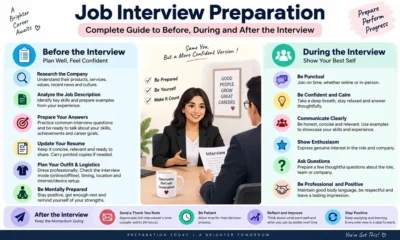

Job Interview Preparation: Complete Guide to Before, During and After the Interview
A complete job interview preparation guide covering common questions, competency answers, remote interviews, interview mistakes and what to do after...
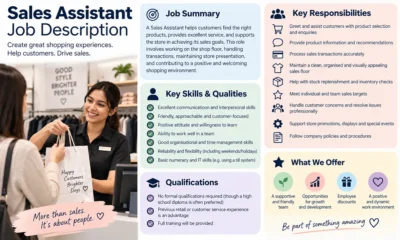

Sales Assistant Job Description: Duties, Skills, Salary and Career Guide UK
A Sales Assistant helps customers, processes purchases and supports the day-to-day running of a retail environment.


Web Developer Job Description: Duties, Skills, Salary and Career Guide UK
A Web Developer builds, maintains and improves websites and web applications. See the main duties, skills, qualifications, salary expectations and...


Choose an Entry-Level Job Based on Your Personality and Skills
Choosing your first job can be confusing. There are hundreds of entry-level jobs in the UK, but the best option...

How AI Can Help You Write a CV Without Making It Sound Generic
Find out how to use AI to improve your CV, tailor your experience and write clearer applications without adding false...


Python Interview Cheat Sheet: 30 Python Concepts You Should Know Before Your Next Coding Interview
Python is one of the most popular programming languages for beginners and professional developers. It is widely used in web...
-
 Career3 years ago
Career Opportunities for Seniors: 7 Jobs that are Perfect for Older Adults
-
 Jobs8 months ago
Second Jobs in the UK: 15 Practical Ways to Earn Extra Income
-

 Career2 years ago
5 Free Job Posting Sites in the UK (For Employers)
-
 How-to8 months ago
How to Use Google Gemini for Freelance Work and Career Skills
-
 How-to8 months ago
Passive Income Ideas: Build Long-Term Income Streams
-

 AI & Tools8 months ago
How to Use Google Gemini for Productivity at Work
-

 Job Description2 years ago
Support Worker Job Description: Duties, Skills, Salary and Career Guide UK
-

 AI & Tools8 months ago
ChatGPT vs Microsoft Copilot: Which AI Is Best for You?