
News
Volkswagen Uses AI Agents to Transform Its Cars in China
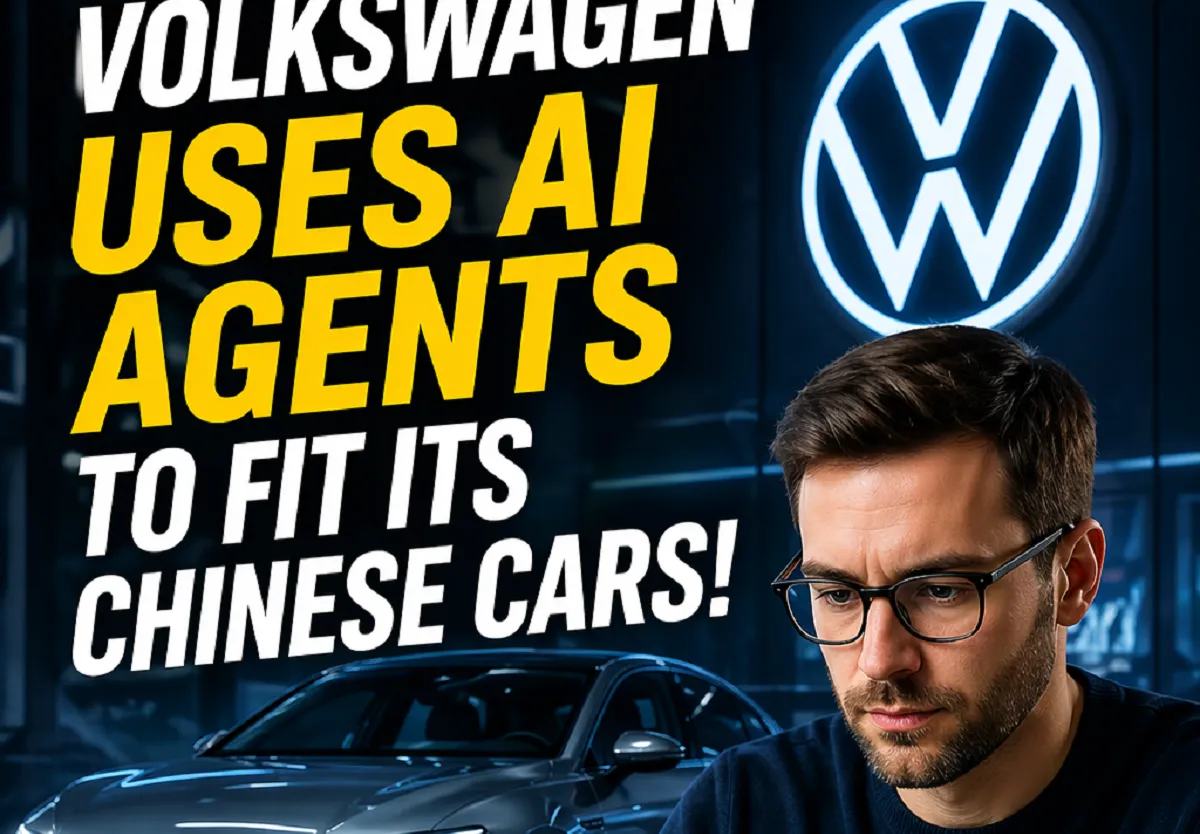
The automotive industry is changing faster than ever before—and at the center of this transformation is Artificial Intelligence (AI). One of the biggest moves in this space comes from Volkswagen, which is now using AI agents to enhance and customize its cars for the Chinese market.
This is not just another tech upgrade. It represents a major shift in how cars are designed, built, and experienced by users.
In this detailed guide, we’ll break down:
- What AI agents are
- Why Volkswagen is using them
- How they improve cars
- What this means for the future of driving
What Are AI Agents in Cars?
AI agents are intelligent software systems that can:
- Analyze data
- Make decisions
- Learn from user behavior
In cars, these agents act like a smart brain that controls various features and adapts to the driver.
Unlike traditional software, AI agents don’t just follow instructions—they learn and improve over time.
Why Volkswagen Is Focusing on China?
China is the world’s largest automotive market, and it is also one of the most advanced when it comes to technology adoption.
Key Reasons:
1. Tech-Savvy Consumers:
Chinese customers expect:
- Smart features
- Seamless digital experiences
- Advanced connectivity
2. Strong Competition:
Local brands are already using AI aggressively. To stay competitive, Volkswagen needs to innovate.
3. Fast Innovation Cycle:
China moves quickly in terms of tech upgrades. AI helps Volkswagen keep up with this pace.
AI-Powered Design: A New Era of Car Development:
Traditional car design takes years. AI changes that completely.
How AI Helps:
- Analyzes user preferences
- Predicts market trends
- Optimizes design features
This leads to:
- Faster development
- Better user experience
- More efficient production
AI allows Volkswagen to design cars that people actually want—before they even ask for them.
Tailored for China: Hyper-Personalization
One of the most powerful aspects of AI is personalization.
Volkswagen is using AI agents to create cars specifically designed for Chinese users.
Examples:
- Language and voice assistants in local dialects
- Customized infotainment systems
- Features based on driving habits
This approach ensures that cars are not just global products—they are locally relevant.
Smarter Decisions in Real Time:
AI agents can process huge amounts of data instantly.
What This Means for Drivers:
- Real-time traffic analysis
- Route optimization
- Safety alerts
- Predictive maintenance
Instead of reacting to problems, AI helps prevent them.
Faster Than Ever: Speed and Efficiency
AI significantly reduces the time required for:
- Designing cars
- Testing features
- Launching updates
Over-the-Air Updates:
Cars can now receive updates just like smartphones.
This means:
- New features without buying a new car
- Improved performance over time
- Continuous innovation
How AI Improves the Driving Experience?
AI agents are not just about technology—they are about better driving experiences.
1. Smart Assistance:
Cars can understand voice commands and respond naturally.
2. Predictive Features:
AI learns your habits:
- Preferred routes
- Driving style
- Climate settings
3. Enhanced Safety:
AI can detect risks and warn drivers in advance.
4. Personalized Comfort:
Your car adjusts automatically to your preferences.
AI in Automotive: A Bigger Trend
Volkswagen is not alone. The entire automotive industry is moving towards AI.
Industry Trends:
- Self-driving technology
- Connected vehicles
- Smart dashboards
- AI-powered maintenance
Cars are becoming intelligent systems, not just machines.
Benefits of AI in Cars:
Let’s summarize the key advantages:
1. Better User Experience
More intuitive and personalized features.
2. Increased Safety
Real-time alerts and predictive systems.
3. Cost Efficiency
Reduced maintenance and optimized performance.
4. Continuous Improvement
Regular updates keep the car modern.
Challenges of AI in Cars:
Despite its benefits, AI also brings challenges.
1. Data Privacy
Cars collect a lot of user data. Protecting it is crucial.
2. System Reliability
AI must be accurate and dependable.
3. High Costs
Advanced technology can increase car prices.
4. Regulation Issues
Different countries have different rules for AI usage.
What This Means for the Future of Cars?
The message is clear:
AI is shaping the future of automotive.
In the coming years, we can expect:
- Fully autonomous vehicles
- Smarter in-car assistants
- More connected ecosystems
- Highly personalized driving experiences
Cars will become more like smart companions rather than just vehicles.
What It Means for Consumers?
If you are planning to buy a car in the future, AI will play a big role in your decision.
Things to Look For:
- Smart features
- AI-based safety systems
- Update capabilities
- Personalization options
The value of a car will not just depend on its engine—but on its intelligence.
What It Means for Jobs?
AI in the automotive industry will also impact jobs.
New Opportunities:
- AI engineers
- Data scientists
- Software developers
Changing Roles:
- Traditional mechanical jobs may evolve
- More focus on digital skills
The industry is shifting from hardware to software.
Final Thoughts:
Volkswagen’s move to use AI agents in its Chinese cars is a strong signal of where the industry is heading.
It shows that:
- AI is becoming essential
- Personalization is the future
- Speed and innovation are key
The automotive world is entering a new era—one where cars are intelligent, adaptive, and deeply connected.
If you want to stay ahead, it’s important to understand and embrace this change.


How to Use AI to Identify Your Transferable Skills
Changing careers can feel difficult because job titles often make people focus on what they have not done instead of...

How to Use AI Responsibly When Applying for Jobs
AI can help job seekers save time when researching roles, improving a CV, preparing a cover letter and practising for...

AI Skills Every Job Seeker Should Learn (Without Becoming an AI Expert)
Artificial intelligence is becoming part of everyday work in many industries. You do not need to become a programmer, data...


How to Get a Job in the UK: A Complete Step-by-Step Guide
Finding a job in the UK can feel difficult, especially when you are competing with many other applicants. The process...

How to Write a CV With No Experience
Find out how to write a CV with no experience, what to include and how students, graduates and first-time job...


What Is a Job Description and What Should You Look For?
What is a job description? Understand what it means, what to look for and how to use it to decide...

Job Interview Preparation: Complete Guide to Before, During and After the Interview
A complete job interview preparation guide covering common questions, competency answers, remote interviews, interview mistakes and what to do after...

Sales Assistant Job Description: Duties, Skills, Salary and Career Guide UK
A Sales Assistant helps customers, processes purchases and supports the day-to-day running of a retail environment.


Web Developer Job Description: Duties, Skills, Salary and Career Guide UK
A Web Developer builds, maintains and improves websites and web applications. See the main duties, skills, qualifications, salary expectations and...

Choose an Entry-Level Job Based on Your Personality and Skills
Choosing your first job can be confusing. There are hundreds of entry-level jobs in the UK, but the best option...

How AI Can Help You Write a CV Without Making It Sound Generic
Find out how to use AI to improve your CV, tailor your experience and write clearer applications without adding false...


Python Interview Cheat Sheet: 30 Python Concepts You Should Know Before Your Next Coding Interview
Python is one of the most popular programming languages for beginners and professional developers. It is widely used in web...

AI Could Replace Millions of Entry-Level Jobs in the UK by 2035: Which Roles Are Most at Risk?
Artificial intelligence is changing the way people work across the UK. From customer service and administration to data processing and...


How to Get a Job When There Are Fewer Vacancies
Finding a job can become more difficult when fewer suitable vacancies are available. You may see the same roles repeatedly,...


How UK Job Seekers Can Use LinkedIn to Find More Job Opportunities
Use LinkedIn more effectively in your UK job search with practical advice on improving your profile, finding jobs, networking and...


Why Is It So Hard to Get a Job in the UK?
If you have been applying for jobs in the UK and getting very few replies, you are not alone. Many...


Entry-Level Jobs in the UK Compared: Pay, Difficulty, Stress and Career Growth
Starting your career can be confusing, especially when there are so many entry-level jobs available in the UK. While some...


Why Are Graduate Jobs Becoming Harder to Find in the UK?
Graduating from university is supposed to feel like the beginning of a new chapter. You finish your degree, prepare your...

Why Good Candidates Fail Job Interviews: 10 Reasons You May Not Get the Job
Find out why good candidates can fail job interviews, what may affect an employer's decision and how to improve before...


30 Entry-Level Jobs in the UK for People With Little or No Experience
Finding your first job can feel difficult, especially when many vacancies ask for previous work experience. The good news is...
-
 Career3 years ago
Career Opportunities for Seniors: 7 Jobs that are Perfect for Older Adults
-
 Jobs8 months ago
15 Best Second Jobs to Boost Your Income in the UK for 2026
-

 Career2 years ago
5 Free Job Posting Sites in the UK (For Employers)
-
 How-to8 months ago
How to Make Money with Google Gemini: Practical Methods Anyone Can Start
-

 AI & Tools7 months ago
10 Insane Ways Google Gemini Will Explode Your Productivity in 2026
-

 Job Description2 years ago
Support Worker Job Description: Duties, Skills, Salary and Career Guide UK
-

 AI & Tools7 months ago
ChatGPT vs Microsoft Copilot: Which AI Is Best for You?
-

 Career3 years ago
13 Best Jobs That AI Can’t Replace: A Guide to Future-proof Careers