
Career
How to Start a Career in Transport and Logistics in the UK
Planning a career in transport and logistics in the UK? See entry-level roles, apprenticeships, qualifications, skills and practical steps to get started.

How to Start a Career in Transport and Logistics in the UK
Transport and logistics is a large part of the UK job market. It covers the movement of people, products and goods by road, rail, air and sea, as well as the warehouses, stock systems and planning work that keep deliveries moving.
The sector is broader than driving jobs. You can work in warehousing, freight forwarding, transport planning, fleet operations, supply chain management, customer service, stock control or vehicle maintenance. The National Careers Service lists opportunities from entry-level work through to senior management.
What Jobs Are Available in Transport and Logistics?
Your first step is to decide which part of the sector suits your interests and strengths.
| Career area | Example jobs | Good for people who enjoy |
|---|---|---|
| Driving and passenger transport | Delivery driver, bus driver, coach driver, train driver | Working independently, travelling and helping customers |
| Warehousing | Warehouse operative, stock controller, warehouse supervisor | Practical work, organisation and teamwork |
| Freight and logistics | Freight forwarding specialist, logistics coordinator, transport planner | Planning, communication and problem-solving |
| Supply chain | Supply chain assistant, procurement assistant, supply chain manager | Business, data and process improvement |
| Fleet and vehicle operations | Fleet administrator, vehicle technician, transport operations roles | Vehicles, operations and practical problem-solving |
Do You Need a Degree?
No. Many transport and logistics careers do not require a university degree. You can enter through an entry-level job, college course, vocational training or apprenticeship.
For some professional roles, a degree can be useful, particularly in areas such as supply chain management, logistics, business or operations. However, practical experience can be just as important for many jobs in this sector.
Apprenticeships in Transport and Logistics
Apprenticeships are one of the strongest routes into the sector because they combine paid employment with structured training. Current UK apprenticeship listings include warehouse roles, transport and warehouse operative apprenticeships, freight forwarding, stock control and supply chain pathways.
For example, current listings include Level 2 supply chain warehouse operative apprenticeships and Level 3 international freight forwarding specialist routes. There are also passenger transport apprenticeships such as bus driver programmes.
Search the official GOV.UK apprenticeship service regularly because vacancies and closing dates change.
How to Get Your First Transport or Logistics Job
1. Choose a starting role
You do not need to know your entire career plan before applying. Pick a role that gives you useful experience and a chance to progress.
2. Check the requirements
Read each vacancy carefully. Some driving jobs require the appropriate licence or additional qualifications, while warehouse and office-based entry roles may have fewer formal requirements.
3. Build practical skills
Useful skills include organisation, punctuality, teamwork, communication, customer service, attention to detail and basic digital skills. Safety awareness is also important across the sector.
4. Apply for entry-level roles
Look at warehouses, distribution centres, transport companies, freight forwarders, retailers, manufacturers, delivery businesses and public transport operators. Do not limit your search to jobs with the word “logistics” in the title.
5. Consider an apprenticeship
If you want to gain qualifications while working, compare apprenticeship vacancies with standard entry-level jobs. An apprenticeship can give you workplace experience and a recognised training route at the same time.
Skills You Need for a Career in Transport and Logistics
Different jobs need different technical abilities, but several skills are useful across the sector.
- Organisation: keeping track of orders, schedules, stock or deliveries.
- Communication: working with customers, drivers, suppliers and colleagues.
- Time management: meeting deadlines and handling changing priorities.
- Attention to detail: checking orders, paperwork, stock records and delivery information.
- Teamwork: coordinating with people across warehouses, offices and transport operations.
- Problem-solving: dealing with delays, missing stock, route changes and other unexpected issues.
- Digital skills: using email, spreadsheets, stock systems, tracking tools and other workplace software.
- Safety awareness: following workplace, vehicle and handling procedures correctly.
Can You Start With No Experience?
Yes. Some entry-level roles are designed for people who are new to the industry. Warehouse operative, stock assistant, delivery support, customer service and junior administration roles can provide a starting point.
If you have no direct experience, focus your CV on transferable skills. Experience from retail, hospitality, volunteering, school, college or previous part-time work can demonstrate reliability, teamwork, customer service and time management.
How to Write a CV for Transport and Logistics Jobs
Keep your CV clear and focused on the job you want.
- Start with a short profile that explains what type of role you are seeking.
- List relevant work experience, including temporary and part-time work.
- Highlight practical skills such as stock handling, customer service, administration or route planning.
- Mention relevant licences, certificates or training.
- Give examples of reliability, teamwork and meeting deadlines.
- Keep the layout simple and easy for a recruiter to scan.
For entry-level applications, you do not need to fill your CV with technical language. Show what you can do and how your experience matches the vacancy.
How to Progress in Transport and Logistics
Transport and logistics can offer several progression routes. Someone who starts in a warehouse may move into stock control, team leadership, warehouse supervision or operations management. A logistics assistant may progress into logistics coordination, planning or supply chain management.
Driving careers can also develop into specialist, supervisory or transport management positions. Your next step will depend on the area you choose, the qualifications available and the experience you build.
Is Transport and Logistics a Good Career Choice?
It can be a good choice if you want a practical career with several entry routes. The sector includes both hands-on and office-based work, so you can move between different types of roles as your interests develop.
It can also suit people who prefer work that has a clear operational purpose. Every day can involve schedules, deliveries, customers, stock, vehicles or supply chains, depending on the role.
Common Mistakes to Avoid
- Only searching for one job title: related roles can use very different titles.
- Ignoring apprenticeships: they can provide a direct route into the sector.
- Applying without checking requirements: some roles have specific licence or training conditions.
- Underselling transferable skills: retail, hospitality and other jobs can provide useful experience.
- Using the same CV everywhere: adjust it to match each vacancy.
- Focusing only on salary: consider shifts, travel, working conditions, training and progression too.
Frequently Asked Questions
What qualifications do I need for a logistics job in the UK?
It depends on the role. Many entry-level positions do not require a degree. Some driving, technical and professional roles require specific licences, certificates or qualifications.
Can I get into logistics without a degree?
Yes. Entry-level jobs, vocational training and apprenticeships can provide routes into transport and logistics without university study.
Are there apprenticeships in logistics?
Yes. Current apprenticeship listings include warehouse, transport, freight forwarding, stock control and supply chain routes.
What is the best entry-level logistics job?
There is no single best option. Warehouse operative, stock assistant, logistics administrator and customer service roles can all provide useful starting experience. Choose one that matches your skills and longer-term interests.
Can I change careers into transport and logistics?
Yes. Skills such as organisation, customer service, administration, teamwork and time management transfer well into many roles in the sector.
Final Thoughts
A career in transport and logistics does not have to start with a university degree or years of experience. Entry-level jobs, apprenticeships and practical training can all provide a route into the industry.
Start by choosing an area that interests you, check the requirements, build relevant skills and apply consistently. Once you have your first experience, you can use it to move into more specialised and senior roles.


How to Start a Career in Transport and Logistics in the UK
Planning a career in transport and logistics in the UK? See entry-level roles, apprenticeships, qualifications, skills and practical steps to...


Rolls-Royce Internship UK: Eligibility, Opportunities & How to Apply
Find Rolls-Royce internships in the UK with practical guidance on eligibility, opportunities, applications, assessments, skills and preparation.


JLR Internships in the UK: How to Find and Apply
Find JLR internships and undergraduate placements in the UK, with practical guidance on eligibility, applications, career areas, assessments and preparation.


Technology Internships in the UK: How to Find and Prepare
Find technology internships in the UK with practical guidance on choosing a tech career area, building skills, finding employers and...


Deloitte Internship UK: How to Apply and Prepare
A practical guide to Deloitte internships in the UK, covering programmes, eligibility, applications, assessments, skills, student visas and preparation.


How to Prepare for a Remote Interview: Complete Guide
Prepare for a remote or video interview with practical advice on technology, camera setup, communication, notes and handling technical problems.

How to Stay Employable: 12 Long-Term Career Strategies
No one can guarantee permanent employment. Employers change, industries evolve and personal circumstances can affect a career at any stage....


How AI Is Changing Recruitment: What Job Seekers Should Expect
Artificial intelligence is changing recruitment, but not in the simple way many headlines suggest. Employers may use AI to organise...


How to Use AI to Identify Your Transferable Skills
Changing careers can feel difficult because job titles often make people focus on what they have not done instead of...

How to Use AI Responsibly When Applying for Jobs
AI can help job seekers save time when researching roles, improving a CV, preparing a cover letter and practising for...

AI Skills Every Job Seeker Should Learn (Without Becoming an AI Expert)
Artificial intelligence is becoming part of everyday work in many industries. You do not need to become a programmer, data...

How to Get a Job in the UK: A Complete Step-by-Step Guide
Finding a job in the UK can feel difficult, especially when you are competing with many other applicants. The process...

How to Write a CV With No Experience
Find out how to write a CV with no experience, what to include and how students, graduates and first-time job...


What Is a Job Description and What Should You Look For?
What is a job description? Understand what it means, what to look for and how to use it to decide...
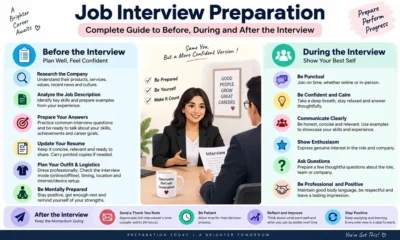

Job Interview Preparation: Complete Guide to Before, During and After the Interview
A complete job interview preparation guide covering common questions, competency answers, remote interviews, interview mistakes and what to do after...
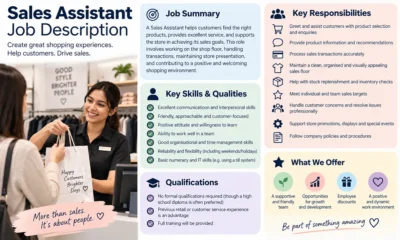

Sales Assistant Job Description: Duties, Skills, Salary and Career Guide UK
A Sales Assistant helps customers, processes purchases and supports the day-to-day running of a retail environment.


Web Developer Job Description: Duties, Skills, Salary and Career Guide UK
A Web Developer builds, maintains and improves websites and web applications. See the main duties, skills, qualifications, salary expectations and...
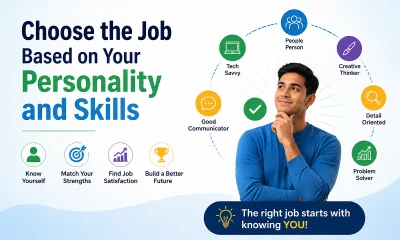

Choose an Entry-Level Job Based on Your Personality and Skills
Choosing your first job can be confusing. There are hundreds of entry-level jobs in the UK, but the best option...
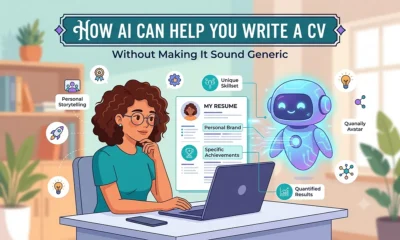

How AI Can Help You Write a CV Without Making It Sound Generic
Find out how to use AI to improve your CV, tailor your experience and write clearer applications without adding false...


Python Interview Cheat Sheet: 30 Python Concepts You Should Know Before Your Next Coding Interview
Python is one of the most popular programming languages for beginners and professional developers. It is widely used in web...
-
 Career3 years ago
Career Opportunities for Seniors: 7 Jobs that are Perfect for Older Adults
-
 Jobs8 months ago
Second Jobs in the UK: 15 Practical Ways to Earn Extra Income
-

 Career2 years ago
5 Free Job Posting Sites in the UK (For Employers)
-
 How-to8 months ago
How to Use Google Gemini for Freelance Work and Career Skills
-
 How-to8 months ago
Passive Income Ideas: Build Long-Term Income Streams
-

 AI & Tools8 months ago
How to Use Google Gemini for Productivity at Work
-

 Job Description2 years ago
Support Worker Job Description: Duties, Skills, Salary and Career Guide UK
-

 AI & Tools8 months ago
ChatGPT vs Microsoft Copilot: Which AI Is Best for You?