
How-to
How to Get a Job in the UK: A Complete Step-by-Step Guide

Finding a job in the UK can feel difficult, especially when you are competing with many other applicants. The process becomes much easier when you treat your job search as a structured project rather than simply sending the same CV to as many vacancies as possible.
A successful application journey usually involves several stages: choosing suitable roles, understanding job descriptions, preparing a strong CV, searching in the right places, tailoring applications, preparing for interviews and improving your approach when something is not working.
This complete guide explains how to get a job in the UK step by step. It is useful for graduates, students, people with no experience, career changers, people returning to work and anyone who wants a more organised approach to finding employment.
Before You Start: Understand How the UK Job Search Process Works
Most job searches follow a similar pattern. You identify suitable vacancies, submit an application, wait to hear from the employer, complete one or more interviews or assessments and, if successful, receive an offer.
The exact process can vary. Some employers ask only for a CV, while others use detailed application forms, supporting statements, online tests, video interviews or assessment centres. Larger organisations may have several stages, whereas smaller employers may make decisions more quickly.
The important point is that getting a job is not only about having the right qualifications. Employers also need to understand how your experience, skills and achievements relate to the role.
1. Decide What Type of Job You Want
Before applying, spend some time narrowing your search. You do not need to have your entire career mapped out, but a clear direction helps you make better decisions.
Start by considering:
- Job titles you are interested in
- Your current skills and experience
- Industries you would consider
- Your preferred location
- Full-time, part-time, temporary or contract work
- Whether remote or hybrid work is important to you
- Your realistic salary expectations
Why a focused search works better
Applying for every vacancy that appears can quickly become exhausting. A more focused search allows you to improve your CV and application strategy around a group of related roles.
For example, someone interested in marketing may apply for marketing assistant, digital marketing assistant, social media assistant and junior content roles. These positions have different titles, but many of the required skills overlap.
Before starting your search, read several job descriptions for roles that interest you. Make a note of the skills and experience that appear repeatedly. This will help you understand what employers are actually looking for.
2. Understand Job Descriptions Before You Apply
A job title does not tell you everything about a role. Two companies can use the same title while expecting very different responsibilities.
Read the full job description and look for:
- Main responsibilities
- Essential skills and experience
- Desirable skills
- Qualifications
- Location and working arrangements
- Salary information where available
- Application deadline
- Interview or assessment requirements
Essential requirements versus desirable requirements
Employers often separate requirements into essential and desirable criteria. Essential requirements are usually the most important points to address in your application.
You do not always need to match every desirable requirement perfectly. However, you should be realistic about the overall fit. If a role requires experience or qualifications you clearly do not have, applying may not be the best use of your time.
For a detailed breakdown, read our guide to understanding job descriptions.
3. Make Sure You Are Eligible to Work in the UK
Before applying for a job, make sure you understand your own right-to-work situation and whether you meet any requirements connected with the role.
Some jobs may have additional requirements relating to professional registration, background checks, security clearance, driving licences or qualifications. International applicants should also check the immigration and work-permission requirements that apply to their circumstances.
Never assume that an employer can provide sponsorship or that a role automatically qualifies for sponsorship. Check the vacancy information and the relevant official requirements before making decisions.
4. Create a Strong Master CV
A useful approach is to create a detailed master CV containing your complete employment history, education, skills, achievements, projects and relevant training.
You can then create a shorter, targeted version for each application.
Your CV should make it easy for an employer to answer three questions:
- Who are you professionally?
- What relevant experience and skills do you have?
- Why might you be suitable for this role?
What to include
The exact structure depends on your background, but a typical CV may include:
- Your contact details
- A professional profile
- Key skills
- Employment history
- Education
- Relevant qualifications or training
- Projects, volunteering or additional experience where relevant
Focus on evidence, not empty claims
Instead of simply saying you have excellent communication, organisation or teamwork skills, provide evidence through your experience.
For example, describe a responsibility you handled, a problem you solved, a project you completed or a result you contributed to. Specific evidence is generally more useful than a long list of unsupported skills.
Use our detailed guides on how to write a CV and how to write a CV with no experience.
5. Tailor Your CV for Each Role
A master CV is useful, but the same version should not automatically be sent to every employer.
Before applying, compare your CV with the job description. Make sure your most relevant experience is easy to see.
Tailoring does not mean inventing experience or changing the truth. It means presenting your genuine experience in the most relevant way.
A simple tailoring checklist
- Does your professional profile match the type of role?
- Are the most relevant skills clearly visible?
- Have you included relevant achievements?
- Does your experience use language that accurately reflects the role?
- Have you removed information that distracts from your application?
- Have you checked for spelling and grammar mistakes?
6. Write a Cover Letter or Supporting Statement When Required
Not every UK employer asks for a cover letter. Some use application questions or a supporting statement instead.
When additional written information is required, avoid repeating your CV word for word. Use the space to explain the connection between your background and the role.
A strong supporting structure
You can usually organise your answer around four points:
- Why you are interested in the role.
- Why the organisation or industry interests you.
- Your most relevant skills and experience.
- Specific examples that demonstrate your suitability.
Always follow the employer’s instructions, particularly where word counts or specific questions are provided.
7. Search for Jobs in More Than One Place
Relying on one website can limit the number of opportunities you see. A broader search strategy usually works better.
Job boards
General job boards can be useful for finding vacancies across many industries. Specialist job boards may be more useful for fields such as technology, healthcare, education, engineering or finance.
Company careers pages
If you have employers you would genuinely like to work for, check their careers pages directly. Some vacancies may appear there first, and company websites can also help you understand the organisation before applying.
Recruitment agencies
Recruitment agencies can be useful when they specialise in your industry or job type. Make sure you understand the type of roles they handle and keep your information accurate.
Professional networks
Professional networking can help you understand industries, follow employers and hear about opportunities. This does not mean sending unwanted messages to large numbers of strangers. Focus on building genuine professional awareness and keeping your profile current.
University and graduate services
Students and recent graduates should also use university careers services where available. These services may offer CV reviews, interview practice, employer events and access to graduate opportunities.
8. Set Up Job Alerts
Job alerts can reduce the amount of time you spend repeating the same searches.
Create alerts using relevant job titles, locations and skill terms. Review the results regularly and adjust your keywords when the alerts are too broad or too narrow.
For example, instead of searching only for one title, you might create separate alerts for several related titles. This can help you find employers who use different names for similar work.
9. Apply for Jobs Strategically
Sending a high number of rushed applications can create the appearance of progress without improving your chances.
A better approach is to prioritise vacancies where you have a reasonable match and enough time to prepare a good application.
Before you click submit
- Read the job description again.
- Check the application deadline.
- Confirm your CV is the correct version.
- Answer every required question.
- Check names, dates and contact details.
- Review spelling and grammar.
- Save a copy of important application information.
10. Keep a Job Application Tracker
Once you start applying for multiple roles, it becomes easy to lose track of what you have submitted.
A simple spreadsheet can include:
- Company name
- Job title
- Location
- Date applied
- Application deadline
- Where you found the vacancy
- Interview dates
- Contact person
- Current application status
- Follow-up actions
Tracking applications also helps you identify patterns. For example, you may discover that one type of role produces more interviews than another, or that your applications need improvement for a particular industry.
11. Build a Professional Online Presence
Employers and recruiters may review professional online profiles as part of their recruitment process.
Keep your professional information accurate and broadly consistent with your CV. A good profile should make it clear what type of work you are looking for and what experience or skills you can offer.
You do not need to post constantly. Start with the basics:
- A clear professional headline
- An accurate summary
- Current experience
- Relevant skills
- Appropriate professional contact details
12. Prepare for Interviews Before You Receive an Invitation
Many candidates wait until an interview invitation arrives before thinking about their examples. Preparing earlier makes the process much easier.
Create a document containing examples of:
- A problem you solved
- A difficult situation you handled
- A project you completed
- A time you worked as part of a team
- A mistake you learned from
- An improvement you suggested or delivered
- A situation where you had to prioritise work
You can adapt these examples to different interview questions while keeping your answers truthful and relevant.
For a complete guide, see our job interview preparation guide.
13. Understand Different Types of Job Interviews
Not every interview takes place in the same format. You may encounter:
- Telephone screening interviews
- Video interviews
- Face-to-face interviews
- Panel interviews
- Technical interviews
- Competency-based interviews
- Assessment centres
Read every invitation carefully so you know what format to expect. Ask reasonable questions if important details are unclear.
14. What to Do If You Have No Experience
Lack of full-time employment does not necessarily mean you have nothing to include in an application.
Relevant experience can sometimes come from:
- University or college projects
- Internships and placements
- Volunteering
- Freelance work
- Personal projects
- Student societies
- Family responsibilities where transferable skills are genuinely relevant
- Training or practical coursework
Turn activities into evidence
Do not simply list the activity. Explain what you did, the skills you used and the outcome.
A personal project, for example, can demonstrate planning, research, technical ability, communication or problem-solving if you explain it clearly.
15. Improve Your Skills While You Search
A job search can reveal gaps between your current skills and employer expectations.
If the same requirement appears repeatedly across suitable vacancies, consider whether it is worth developing.
Focus on useful, relevant improvements rather than collecting certificates without a clear purpose.
Depending on your career direction, this may involve:
- Software or digital skills
- Industry knowledge
- Communication skills
- A portfolio project
- Professional qualifications
- Technical training
The goal is not to become qualified in everything. It is to strengthen your position for the roles you genuinely want.
16. Use Feedback and Results to Improve Your Strategy
Your job search should change when the results suggest that something is not working.
If you are not receiving interviews
Review your targeting and applications. Ask whether your CV clearly shows relevant experience and whether you are applying for roles that match your current level.
If you are receiving interviews but not offers
Focus on interview preparation. Review your examples, research process, answers and ability to explain why you are suitable for the role.
If you are applying for a long time without progress
Step back and review the bigger picture. You may need to adjust your target roles, locations, skills, application quality or job-search channels.
17. Follow Up Professionally
Not every application requires a follow-up message, and employers may clearly state that they cannot respond to individual enquiries.
Where follow-up is appropriate, keep your message brief and professional. Avoid repeated messages that create pressure for the employer.
If you have completed an interview, a short thank-you message can be appropriate in some situations, but it should not replace a strong interview performance.
18. Be Careful About Job Scams
Job seekers can be targeted by fake recruiters and fraudulent job advertisements.
Warning signs can include:
- Requests for money before you have started legitimate work.
- Pressure to act immediately.
- Unusually high pay with very little information.
- Requests for sensitive financial information too early.
- Messages from unofficial addresses claiming to represent well-known companies.
- Job offers made without a credible recruitment process.
Research employers, check company websites and be cautious before sharing personal or financial information.
19. Common Mistakes to Avoid When Looking for a Job
- Using the same CV for every role: Your most relevant experience may be hidden.
- Ignoring the job description: Essential requirements should guide your application.
- Applying without checking eligibility: This can waste valuable time.
- Focusing only on job boards: Employer websites and specialist sources may provide additional opportunities.
- Failing to track applications: Important deadlines and follow-ups can be missed.
- Waiting too long to prepare for interviews: Build examples in advance.
- Collecting unrelated qualifications: Choose learning that supports your career direction.
- Believing more applications always means better results: Quality and relevance matter.
20. A Simple Weekly Job Search Routine
A consistent routine can help you stay organised without spending every hour searching for vacancies.
Day 1: Search and shortlist
Review new vacancies and identify the strongest matches.
Day 2 and 3: Prepare applications
Tailor your CV and complete applications carefully.
Day 4: Improve your career materials
Update your CV, portfolio, professional profile or interview examples.
Day 5: Skills and research
Spend time improving a relevant skill or researching employers and industries.
Weekly review
Update your application tracker. Look at what produced responses and decide what needs to change next week.

How to Get a Job in the UK if You Are Changing Careers
Career changers should focus on transferable skills rather than trying to pretend they already have years of experience in a new profession.
Start by identifying the skills that can transfer between your previous work and your target role. These may include communication, leadership, customer service, project coordination, sales, analysis, technical problem-solving or administration.
You may also need evidence that you are serious about the new direction. A relevant course, portfolio project, voluntary work or entry-level role can sometimes help bridge the gap.
How to Get a Job in the UK as a Graduate
Graduates should not underestimate academic projects, placements, societies and part-time work. Employers often understand that graduates may not have extensive full-time experience.
The challenge is explaining what you learned and how it relates to the role.
Focus on:
- Relevant coursework or projects
- Internships and placements
- Part-time work and transferable skills
- Society responsibilities
- Technical or professional skills
- Evidence of initiative and problem-solving
Frequently Asked Questions
How long does it take to get a job in the UK?
There is no fixed timeframe. The length of a job search depends on factors such as your industry, location, experience, target roles and the availability of suitable vacancies.
How many jobs should I apply for each week?
There is no perfect number. Focus on maintaining a sustainable routine and submitting well-prepared applications for suitable roles.
Do I need a cover letter for every job?
No. Follow the employer’s instructions. Some employers ask for cover letters, while others use application forms or supporting questions.
Can I use the same CV for every job?
Keep a master CV, but tailor important applications so your most relevant experience and skills are clear.
What should I do if I have no work experience?
Use relevant evidence from education, projects, volunteering, internships, placements and other activities that demonstrate transferable skills.
What should I do if I am not getting interviews?
Review the roles you are targeting, your CV and the way you address job requirements. Consider asking a careers professional or trusted mentor for constructive feedback.
Final Thoughts
Getting a job in the UK is usually a process of preparation, targeting, application quality and continuous improvement. A focused search can be more effective than applying for every vacancy you see.
Start by choosing suitable roles, understand what employers are asking for and build each application around your genuine experience and skills. Keep track of your results and adjust your approach when necessary.
This page is designed to be your starting point for the complete job-search journey. For more detailed help, continue with our specialist guides on writing a CV, CVs with no experience, job descriptions and job interview preparation.




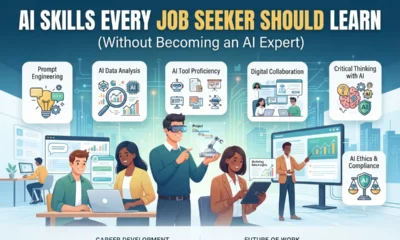

AI Skills Every Job Seeker Should Learn (Without Becoming an AI Expert)
Artificial intelligence is becoming part of everyday work in many industries. You do not need to become a programmer, data...


How to Get a Job in the UK: A Complete Step-by-Step Guide
Finding a job in the UK can feel difficult, especially when you are competing with many other applicants. The process...
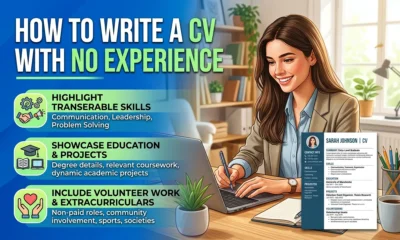

How to Write a CV With No Experience
Find out how to write a CV with no experience, what to include and how students, graduates and first-time job...


What Is a Job Description and What Should You Look For?
What is a job description? Understand what it means, what to look for and how to use it to decide...
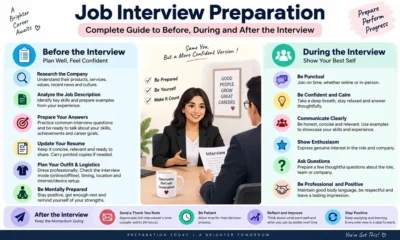

Job Interview Preparation: Complete Guide to Before, During and After the Interview
A complete job interview preparation guide covering common questions, competency answers, remote interviews, interview mistakes and what to do after...

Sales Assistant Job Description: Duties, Skills, Salary and Career Guide UK
A Sales Assistant helps customers, processes purchases and supports the day-to-day running of a retail environment.


Web Developer Job Description: Duties, Skills, Salary and Career Guide UK
A Web Developer builds, maintains and improves websites and web applications. See the main duties, skills, qualifications, salary expectations and...

Choose an Entry-Level Job Based on Your Personality and Skills
Choosing your first job can be confusing. There are hundreds of entry-level jobs in the UK, but the best option...

How AI Can Help You Write a CV Without Making It Sound Generic
Find out how to use AI to improve your CV, tailor your experience and write clearer applications without adding false...

Python Interview Cheat Sheet: 30 Python Concepts You Should Know Before Your Next Coding Interview
Python is one of the most popular programming languages for beginners and professional developers. It is widely used in web...


AI Could Replace Millions of Entry-Level Jobs in the UK by 2035: Which Roles Are Most at Risk?
Artificial intelligence is changing the way people work across the UK. From customer service and administration to data processing and...


How to Get a Job When There Are Fewer Vacancies
Finding a job can become more difficult when fewer suitable vacancies are available. You may see the same roles repeatedly,...


How UK Job Seekers Can Use LinkedIn to Find More Job Opportunities
Use LinkedIn more effectively in your UK job search with practical advice on improving your profile, finding jobs, networking and...


Why Is It So Hard to Get a Job in the UK?
If you have been applying for jobs in the UK and getting very few replies, you are not alone. Many...


Entry-Level Jobs in the UK Compared: Pay, Difficulty, Stress and Career Growth
Starting your career can be confusing, especially when there are so many entry-level jobs available in the UK. While some...


Why Are Graduate Jobs Becoming Harder to Find in the UK?
Graduating from university is supposed to feel like the beginning of a new chapter. You finish your degree, prepare your...

Why Good Candidates Fail Job Interviews: 10 Reasons You May Not Get the Job
Find out why good candidates can fail job interviews, what may affect an employer's decision and how to improve before...


30 Entry-Level Jobs in the UK for People With Little or No Experience
Finding your first job can feel difficult, especially when many vacancies ask for previous work experience. The good news is...


IBM Internship UK: A Complete Guide to Opportunities, Eligibility and How to Apply
An IBM internship can be an attractive opportunity for students and early-career candidates who want practical experience at a major...

15 Job Advert Red Flags to Check Before Applying for a Job in the UK
Finding a job can be exciting, especially when you come across a vacancy that appears to offer good pay, flexible...
-
 Career3 years ago
Career Opportunities for Seniors: 7 Jobs that are Perfect for Older Adults
-
 Jobs8 months ago
15 Best Second Jobs to Boost Your Income in the UK for 2026
-

 Career2 years ago
5 Free Job Posting Sites in the UK (For Employers)
-
 How-to7 months ago
How to Make Money with Google Gemini: Practical Methods Anyone Can Start
-
 How-to8 months ago
How to Build Passive Income and Wealth: 26 Lucrative Ideas
-

 AI & Tools7 months ago
10 Insane Ways Google Gemini Will Explode Your Productivity in 2026
-

 Job Description2 years ago
Support Worker Job Description: Duties, Skills, Salary and Career Guide UK
-

 AI & Tools7 months ago
ChatGPT vs Microsoft Copilot: Which AI Is Best for You?